Trail-boot grip in a light, cushioned shoe with a heel that can feel loose
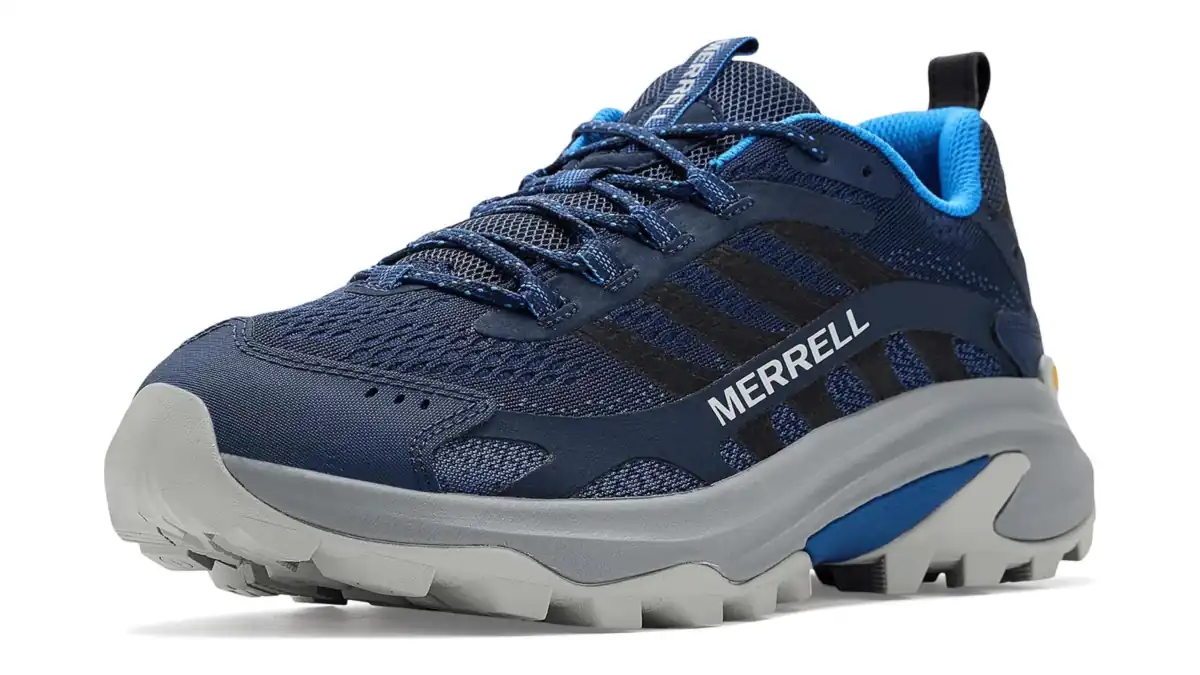
Quick Answer: Merrell Moab Speed 2 Review: The Merrell Moab Speed 2 is a low-cut hiking shoe for day hikes, long walks and travel. It takes the grip and protection of a hiking boot and puts it in something closer to a running shoe, so you get a soft foam midsole, a grippy Vibram outsole and almost no break-in. It suits neutral walkers who want comfort from the first mile. The trade-off is fit: the forefoot is roomy and the heel hold is only average, so narrow feet may slide. Check latest price.
Merrell built its reputation on the Moab, a chunky, supportive hiker that has sold in enormous numbers for two decades. The Moab Speed 2 is the light, fast end of that family. Merrell took the ideas that make a hiking boot work, grip, underfoot protection and a stable platform, and rebuilt them in a low-cut shoe that weighs about as much as a rugged trail running shoe.
That puts it between two things you already know. It is softer, lighter and more flexible than a traditional leather hiker such as the Merrell Moab 3. It is also more protective, stiffer underfoot and better gripping than a normal walking sneaker. If your outdoor life is day hikes, gravel paths, dog walks on wet grass and the occasional airport, this is the category Merrell is aiming at.
It comes in several versions. The plain Moab Speed 2 has a breathable mesh upper and no waterproof layer. There is also a Gore-Tex version for wet ground, and a leather mid boot for people who want ankle coverage. This review covers the standard low-cut men’s and women’s shoe, which is the version most buyers pick up first.
Specs
Here are the specifications for the Merrell Moab Speed 2:
| Type | Low-cut light hiking shoe |
| Best for | Day hikes, long walks, travel, light trail running |
| Support type | Neutral, meaning it does not steer your foot inward or outward |
| Weight | About 1 lb. 8.7 oz. per pair, men’s; about 1 lb. 6.8 oz. per pair, women’s size 9 |
| Stack height | 34 mm heel, 24 mm forefoot, the amount of foam between your foot and the ground |
| Heel-to-toe drop | 10 mm, so your heel sits noticeably higher than your toes |
| Midsole | FloatPro Foam, Merrell’s soft cushioning foam, with a full-length flex plate for stability |
| Outsole | Vibram TC5+ rubber with 4 mm lugs, the rubber teeth that bite into dirt |
| Upper | Breathable recycled mesh with synthetic overlays |
| Waterproofing | None on the standard model; a Gore-Tex version is sold separately |
| Widths | Standard and wide, men’s and women’s |
| Price | $140 US list price on merrell.com for the standard model, verified September 2026. Merrell does not publish a launch month for the Moab Speed 2, so we do not state one. Check latest price |
Pros
- Comfortable straight out of the box, so there is no painful break-in period before a long day
- Vibram TC5+ rubber and 4 mm lugs hold well on loose dirt, wet rock and grass, which is more grip than a normal sneaker gives you
- Light for a hiking shoe, so your legs feel fresher at the end of a long day than they would in a leather boot
- The mesh upper breathes, which keeps feet cooler on warm hikes than a waterproof boot does
- Wide widths are available in both men’s and women’s, which is unusual at this price
Cons
- Heel hold is only average, so narrow or low-volume feet can slip on steep descents
- The roomy forefoot that many people love feels sloppy if you prefer a snug, precise fit
- No waterproofing on the standard model, so wet grass and puddles soak through
- At $140 it costs more than several capable waterproof hiking boots
- The full-length plate makes the shoe stiffer than a trail running shoe, which some people notice on pavement
What is new versus the original Moab Speed
The headline change is cushioning. Merrell says the Moab Speed 2 carries about 30 percent more foam underfoot than the first Moab Speed. In practice that means a softer landing and a less rigid, less board-like feel, which is the single biggest reason the shoe is easier to wear for hours.
Traction changed too. Merrell moved to Vibram TC5+ rubber with a redesigned lug pattern, a compound made specifically for Merrell. The practical effect is more confident footing on damp rock and packed dirt, the two surfaces where a walking sneaker usually lets you down.
The upper was reworked as well, borrowing venting ideas from Merrell’s trail running shoes so the shoe runs cooler, and it now uses a high proportion of recycled material. A full-length flex plate sits inside the midsole to stop the softer foam from feeling wobbly. None of this is a redesign from scratch. Merrell kept the shape and character of the original and fixed the two complaints people had most often, which were firmness and grip.
Who should buy the Merrell Moab Speed 2
Buy it if your hiking is mostly day hikes and marked trails, and you have decided a full boot is more shoe than you need. The weight saving is real, and lighter feet make a long day feel shorter.
It is also a strong pick if you want one pair for several jobs. The grip is good enough for a rocky path, the cushioning is soft enough for a paved loop and the look is plain enough to wear around town. Travelers get a lot out of that range, because it means packing one pair instead of two.
Finally, it suits people with average to wide feet who have struggled with pinched toes in hiking shoes. The forefoot here is generous, and a genuine wide width is on offer in both men’s and women’s sizing. If you have been sizing up in other brands to buy toe room, this shoe may let you go back to your normal size.
Who should probably skip it
If you carry a heavy pack, or you hike on loose scree and rough, off-trail ground, a low-cut shoe with a soft midsole is not enough boot. You want ankle coverage and a firmer platform.
Skip it as well if you have a narrow foot and you know you need the heel to lock in. The generous shape that helps wide feet works against you here, and lacing can only do so much. And if you hike in genuinely wet country, buying the non-waterproof version will frustrate you within a week.
- Salomon X Ultra 5: a precise, snug-fitting hiker built for people whose feet swim in roomy shoes (check price)
- Columbia Newton Ridge Plus II Waterproof: a genuinely waterproof leather boot with ankle support, for wet ground and heavier loads (check price)
- Hoka Speedgoat 7: a true trail running shoe if you want to run the trail rather than walk it, with far more cushioning and less stiffness (check price | read review)
How does the Merrell Moab Speed 2 fit?
The Moab Speed 2 fits the way most Merrell hikers do, which is comfortable and forgiving rather than sharp and athletic. Length is true to size for most people. The character of the fit is all in the width, and whether you like it depends entirely on the shape of your foot.
Fit and sizing
Order your usual size. The forefoot and toe box are roomy, with enough space for toes to spread on a long descent and enough volume to take a thicker hiking sock without going up half a size. Feet swell over a long day, and this shoe has room built in for that.
The heel is the weak point. The heel cup is padded and comfortable, but it does not grip as firmly as a performance hiker, so a narrow heel can lift slightly on steep downhills. A heel-lock lacing pattern, using the extra eyelet at the top, helps. If that does not settle it, this is not your shoe. Wide widths are available if the standard fit is still tight across the ball of the foot.
Upper and step-in comfort
Step-in comfort is the shoe’s calling card. The mesh upper is soft, the tongue and collar are padded and there are no stiff seams waiting to rub. You can buy these on a Friday and hike in them on a Saturday, which is not something you can say about most leather boots.
Because the mesh is open, the shoe breathes well and dries quickly if you soak it. That is the upside. The downside is that it offers no barrier at all to wet grass or a shallow stream crossing. It also means a little less protection from sharp rocks against the side of the foot than a leather hiker would give you.
How does the Merrell Moab Speed 2 perform?
This shoe is built to make easy and moderate trails feel easy. It is not a technical mountain shoe and it is not a cushioned road trainer. It sits in the middle, and it is genuinely good there. Here is how the parts behave once you are moving.
Cushioning and ride
FloatPro Foam is soft by hiking shoe standards. With 34 mm of foam under the heel and 24 mm under the forefoot, there is a real layer of padding between you and the trail, so stones and roots register as pressure rather than pain. That extra foam over the first Moab Speed is what you feel in the first ten minutes.
The 10 mm drop, meaning your heel sits 10 mm higher than your toes, is on the traditional side. Most people find that comfortable because it takes a little strain off the calf and Achilles on climbs. If you are used to flatter shoes it will feel like walking slightly downhill at first, and then you will stop noticing it.
Ride and trail performance
A full-length flex plate sits between the foam and the outsole. Its job is to stop the soft midsole from folding over an awkward rock, and it does that well: the shoe feels planted rather than squirmy on uneven ground. The cost is flexibility. The forefoot does not bend as freely as a trail running shoe, so the stride feels a bit more deliberate.
You can run in it for short, easy stretches, and plenty of people do on the flat bits between climbs. It is heavier and stiffer than a purpose-built trail shoe, so it will not feel quick, but nothing about it punishes a jog.
Stability and support
This is a neutral shoe, which means it is not designed to steer your foot inward or outward. It does not correct how you walk and it is not marketed to. What it does offer is a wide, flat base and the flex plate, and those two together give you a stable platform on side-slopes and rough ground.
Because the collar is low, there is no ankle support in the way a mid boot gives it. If you have a history of rolling an ankle, or you hike with a loaded pack that shifts your balance, take that seriously. The Moab Speed 2 Mid version exists for exactly that reason.
Outsole, grip and durability
The Vibram TC5+ outsole is the best part of the shoe. Vibram is a specialist rubber maker, and the TC5+ compound was mixed for Merrell. Paired with 4 mm lugs, the rubber teeth that dig into soft ground, it holds confidently on packed dirt, gravel, damp rock and wet grass. It is not a mud tire, so deep, sticky mud will still clog it, but for normal trail surfaces it is more grip than most walkers ever need.
On durability, nobody can promise you a mileage figure and we will not. The broad 300 to 500 mile guideline people quote for running shoes is a rough guide at best, and a hiking shoe used for walking usually lasts longer than that. The mesh upper is the part most likely to wear first, particularly where it creases across the toes.
Is the Merrell Moab Speed 2 good for walking?
Yes, and for a lot of people this is the main reason to buy it. The soft foam and the padded collar make it kind on hard surfaces, so it handles pavement, a gravel loop or a full day of city sightseeing without beating up your feet. Travelers like it because one pair covers the flight, the museum and the trail at the other end.
For standing all day it is decent rather than outstanding. The plate keeps the shoe stable but also makes it stiff, and on a flat shop or warehouse floor some people want more flex. The insole lifts out cleanly, so if you wear custom orthotics or a supportive aftermarket insole you can swap it in, and the roomy forefoot leaves space for it. As always with foot comfort, the result depends on your arch, your gait and your history, not on the shoe alone.
Merrell Moab Speed 2 versus the original Moab Speed
Moab Speed 2 | Moab Speed | |
Cushioning | About 30 percent more foam, softer landing | Firmer, more rigid underfoot |
Outsole | Vibram TC5+, redesigned lugs | Earlier Vibram compound and lug pattern |
Upper | Reworked, more breathable, heavily recycled | Warmer, less vented |
Feel | Lighter and nimbler | More like a stripped-down boot |
Buy the Moab Speed 2 when you want the softer, cooler, grippier version, which is almost always. This is a clear improvement rather than a sideways move, and it is the model Merrell currently sells.
Buy the original Moab Speed when you find leftover stock at a real discount and you happen to prefer a firmer, flatter-feeling shoe. That is a narrow case, and you should expect sizes to be picked over.
Merrell Moab Speed 2 alternatives
If the Moab Speed 2 is close but not quite right, the fix is usually one of three things: more support, more waterproofing or a softer ride.
Merrell Moab 3: the classic version of this shoe, heavier and more structured, for hikers who want more underfoot support and a more traditional hiking feel than the Speed can give (check price).
Staying in the same family, the Merrell Moab Speed 2 Gore-Tex keeps everything described above and adds a waterproof membrane. You lose some of the breathability that makes the mesh version pleasant in summer, and you gain dry feet in wet grass, which is the trade most hikers in damp climates would take (check price).
Brooks Cascadia 20 is worth a look if the stiffness is what bothers you. It is a trail running shoe rather than a hiker, so it flexes more naturally and feels quicker, while still giving you a stable base and real trail grip (check price | read review).
For wide feet that also want waterproofing, the Keen Targhee IV is the obvious rival. Keen builds a famously broad toe box, wider than Merrell’s, and the Targhee comes waterproof as standard, so it answers both of the Moab Speed 2’s fit and weather limits in one shoe (check price).
Price and value
At a $140 list price, the Moab Speed 2 is priced like a good trail running shoe rather than a budget hiker. What that money buys is the Vibram outsole, the extra foam and the wide-width option, and those are the three things that actually change your day on the trail. It is not the cheapest way to get a grippy shoe, and you can buy a waterproof leather boot for less. The case for paying it is weight and comfort: this is a shoe you can wear all day without thinking about your feet, and that is worth something on a long hike.
Final verdict
Best for: day hikers, long-distance walkers and travelers who want boot-level grip without boot-level weight, especially with average to wide feet.
Avoid if: you carry a heavy pack, hike off-trail on rough ground, have a narrow heel, or need waterproofing from the standard model.
Fit: true to size in length, roomy through the forefoot, softer than average in the heel. Wide widths available.
Verdict: The Merrell Moab Speed 2 is one of the easiest hiking shoes to like. It is comfortable immediately, it grips far better than a walking sneaker and it is light enough that you stop thinking about your feet. We rate the fit as its only real weakness, and it is a weakness you can test in five minutes in a shop.
Frequently Asked Questions for Merrell Moab Speed 2
The standard mesh version is not waterproof. Merrell sells a separate Moab Speed 2 Gore-Tex version with a waterproof membrane, and a leather mid boot, if you need dry feet.
Yes. Merrell lists the Moab Speed 2 in standard and wide widths for both men and women, which is not common at this price.
Most people take their usual size. The forefoot already has extra room, so sizing up tends to make the heel slip more rather than fix a tight fit. Try the wide width instead if the ball of your foot feels squeezed.
The Moab 3 is the traditional hiker: heavier, more structured and more supportive. The Moab Speed 2 is lighter, softer and more flexible, closer to a rugged running shoe. Pick the Moab 3 for heavier loads and the Speed 2 for faster, lighter days.
The insole is removable, and the shoe has enough volume and forefoot room to take most custom or aftermarket insoles. Whether it feels right depends on your orthotic and your foot, so check the fit with the insole in before a long day.
Yes. Merrell offers a Moab Speed 2 Leather Mid Waterproof boot for people who want ankle coverage and a waterproof upper on the same light platform.
Use the extra top eyelet to tie a heel-lock, sometimes called a runner’s loop, which pulls the collar tighter around your ankle. A thicker sock also helps. If the heel still lifts on descents, the shoe is the wrong shape for your foot.
For the full family map, see our Merrell shoes guide.