Last Updated on September 22, 2026
Quick Answer: Returning to regular shoes after a foot injury should happen only after the injury is stable enough for the weight-bearing and activity your clinician has approved. The right shoe can make the transition more comfortable by providing appropriate stiffness, cushioning, toe-box room and stability, but footwear cannot make an unhealed fracture, tendon injury or ligament injury safe to load. This hub connects BWF’s recovery timelines, post-injury shoe guides and walking-return resources.
This Foot Injury Recovery Hub brings together our guides to broken toes, metatarsal fractures, stress fractures, midfoot injuries and other common foot problems. It also covers what to consider when you are ready to move out of a cast, brace or walking boot and back into regular shoes.
The important word is ready. A doctor, podiatrist, orthopedic specialist or other qualified health professional should determine when you can safely increase weight-bearing or return to regular footwear after a fracture or significant foot injury. Footwear can support your return to normal activity, but it cannot make an unhealed injury safe to walk on.
Once you have been cleared to wear regular shoes again, factors such as cushioning, toe-box space, stability, stiffness and fit can make a substantial difference in how comfortable that transition feels.
Start Here: What Type of Foot Injury Are You Recovering From?
Different foot injuries affect walking in different ways. A broken toe may make pressure from the front of a shoe uncomfortable, while a metatarsal fracture can affect weight-bearing through the forefoot or outside of the foot. A midfoot injury may require a much more cautious return to normal activity.
Use the guides below to learn more about the injury you are dealing with and what recovery may involve.
Metatarsal fractures
The metatarsals are the five long bones extending through the middle and forefoot toward the toes. Fractures can result from a direct injury, twisting event or repetitive stress, and treatment depends on the location and severity of the fracture.
Our metatarsal fracture healing timeline explains what recovery can look like from the initial injury through the return to regular activity.
A fifth metatarsal fracture deserves particular attention because different types of breaks in this bone can require different treatment and healing periods. Some people may be treated with a boot, cast or stiff-soled shoe, while other fractures can require surgery.
If you have already been diagnosed with a fracture, follow the weight-bearing instructions given by your health professional rather than using pain alone as a signal that the bone has healed.
Once you have healed enough to start to wear shoes again, ensure you wear a model that supports your healing. Read: Best shoes after a metatarsal fracture.
Broken toes
A broken toe can be surprisingly disruptive because the toes help with balance and push-off during walking. Swelling can also make normal footwear uncomfortable even when the injury itself is beginning to improve.
Read our complete guide to broken-toe recovery time for more information about healing and what to expect.
Many uncomplicated broken toes heal in about four to six weeks, although symptoms can sometimes last longer. The NHS recommends wide, comfortable, flat shoes with stiff soles for many uncomplicated broken toes and advises against tight or pointed shoes during recovery.
A broken big toe, an obviously deformed toe, numbness, an open wound or a bone protruding through the skin requires prompt medical attention.
Stress fractures
Not every fracture happens because of a fall or sudden impact. Stress fractures are small cracks or areas of bone injury caused by repetitive loading. They are particularly common among runners and people who suddenly increase their activity.
Continuing to load a stress fracture before it has healed can prolong recovery, which is why persistent, localized foot pain should not simply be treated as a shoe problem.
Once a health professional has cleared you to return to regular footwear, our guide to the best shoes for stress fractures and broken bones looks at shoe characteristics that may be useful during the transition.
Midfoot and Lisfranc injuries
Pain in the middle of the foot is not always a simple sprain. Lisfranc injuries involve the joints, bones or ligaments that stabilize the midfoot and can range from relatively mild injuries to serious fractures and dislocations.
Recovery can take considerably longer than it does for many minor foot injuries.
If you have been diagnosed with this type of injury, see our guide to recovering from a midfoot or Lisfranc sprain.
Because Lisfranc injuries can be significant, footwear decisions should be secondary to the treatment and rehabilitation plan provided by your health professional.
Foot Injury Recovery Times
One of the most common questions after a foot injury is also one of the hardest to answer: How long will this take?
There is no single foot-injury recovery timeline. Healing depends on which bone, ligament, tendon or other structure has been injured, how serious the injury is, whether surgery was required, your general health and how closely you follow weight-bearing and rehabilitation instructions.
Our foot injury recovery times guide compares recovery expectations for several common foot problems.
It is also useful to separate bone healing from the return to completely normal walking. A health professional may determine that a fracture has healed sufficiently for increased activity while you still experience stiffness, swelling, muscle weakness or an unfamiliar walking pattern.
That is where the transition back into shoes becomes important.
Returning to Shoes After a Foot Injury
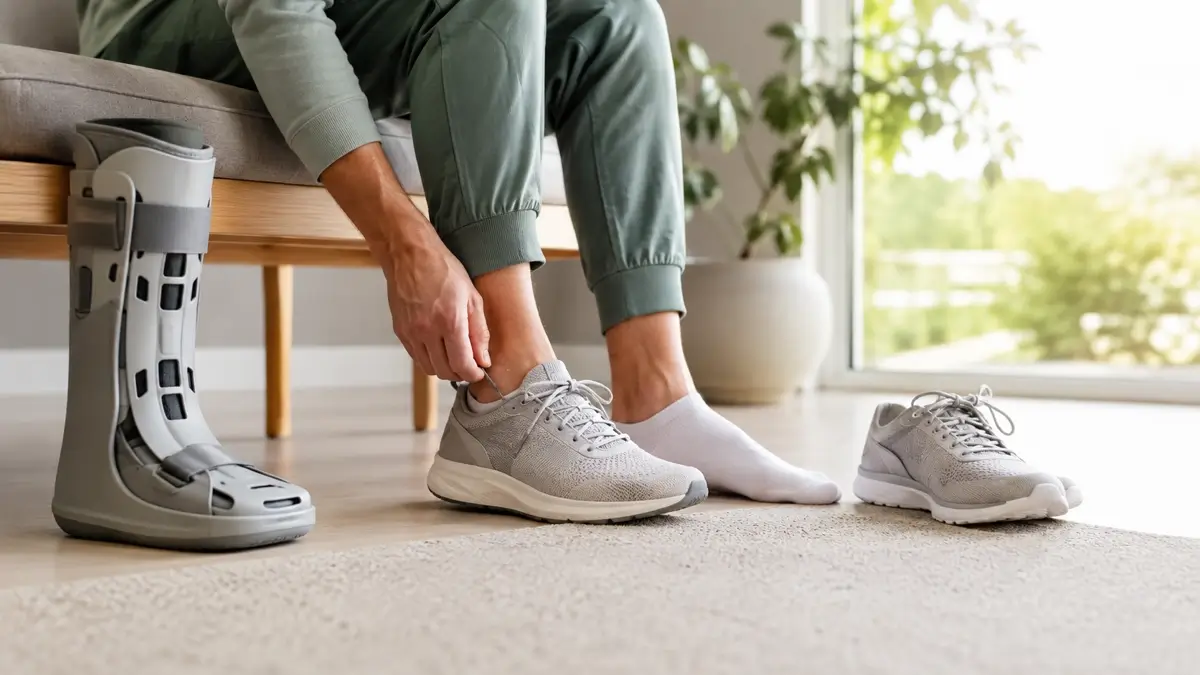
Going from a cast or walking boot directly back to the shoes you wore before your injury may not feel as natural as you expect.
Your injured foot may still be swollen. Your ankle or foot muscles may have become weaker after a period of reduced activity. Your range of motion may have changed, and a shoe that fit comfortably before the injury may temporarily feel tight.
For that reason, the best post-injury shoe is not necessarily the softest or most heavily cushioned shoe you can find. It needs to suit your particular injury, your foot and the recommendations of your health professional.
Once you have been cleared to return to regular footwear, there are several characteristics worth considering.
Enough room for your toes
Residual swelling can make a previously comfortable shoe feel restrictive, especially across the forefoot.
A roomy toe box can reduce pressure on sensitive toes and give the front of the foot more space. This can be particularly useful after a broken toe or other forefoot injury.
See our guide to the best wide toe-box shoes for men and women if forefoot space is one of your main concerns.
Remember that a wide toe box and a wide shoe are not necessarily the same thing. You want enough space around the toes without allowing the rest of the foot to slide excessively inside the shoe.
A secure fit
Extra room should not mean a loose shoe. A shoe that allows your heel to lift or your foot to slide forward may create additional friction and make you compensate while walking. Look for a shoe that holds the heel and midfoot comfortably while leaving appropriate space at the front.
Laces can be particularly useful because they allow you to adjust the fit as swelling changes.
Appropriate cushioning
Cushioning can make walking more comfortable when a foot remains sensitive after an injury, but more cushioning is not automatically better.
Extremely soft shoes can feel unstable to some people. The goal is a shoe that provides comfortable impact absorption while still allowing you to walk securely.
Our best walking shoes guide is a useful starting point if you are looking for comfortable everyday footwear after being cleared to resume normal walking.
The right amount of flexibility
A highly flexible shoe bends easily through the forefoot. That can be comfortable for some walkers but undesirable when the toes or metatarsals remain sensitive.
Depending on the injury, your health professional may recommend footwear with a firmer or stiffer sole during part of the recovery process.
Do not assume that a barefoot, minimalist or highly flexible shoe is automatically the best way to “strengthen” an injured foot. Your return to normal foot motion should match your stage of recovery.
Why Your Walking Pattern May Feel Different
People often notice that they walk differently after spending time in a walking boot, cast or protective shoe.
That does not necessarily mean something is permanently wrong.
When one part of the foot hurts, people naturally try to avoid loading it. After several weeks of altered walking or reduced activity, that movement pattern can sometimes persist even as the injury improves.
You may notice that you:
- Place less weight on the previously injured foot.
- Take shorter steps.
- Push off differently through the toes.
- Put more weight along one side of the foot.
- Feel less stable than you did before the injury.
If a pronounced limp or abnormal walking pattern persists, a physical therapist, podiatrist or other qualified professional can assess what is happening rather than having you try to correct it by choosing a particular type of shoe yourself.
You can also read our guide to how to tell what kind of running gait you have and our explanation of shoe wear patterns to better understand common movement patterns.
What About Supination After a Foot Injury?
Supination, also called underpronation, describes a walking or running pattern in which the foot places more pressure toward its outside edge.
You should not assume you have developed supination simply because the outside of your foot hurts after an injury. Pain from a fifth metatarsal fracture, for example, can also occur along the outside of the foot.
If your normal gait genuinely involves supination, footwear with appropriate cushioning and a comfortable neutral platform may be worth considering.
Our guide to the best shoes for supination or underpronation compares current options designed for walkers and runners who tend to load the outside of the foot.
You can also use our at-home test for overpronation and supination as a general educational tool, but an at-home test is not a substitute for professional assessment when you are recovering from an injury.
Swelling Can Change How Your Shoes Fit
Swelling frequently lasts beyond the earliest stage of a foot injury, and it may change during the day. A shoe that feels comfortable first thing in the morning may feel tighter after several hours on your feet.
Do not force a swollen foot into footwear that causes pressure, numbness, tingling or increased pain.
If swelling suddenly becomes worse, particularly when accompanied by increasing pain, changes in skin color, numbness, tingling or other new symptoms, contact a health professional.
When ordinary shoes are appropriate again, adjustable lacing, adequate forefoot space and the correct shoe width can help accommodate normal variations in foot volume.
Forefoot Pain After an Injury
The forefoot includes the toes, metatarsals and ball of the foot, so several different injuries can cause discomfort in this area.
Pain under the ball of the foot is sometimes described broadly as metatarsalgia, but that term describes a symptom rather than telling you exactly what is causing it.
Our guide to what metatarsalgia is explains the condition and some of the problems that can contribute to pain in the ball of the foot.
Persistent pain after an injury deserves evaluation, particularly if it becomes worse as you increase your activity. Do not assume that replacing your shoes will resolve pain caused by an incompletely healed injury.
Returning to Walking
Being allowed to bear weight again does not necessarily mean you should immediately return to your previous walking distance.
Depending on the injury and your health professional’s recommendations, the transition may involve gradually increasing the amount of time you spend on your feet.
Pay attention to how your foot responds not only while you are walking but also later that day and the following morning.
A major increase in pain or swelling may be a sign that you have progressed too quickly and should discuss your activity level with your health professional.
For general footwear options once you have been cleared to return to walking, see our guide to the best walking shoes.
Choosing Shoes After a Foot Injury
There is no single shoe that is best for every recovering foot.
The shoe that works for you will depend on the injury, where you are in the recovery process, your foot shape, how you walk and what you intend to do in the shoes.
Once regular footwear has been approved, consider the following questions before buying a pair:
- Is there enough room for my toes without allowing my foot to slide?
- Does the shoe feel secure around the heel and midfoot?
- Does the sole provide the amount of stiffness or flexibility appropriate for my recovery?
- Is there enough cushioning for comfortable walking?
- Does the shoe accommodate any remaining swelling?
- Can I adjust the fit with laces or another secure fastening system?
- Does the shoe feel comfortable immediately rather than requiring painful “breaking in”?
A new shoe should not be used to override pain from an injury. If walking in a supposedly supportive shoe makes your symptoms noticeably worse, stop and determine why before continuing to use it.
Shoes for Different Foot Types
Injury recovery is only one part of choosing footwear. Your usual foot mechanics still matter once you return to normal activity.
If you already know your foot type or gait pattern, these BestWalkingFeet guides can help you explore appropriate shoe categories.
For people whose feet tend to roll outward, see our best shoes for supination.
For people whose feet tend to roll inward excessively, see our best shoes for overpronation.
If your gait is relatively neutral, our guide to neutral running shoes and who should wear them explains how neutral shoes differ from stability footwear.
If you are uncertain about your normal mechanics, avoid trying to diagnose them while you are still limping or deliberately protecting an injured foot. Your temporary post-injury gait may not represent the way you normally walk.
When Foot Pain Needs Medical Attention
Shoes can address fit and comfort. They cannot diagnose a fracture, determine whether a bone has healed or tell you whether it is safe to increase your activity.
Seek medical attention for a suspected serious foot injury, particularly if there is obvious deformity, an open wound near the injury, bone protruding through the skin, numbness or tingling, severe pain or difficulty bearing weight.
You should also contact your health professional if a diagnosed injury is becoming more painful rather than improving, swelling is increasing unexpectedly or you are having difficulty progressing through your prescribed recovery.
People with diabetes, circulation problems, neuropathy or other conditions that can affect foot health should be particularly cautious about self-treating foot injuries.
Foot Injury Recovery Guides
BestWalkingFeet has a growing library of resources for readers recovering from foot injuries. Start with the guide that most closely matches what you are dealing with:
- Metatarsal Fracture Healing Timeline: From Injury to Full Recovery
- Broken Toe Recovery Time: How Long Healing Takes and What Actually Helps
- Foot Injury Recovery Times
- Best Shoes for Stress Fractures and Broken Bones in Legs and Feet
- Recovering From a Midfoot or Lisfranc Sprain: What to Expect
- Best Wide Toe-Box Shoes for Men and Women
- Best Shoes for Supination or Underpronation
- How to Tell What Kind of Running Gait You Have
- Shoe Wear Patterns
- Best Walking Shoes
As we add new injury, recovery and post-injury footwear guides, this page can serve as the starting point for finding them.
Common Questions About Foot Injury Recovery and Shoes
Your health professional should determine when it is safe to transition out of a cast, boot or protective shoe. The timing depends on the type and location of the fracture, how well it is healing and whether you can safely bear weight. Do not make the transition based only on the fact that pain has decreased.
Once regular footwear has been approved, many people benefit from shoes that fit securely, provide adequate toe room and offer comfortable cushioning. Some injuries may require a relatively stiff sole during part of recovery. Follow any footwear instructions given by your doctor, podiatrist or physical therapist.
Not automatically. Buying a shoe that is too long can cause your foot to move around inside it. You may instead need a wider size, a roomier toe box or a more adjustable shoe. Persistent or significant swelling should also be discussed with your health professional.
A roomy toe box can help reduce pressure on sensitive or swollen toes once you have been cleared to wear regular footwear. The NHS recommends wide, comfortable shoes for many uncomplicated broken toes. The shoe should still fit securely around the rest of your foot.
That depends on the fracture and your stage of recovery. Protective footwear used during healing often limits movement, while later footwear needs can change as the bone heals and normal movement returns. Ask your health professional whether you still need a stiff sole before switching to more flexible shoes.
Stiffness, weakness, swelling and changes in walking mechanics can persist after a period of immobilization. If these problems continue or interfere with walking, a physical therapist or other health professional can assess your strength, range of motion and gait.
A limp can develop because you have been protecting the injured foot or because immobilization has affected strength and mobility. A walking boot can also temporarily change the way you move. Persistent limping should be assessed rather than corrected solely by changing shoes.
Pain can temporarily change where you place weight on your foot, but that does not necessarily mean you have developed a permanent supinated gait. If you are concerned about your walking pattern after an injury, consider a professional gait assessment once you can walk normally again.
Being cleared to stop using a boot does not necessarily mean you are ready to resume your previous walking mileage immediately. Follow your health professional’s recommendations for gradually returning to activity.
Stop using the shoe and determine where the discomfort is coming from. Pressure from fit may be solved with a different size or design, but persistent or increasing pain at the site of the original injury should be discussed with your health professional.
Sometimes, but the appropriate shoe depends on the injury and your stage of recovery. Running shoes vary considerably in cushioning, flexibility, stability and geometry. Do not assume that a highly cushioned running shoe is automatically the safest post-injury choice.
Rocker-style soles can alter how the foot moves through the walking cycle and may reduce the amount of bending required at certain parts of the forefoot. Whether that is appropriate depends on your injury. Ask your health professional if a rocker sole makes sense for your situation.
Possibly. Check that they still fit comfortably and that the sole is not excessively worn or uneven. Your foot size, swelling and gait can also be different during recovery, so a shoe that worked before the injury may not feel the same afterward.
There is no single timeline. Swelling can persist after pain has improved and can vary according to the type and severity of injury. Swelling that suddenly increases or occurs with worsening pain, numbness, tingling or changes in skin color should be evaluated.
Shoes can protect the foot and improve comfort when they are appropriate for your stage of recovery, but regular footwear does not replace fracture treatment or make it safe to load an unhealed bone. Follow your health professional’s instructions about immobilization, weight-bearing and returning to shoes.
Find the Right Shoes for Your Next Step
Recovery does not end the day the boot comes off. Returning to comfortable, confident walking can involve finding shoes that fit your foot as it is now, not simply putting on whatever you wore before the injury.
Once your health professional has cleared you to return to regular footwear, explore our guides to wide toe-box shoes, walking shoes, shoes for supination and shoes for stress fractures and broken bones to find options that match your foot, walking pattern and stage of recovery.
Medical note: BestWalkingFeet.com provides general educational information about footwear and foot health. It is not a substitute for diagnosis, treatment or individualized medical advice from a qualified health professional.