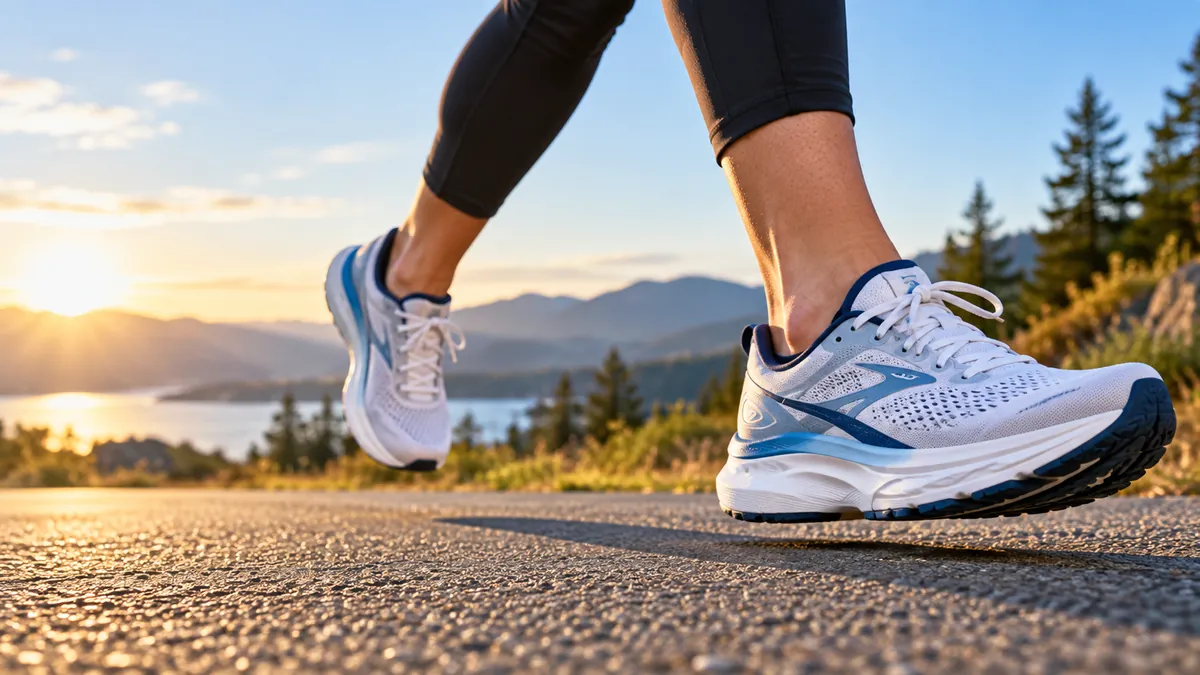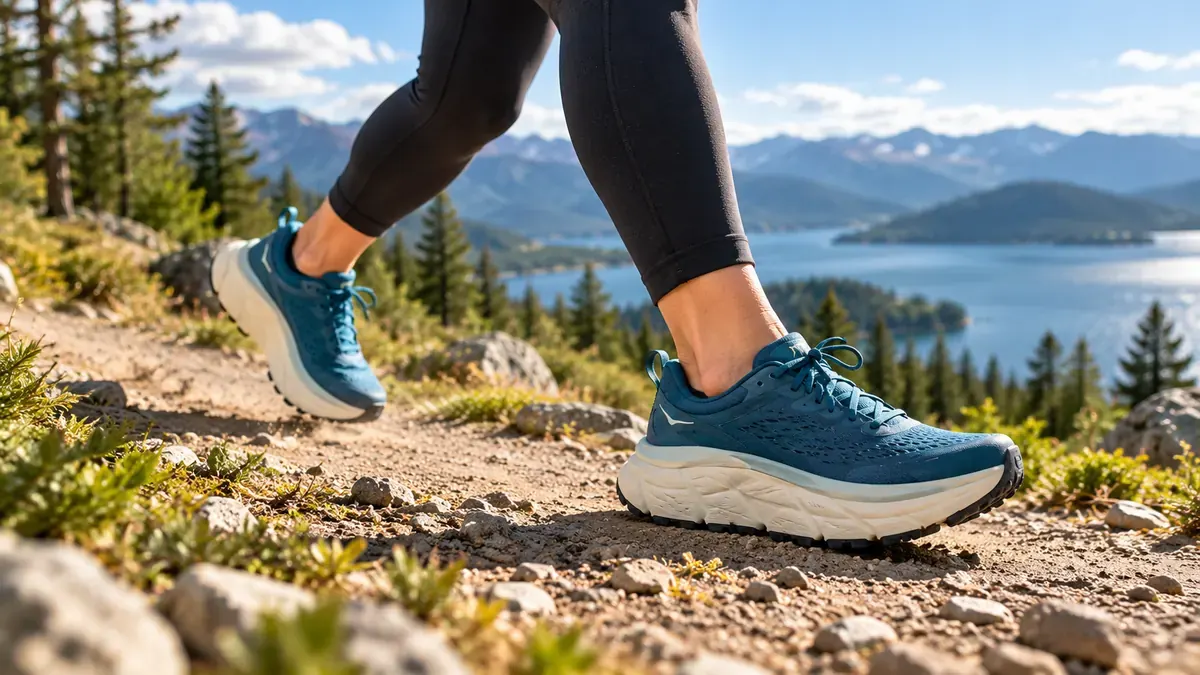
Enormous cushioning and a very wide base at a weight you can feel
Quick Answer: The Hoka Stinson 8 is a maximum-cushion road-to-trail shoe for runners, walkers and hikers who value protection, stability and room over speed. Its broad platform, H-Frame support geometry and deep cushioning make it especially appealing for long easy miles, gravel roads and all-day walking. It is still heavy and not well suited to fast running or technical trails. The fit is notably roomy for a Hoka, and a wide version is available. See the specs below or try our Free Shoe Finder.
The Hoka Stinson 8 is one of Hoka’s most heavily cushioned shoes for mixed road-to-trail surfaces. It sits at the top of the brand’s road-to-trail line, above the lighter Challenger, and it is built for people who care more about protection than pace. Hoka calls it a trail shoe, but the shallow tread and the huge slab of foam underneath make far more sense on pavement, gravel roads, canal paths and packed dirt than on anything rocky or steep.
It is a specific shoe for a specific person. If you have wide feet, carry a bit more weight, walk or run for hours at a time and have given up on shoes that feel thin by mile eight, this is one of the few options that will not run out of cushioning before you do. If you want a shoe that feels light and lively, look elsewhere. The Stinson has never been that, and the 8 is no exception.

Specs
Here are the specifications for the Hoka Stinson 8:
| Type | Maximum-cushion road-to-trail shoe |
| Gait type | Neutral, with mild built-in guidance |
| Midsole | Dual-density foam: a thicker shock-absorbing bottom layer under a reworked H-Frame layer |
| Stack height | Men: 44 mm heel, 39 mm forefoot; women: 43 mm heel, 38 mm forefoot |
| Heel-to-toe drop | 5 mm |
| Weight | 11.3 oz (320 g) men’s US 10; 9.6 oz (272 g) women’s US 8 |
| Upper | Engineered mesh with a padded, gusseted tongue |
| Outsole | Shallow-lug rubber tuned for road and packed dirt |
| Widths | Regular and wide; exact width availability varies by colorway |
| Best for | Long, easy miles, all-day walking, gravel roads and mellow dirt |
| Price | $180 launch price. Check latest price |
Pros
- About as much cushioning as any shoe on sale, so hard pavement and stony gravel both stop registering as impact.
- A very broad base that keeps the foot settled without any firm posts or wedges, which matters when you are tired.
- The lightest Stinson yet, so the line’s biggest historical complaint is at least easing.
- A genuinely roomy fit with a wide option, which is rare in a shoe with this much cushioning.
- Handles pavement and easy dirt equally well, so one pair covers a mixed route without a change of shoes.
Cons
- Still heavy at over 11 ounces in a men’s 9, which you notice on any run longer than an hour.
- The shallow tread gives up quickly on wet rock, loose scree and steep mud, so it is not a true mountain shoe.
- Nothing about it feels fast, and picking up the pace takes real effort.
- At $180 it costs more than several lighter all-round trail shoes.
- The sheer height under the foot takes getting used to if you are coming from a lower shoe.
What is new versus the previous Stinson
The headline change is the midsole. Hoka has reformulated it into two clear layers: a thicker, softer bottom layer that does the impact absorbing, and a reworked H-Frame layer above it. H-Frame is Hoka’s name for a firmer frame of foam that runs through the shoe like a chassis, and its job is to stop all that soft foam from feeling wobbly. The practical result is a shoe that gives underfoot when you land but does not sway sideways when you push off, and heel-to-toe transitions come through noticeably smoother than they did on the previous version.
The other change is weight. This is the lightest Stinson Hoka has produced, which is a low bar for a line that has always been the heaviest thing in the range, but the saving is real and comes mostly from a simpler upper. The tread has also been retuned toward road and hard-packed ground rather than soft trail. That is an honest reflection of where most people actually wear this shoe, though it does narrow what it can handle. Hoka does not publish a launch price for the previous generation that we can confirm, so we have not listed one.
Who should buy the Hoka Stinson 8
Buy it if your routes are long, flat and mixed. Gravel roads, park loops, rail trails, canal paths, the shoulder of a country road: this is exactly the terrain the Stinson 8 was built for, and it covers all of it without complaint. It suits runners who prefer a deeply cushioned, broad platform, and it is especially worth comparing for heavier runners or anyone who finds thinner trail shoes harsh over long distances.
It is also a strong pick for people who are not really running at all. Walkers who put in several hours a day, hikers who prefer a shoe to a boot on easy ground and anyone who stands on hard floors for a living will get more out of this shoe than most runners will. The wide base and the tall sidewalls, which cup the foot rather than letting it sit on top of the foam, give a settled, planted feeling that many people find reassuring. If you have wide feet and have struggled to find a cushioned shoe that fits, the Stinson is one of the few that genuinely accommodates them.
Who should probably skip it
Skip it if you run anything technical. The tread is too shallow for wet rock, loose gravel on a slope or real mud, and the height under the foot puts your ankle a long way from the ground, which is not what you want when the ground keeps moving. Skip it too if you value a light shoe or if you do any tempo work. At over 11 ounces this shoe resists being hurried, and no amount of foam makes up for that.
It is also the wrong choice if you like to feel the ground. There is a lot of material between you and the surface, and some people find that disconnected rather than comfortable. If any of that describes you, these suit you better:
- Hoka Speedgoat 7: a proper mountain shoe with deep Vibram Megagrip lugs for the rocky, steep and wet ground the Stinson cannot handle (check price | read review).
- Hoka Mach 7: far lighter and quicker on the road, for the runner who wants Hoka cushioning without the anchor (check price | read review).
- Salomon Thundercross: deep lugs, a firmer ride and much better ground feel for messy, soft trails (check price | read review).

How does the Hoka Stinson 8 fit?
The Stinson 8 fits true to size for most people, with more room through the forefoot than almost anything else in this category. It is a shoe designed around feet that spread, and it shows. The one thing to be aware of is volume: the interior is generous top to bottom as well as side to side, so narrow feet may find they need to lace it firmly.
Fit and sizing
Order your usual size. The toe box is wide and has a decent amount of height over the toes, which helps if you have bunions or if your feet swell over a long day. A wide fitting is offered, though which colorways get it changes through the year, so check before you settle on a color. Runners with narrow heels sometimes need to use the extra lace eyelet at the top to lock the heel down, since the ankle collar is padded but not especially tight.
Upper and step-in comfort
The upper is engineered mesh, which means the weave is varied across the shoe so it is more open where you need airflow and more closed where you need the foot held. It is soft the moment you put it on, with no break-in period and no stiff seams to speak of. The tongue is padded and gusseted, meaning it is attached to the sides of the shoe so it cannot slide off center, and the heel counter is firm enough to hold without pressing on the Achilles. Step-in comfort is the shoe’s strongest first impression: it feels like sinking into something.
How does the Hoka Stinson 8 perform?
This is a shoe with one clear job and it does that job extremely well. It protects. What it does not do is help you move faster, and it makes no real attempt to. Judge it on comfort over distance rather than on anything to do with pace, and it looks very good indeed.
Cushioning and ride
Stack height is simply how much material sits between your foot and the ground, and at 42 mm under the heel the Stinson 8 has close to the most of any shoe on sale. The feel is soft but not mushy. The lower layer gives generously when you land, and the firmer H-Frame layer above it stops that softness from turning into a wallow. Hard pavement, packed gravel and stony farm tracks all lose their edge, and the difference is most obvious in the last third of a long outing when your legs are tired and every landing would normally start to sting.
Ride and running performance
The ride is smooth and rolling rather than springy. Hoka builds a rocker into the sole, which means the bottom of the shoe curves up at the toe so you tip forward rather than having to bend your foot, and that rocker does most of the work of moving you along. It suits a steady, even effort. Ask the shoe to accelerate and it pushes back: the weight is there, the foam gives rather than returns, and the whole thing feels like it is being carried rather than driven. Easy runs, long runs and recovery runs are what this shoe is for.
Stability and support
We classify the Stinson 8 as a stable neutral shoe. It has no medial post, which is the wedge of firmer foam that traditional stability shoes put under the arch, and it does not attempt to change how your foot moves. Instead it relies on geometry: a very wide base, sidewalls that rise up around the foot to cradle it and the firmer H-Frame layer that resists twisting. The result is much more structured than a typical neutral trail shoe, but pronation alone does not determine whether someone needs a stability shoe. If you consistently prefer dedicated support, compare it with other stability options rather than assuming the Stinson’s broad base is a substitute. No shoe corrects a gait, and persistent pain is worth assessing rather than trying to solve with footwear alone.
Outsole, grip and durability
The outsole uses shallow lugs in a durable rubber compound, laid out to give a broad contact area on hard ground rather than to bite into soft ground. On pavement, gravel, packed dirt and dry grass it grips perfectly well. On wet rock, greasy roots and deep mud it is out of its depth, and that is worth being honest about before you buy it as a trail shoe. Durability looks strong: the rubber coverage is generous and the foam is deep enough that it should not compress out quickly. The usual 300 to 500 mile guideline for replacing a shoe is a rough rule of thumb rather than a promise, and heavier runners and hard surfaces both shorten it.

Is the Hoka Stinson 8 good for walking?
It is one of the best walking shoes Hoka makes, and for a lot of buyers that is the real reason to own it. Walking puts less force through the foot than running but does it for far longer, so what matters is cushioning that keeps working over hours, a base that does not let the foot roll and a fit that tolerates swelling. The Stinson 8 delivers all three. It is excellent for standing on hard floors, for long days of travel and sightseeing, and for anyone whose job keeps them upright on concrete. The rocker helps here too, rolling you through each step so your calves do less work. The weight matters less when walking than when running, though you will still notice it on stairs. The removable insole and roomy interior may also make it easier to accommodate some aftermarket insoles or orthotics, but fit should be checked with the insert in place because it can change heel hold and instep pressure.
Hoka Stinson 8 versus the previous Stinson
| Stinson 8 | Previous Stinson | |
| Midsole | Reformulated dual-density foam with a reworked H-Frame layer | Earlier dual-density setup, firmer overall |
| Weight | 11.1 oz men’s 9, the lightest Stinson to date | Heavier |
| Transitions | Smoother heel to toe | Noticeably clunkier |
| Surface bias | Road and packed dirt | Slightly more trail oriented |
| Launch price | About $175, August 2026 | Not confirmed |
Buy the Stinson 8 when you want the smoother, lighter version and you spend most of your time on hard surfaces. Buy the previous model if you find it heavily discounted, you already know the fit suits you and you are not bothered about the last ounce.
Hoka Stinson 8 Alternatives
If the Stinson’s cushioning appeals but its bulk does not, the Hoka Challenger 8 is the obvious step down. It runs the same road-to-trail brief with far less shoe underneath, which makes it quicker and cheaper, and it is the better choice if your mixed routes lean more toward pavement than dirt (check price | read review).
Runners who want this much foam but only ever run on roads should look at the Hoka Bondi 9 instead. It is the road-only equivalent, with a smoother outsole and a slightly less agricultural feel, and it makes more sense if the dirt sections of your week are occasional rather than routine (check price | read review).
For broad feet specifically, the Altra Olympus 7 is worth a look. It pairs a foot-shaped toe box with deep cushioning and a proper Vibram outsole, so it does everything the Stinson does off road and rather more, though its completely flat platform asks more of your calves and takes some adjusting to (check price | read review).
Anyone shopping mainly for comfort on long walks rather than runs might prefer the Brooks Ghost Max 4, which offers a similar amount of protection in a lighter, tidier package that does not look like a piece of hiking equipment (check price | read review).
Price and value
The Stinson 8 launched at $180 in 2026. That is a lot for a shoe that only does one thing, and there are better all-round trail shoes for less. What the money buys is a quantity of cushioning and a width of platform that very few competitors match, plus the durability that comes from having that much material to wear through. If you are the person this shoe is aimed at, someone who walks or runs long and slow on hard surfaces and wants protection above everything else, it earns its price. If you are not, it is expensive for what you will actually use.
Final verdict
Best for: neutral runners, walkers and hikers covering long distances on pavement, gravel roads and easy dirt, particularly those with wide feet or who carry more weight.
Avoid if: you run technical trails, you do faster sessions or you want to feel connected to the ground.
Fit: true to size, roomy through the forefoot, high volume, with a wide fitting available.
Verdict: the Hoka Stinson 8 is the most cushioned, widest-based shoe in Hoka’s mixed-surface range, and the reformulated midsole finally makes it roll rather than plod. It is still heavy and still hopeless on anything steep or wet, but for long, slow miles on hard ground it is very hard to beat.
Check the latest price on the Hoka Stinson 8.
For more Hoka choices, see our best Hoka running shoes guide and our best trail running shoes roundup.
Frequently Asked Questions for Hoka Stinson 8
Yes. Hoka offers the Stinson 8 in a wide fitting as well as the regular width, though which colorways get the wide option changes through the year. The regular width is already generous through the forefoot compared with most cushioned shoes.
Both, but it leans toward the road. The tread is shallow and tuned for pavement and packed ground, so it is excellent on gravel roads, rail trails and canal paths and out of its depth on wet rock, loose scree or deep mud.
The stock insole is removable, and the Stinson 8 has a relatively roomy interior. If you use a prescribed orthotic or aftermarket insole, test the shoe with that insert in place because it can change heel hold, instep pressure and available toe-box volume.
At 11.3 ounces in a men’s US 10 it is at the heavy end of the category. A typical trail shoe sits between 9 and 10 ounces, and lightweight models come in under 9. The extra weight is the price of the cushioning.
Many people with heel pain find deeply cushioned, rockered shoes comfortable, and the Stinson 8 is both. It may suit you, but no shoe treats or cures plantar fasciitis, and what helps varies a great deal between people. If heel pain is persistent or getting worse, see a podiatrist.
Yes, order your usual size. The fit is generous in length and width, so there is no need to size up unless you normally do. People with narrow heels may want to use the extra lace eyelet to lock the heel in place.
Is the Hoka Stinson 8 good for long walks and standing?
Yes, if you like a heavily cushioned, broad and rockered shoe. Its weight is less noticeable while walking than while running, and the wide platform can feel reassuring over long days. If you prefer a lighter or more flexible walking shoe, compare it with the Hoka Bondi 9 or Brooks Ghost Max 4.