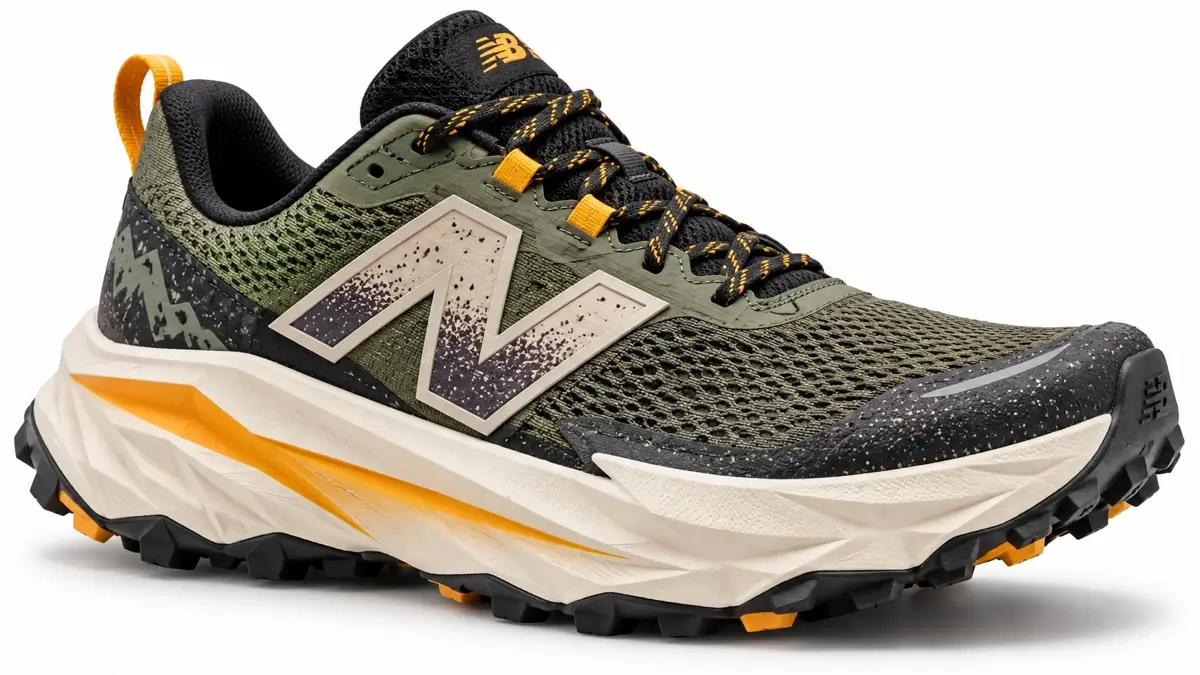
Quick Answer: New Balance FuelCell SuperComp Trail v2 Review: The New Balance FuelCell SuperComp Trail v2 is a responsive carbon-plated trail shoe for runners who can keep a rhythm on gravel, fire roads, rolling singletrack and other runnable terrain. The PEBA-blend FuelCell foam feels lively, while the Vibram Megagrip outsole gives it real off-road traction. Version 2 also comes in Standard and Wide, which offers another fit option. It can handle technical sections, but the stiff plated ride feels most natural when the trail lets you keep moving rather than constantly picking your way through obstacles. Check latest price. See recommendations side by side.
A fast, plated trail shoe for runnable terrain
Gender-specific buy links: Men’s version | Women’s version
The SuperComp Trail v2 is New Balance’s performance-focused trail shoe for runners who want the energetic feel of a plated racer off road. It is less about cushioning for its own sake and more about helping you carry speed across terrain that is still runnable.
That distinction matters. A stiff carbon-plated shoe feels best when you can settle into a rhythm. On gravel roads, forest roads and smoother singletrack, the shoe feels quick and efficient. On slower, highly irregular terrain, a more flexible trail shoe can feel easier to place.
New Balance also gives version 2 a full-length Vibram Megagrip outsole and now offers a Wide fitting, giving buyers another fit option.
At a glance
The useful details at a glance:
| Best for | Gravel, fire roads, rolling singletrack, runnable trail races and faster trail workouts |
| Ride | Responsive, stiff and rolling rather than flexible |
| Terrain | Best on runnable trails; capable on technical sections but less natural at slow, precise paces |
| Fit | Secure race-oriented upper; Standard (D) and Wide (2E) available |
| Walking | Fine for race/hike walking sections, less natural for everyday walking |
| Support | Neutral |
| Best reason to choose it | You want a plated trail shoe that rewards a steady, faster rhythm |
| Skip it if | You prefer a flexible shoe for slow, highly technical terrain |
Pros
- Responsive plated ride for runnable trail courses
- PEBA-blend FuelCell feels lively without being harsh
- Full-length Vibram Megagrip gives it serious trail traction
- Wide (2E) option makes the fit more accessible
- Secure gusseted upper holds the foot well when the pace picks up
Cons
- Stiff ride is less natural on slow, highly technical terrain
- Not as flexible as an everyday trail trainer
- Race-oriented upper is less padded than a comfort-focused trail shoe
- Best use is fairly specific: faster trail running and runnable courses
What is new versus the original SuperComp Trail
The biggest update is the combination of a PEBA-blend FuelCell midsole and revised carbon plate. The practical result is a livelier, more rolling ride when you are moving quickly enough for the plate to work with your stride.
The Energy Arc design is still central to the shoe, but you do not need to understand the plate geometry to feel the difference. Version 2 is built to feel smoother and more responsive as you transition through toe-off.
The outsole is also a meaningful strength. New Balance uses full-length Vibram Megagrip with Litebase and Traction Lug technology, giving the shoe enough grip for genuine trail use rather than treating it like a road racer with shallow tread.
Who should buy the New Balance FuelCell SuperComp Trail v2
Buy the SuperComp Trail v2 if your favorite trail routes are fast enough to let you settle into a rhythm. Gravel races, rolling singletrack, forest roads and runnable ultras are the situations where the plated ride makes the most sense.
It also works well for trail runners who already enjoy plated road shoes and want a similar sense of forward roll off road. The feeling is firmer and more purposeful than a normal trail trainer, but that is part of the appeal.
It can also cover mixed road-and-trail routes, although the outsole is clearly designed with off-road use in mind. Short road sections are fine; sustained pavement running is not really why this shoe exists.
Who should probably skip it
Skip it if you prefer a flexible shoe that closely follows every contour of the trail. The carbon plate makes the SuperComp Trail v2 feel more rigid, so runners who spend most of their time moving slowly through jagged rocks, roots and highly irregular terrain may prefer a lower, more adaptable trail shoe.
Not sure which trail shoe suits your feet and terrain? Find your ideal shoe with our free Shoe Finder.
Do not skip it simply because you need more width. New Balance currently sells the men’s model in both Standard (D) and Wide (2E), which gives buyers another width to compare.
These are better buys for those runners:
- Hoka Speedgoat 7: choose it if you want a more flexible, cushioned trail shoe for rough everyday terrain rather than a plated racing feel (check latest price | read review).
- Brooks Cascadia 20: choose it if you want a durable everyday trail trainer with a steadier, more conventional ride (check latest price | read review).
- Altra Olympus 7: choose it if your priority is toe room and long-distance comfort rather than a plated, race-oriented ride (check latest price | read review).
How does the New Balance FuelCell SuperComp Trail v2 fit?
The upper is secure and performance-oriented, but the fit is not limited to narrow feet. New Balance offers both Standard and Wide versions, so choose the width that matches your normal running shoes rather than trying to create room by sizing up.
Fit and sizing
Start with your normal New Balance running-shoe size. If you regularly need more room through the forefoot or midfoot, choose the Wide (2E) version. For cross-brand sizing, use our shoe size converter as a starting point.
Upper and step-in comfort
The upper is lightweight and protective without much excess padding. The gusseted tongue helps hold the midfoot securely, which matters in a stiff shoe when the trail turns or slopes.
The tradeoff is comfort rather than durability certainty: this feels like a performance upper, not a plush hiking shoe. If you prefer thick padding around the tongue and collar, an everyday trail trainer will feel more relaxed.
How does the New Balance FuelCell SuperComp Trail v2 perform?
The shoe changes character with the terrain. On runnable ground it feels quick and purposeful. On slower, highly irregular trail it feels stiffer and more deliberate than a flexible everyday trail shoe.
Cushioning and ride
The PEBA-blend FuelCell midsole feels lively rather than simply soft. There is enough cushioning for longer trail efforts, but the defining sensation is the way the foam and plate work together when you settle into a steady pace.
This is not a plush recovery shoe. The cushioning has more snap than sink, which suits racing and faster trail running better than slow, relaxed outings.
Ride and running performance
The Energy Arc plate gives the shoe its rolling, propulsive character. It works best when you are moving smoothly and consistently rather than picking your way through obstacles one step at a time.
That does not mean the shoe cannot handle technical trail. It can. The difference is feel: the stiff sole gives you less flex and trail feedback than a lower, more adaptable shoe, so technical terrain is not where its main advantage shows up.
Stability and support
This is a neutral racing shoe. The plate adds torsional stiffness, while the upper and outsole help keep the foot controlled on uneven ground. It does not use a dedicated stability system.
If tall, stiff shoes already feel awkward to you off road, a lower and more flexible trail shoe may be easier to place. That is a preference and terrain question, not a reason to assume the SuperComp Trail v2 is inherently unstable.
Outsole, grip and durability
Full-length Vibram Megagrip is one of the shoe’s strongest features. The outsole is designed for varied trail surfaces, with enough bite for dirt, rock and loose ground while still rolling reasonably well on harder sections.
Instead of assuming a fixed mileage life, replace the shoe when the outsole loses useful traction, the FuelCell midsole feels noticeably flatter or the upper no longer holds the foot securely.
Is the New Balance FuelCell SuperComp Trail v2 good for walking?
It is fine for walking sections during trail races or hikes, but everyday walking is not the reason to buy it. The carbon plate makes the sole stiffer than a normal walking shoe, so the stride feels more mechanical at slow speeds.
For daily walking, standing or travel, a more flexible shoe will usually feel more natural. See our best trail walking shoes for better options.
SuperComp Trail v2 versus the original SuperComp Trail
What changed | SuperComp Trail v2 | SuperComp Trail |
Ride | Livelier and more responsive | Earlier FuelCell feel |
Plate | Updated Energy Arc carbon plate | First-generation design |
Outsole | Updated full-length Vibram Megagrip | Earlier Vibram setup |
Fit options | Standard and Wide | Previous fit options |
Choose version 2 if you want the livelier foam, revised plate and current fit options. The update is meaningful for runners who want the shoe specifically for faster trail use.
New Balance FuelCell SuperComp Trail v2 alternatives
The SuperComp Trail v2 is fast, stiff and performance-focused. These alternatives shift the balance toward more flexibility, everyday comfort or softer-terrain grip.
- The North Face Vectiv Enduris 4: choose it if you want a plated trail feel with more everyday-training versatility (check latest price | read review).
- Asics Trabuco Max 5: choose it if you want a rolling high-cushion trail ride without a carbon plate (check latest price | read review).
- Saucony Peregrine 16: choose it if you prefer a lower, more agile trail shoe where foot placement matters more than propulsion (check latest price | read review).
- Salomon Thundercross: choose it if deep mud and soft ground are more important than maintaining speed on runnable trail (check latest price | read review).
Should you buy it?
Best for: trail runners who want a responsive plated shoe for gravel, fire roads, rolling singletrack and other runnable terrain.
Avoid if: you prefer a very flexible trail shoe, mainly walk rather than run, or spend most of your time on slow, highly irregular terrain.
Fit: secure and performance-oriented, with Standard (D) and Wide (2E) versions available.
Verdict: The New Balance FuelCell SuperComp Trail v2 is a fast, responsive trail shoe with a clearly defined strength: runnable terrain where the plate, FuelCell foam and Vibram outsole can all work together.
Check the latest price on the New Balance FuelCell SuperComp Trail v2
Frequently Asked Questions for New Balance FuelCell SuperComp Trail v2
It stiffens the shoe and works with the Energy Arc geometry to create a more rolling, propulsive feel when you are moving at a steady or faster pace.
No. Racing is its main role, but runners who enjoy a plated, responsive trail shoe can also use it for faster trail workouts and long runnable efforts.
Yes. New Balance currently sells the men’s model in Standard (D) and Wide (2E).
It can handle technical sections, but its stiff plated ride is most natural on runnable terrain where you can keep a rhythm. Runners who spend most of their time on slow, highly irregular terrain may prefer a more flexible trail shoe.
Yes, for short road sections or mixed routes. The outsole is trail-focused, so it makes most sense when a meaningful part of the route is off road.
It is fine for walking sections during trail races or hikes, but the stiff carbon-plated ride is less natural for everyday walking than a flexible trail or walking shoe.
It is best for trail runners who want a responsive plated shoe for gravel, fire roads, rolling singletrack and other runnable courses where they can maintain momentum.