Last Updated on October 6, 2026
| Quick Answer: The Asics Gel-Kayano 33 is the best stability running shoe overall in 2026. Its new FLUIDSUPPORT system, dual-layer cushioning and broad platform deliver strong guidance without the rigid feel of an old-fashioned medial post. The Brooks Adrenaline GTS 25 is a dependable everyday alternative, while the Hoka Gaviota 6 is better for maximum cushioning. Choose the New Balance Fresh Foam X 860v15 for extensive width options or the Asics GT-2000 15 for lighter stability. Check Latest Price |
Stability running shoes have changed substantially. Many older models tried to control overpronation with a firm piece of foam under the inside edge of the foot. That approach could feel heavy, stiff and intrusive.
Today’s best stability shoes use broad platforms, raised sidewalls, shaped midsoles and support frames. These features guide the foot without forcing every runner through exactly the same movement pattern.
That does not mean every runner needs stability. Some neutral runners feel more comfortable in a stable platform, while some people with flat feet are comfortable in neutral shoes. Comfort, fit and how the shoe feels while you move are more useful than arch height alone.
If you know your foot rolls inward excessively, see our separate guide to the best shoes for overpronation. If you are shopping specifically for walking rather than running, use our best walking shoes for overpronation. This article focuses specifically on stability running shoes and the type of ride each one provides.
Best stability running shoes at a glance
These are the current models that stand out for different runners, walking needs and cushioning preferences.
Best for | Stability system | Ride | Launch price | |
|---|---|---|---|---|
Best overall | FLUIDSUPPORT | Soft and protective | $170 | Check latest price | |
Everyday running | GuideRails | Balanced | $155 | Check latest price | |
Plush cushioning | GuideRails | Soft and substantial | $180 | Check latest price | |
Maximum cushioning and walking | Enhanced H-Frame | Plush and stable | $180 | Check latest price | |
Wide feet | Stability Plane | Cushioned and controlled | $150 | Check latest price | |
Best value | Midfoot support system | Smooth and supportive | $145 | Check latest price | |
Lighter stability | 3D Guidance System | Responsive and agile | $150 | Check latest price | |
Natural-feeling guidance | CenterPath | Flexible and smooth | $150 | Check latest price |
Prices can change, and some colors may sell below the original price. Compare the final price, available width and return policy before ordering.
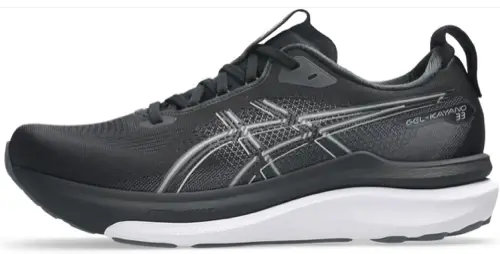
Asics Gel-Kayano 33
Best for: Overall stability, long runs and premium cushioning
The Asics Gel-Kayano 33 is the best overall stability running shoe because it provides substantial support without feeling like a traditional motion-control shoe. (Check price | Read full review)
Asics made a meaningful change for this generation. FLUIDSUPPORT replaces the 4D Guidance System used in the Kayano 30 through 32. The new system combines midsole geometry with two cushioning layers. FF Blast Max sits closer to the foot for softness and energy return, while FF Blast Plus creates a more stable foundation underneath.
The men’s version weighs 10.5 ounces and has an 8 mm heel-to-toe drop. That is competitive for a maximum-cushion stability shoe, although runners seeking a light tempo trainer should look elsewhere.
The Kayano works best for daily mileage, easy runs, long-distance training and fitness walking. Its wide base makes the substantial cushioning feel controlled rather than unstable.
This is also one of the better choices for runners who want noticeable support but dislike the pressure that a hard medial post can place under the arch. The stability feels built into the whole platform instead of concentrated in one spot.
Avoid it if you prefer a flexible, low-profile trainer. The Kayano is a substantial shoe, and its protective platform is always present underfoot.
Brooks Adrenaline GTS 25

Best for: Dependable everyday stability
The Brooks Adrenaline GTS 25 is the safest starting point for runners who want a conventional daily trainer with moderate support. (Check price | Read full review)
Brooks uses GuideRails along the sides of the foot to help keep excess movement under control. The system does not try to push the arch upward. Instead, it provides guidance when the foot and lower leg move farther than intended.
The Adrenaline GTS 25 also has more nitrogen-infused DNA LOFT v3 cushioning in the heel and forefoot than the previous version. Its drop has decreased from 12 mm in the Adrenaline GTS 24 to 10 mm. The men’s shoe weighs 10.6 ounces.
It does not feel as plush as the Brooks Glycerin GTS 23 or Hoka Gaviota 6. That is part of its appeal. The cushioning is protective without making the shoe feel excessively soft or tall.
Choose the Adrenaline for regular road miles, treadmill running, walking and daily wear. It is available in narrow, standard, wide and extra-wide options, although availability can vary by gender and color.
The Adrenaline is not the most exciting shoe in this comparison. It earns its place by being predictable, secure and versatile. For many runners, those qualities matter more than maximum softness or a dramatic rocker.
Brooks Glycerin GTS 23

Best for: Plush cushioning with structured support
The Brooks Glycerin GTS 23 is the premium Brooks option for runners who want a softer ride than the Adrenaline provides. (Check price | Read full review)
Brooks combines its GuideRails support system with DNA TUNED cushioning. This nitrogen-infused midsole is designed with larger cells in the heel for softer landings and smaller cells in the forefoot for more responsive toe-offs. Brooks added another 2 mm of cushioning under the forefoot for this version.
The result is a shoe that feels protective during everyday and long-distance running but still has enough structure to keep the soft platform controlled. Its 8 mm drop also makes transitions feel less steep than the Adrenaline’s 10 mm setup.
The men’s Glycerin GTS 23 weighs 11 ounces. It is not intended for speed sessions, but the weight is reasonable for a highly cushioned stability shoe.
Choose the Glycerin GTS 23 over the Adrenaline if softness is a higher priority than price or a traditional trainer feel. It can also work well for walking and long periods on your feet.
Runners who dislike soft cushioning may find the Glycerin too relaxed. The Adrenaline has a firmer, more familiar daily-trainer personality, while the Kayano provides a slightly different blend of cushioning and adaptive guidance.
Hoka Gaviota 6
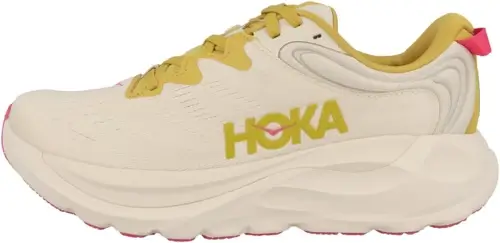
Best for: Maximum cushioning, walking and easy running
The Hoka Gaviota 6 is the stability shoe to choose when you want a broad platform and plenty of cushioning. (Check price | Read full review)
Hoka uses an enhanced H-Frame inside the midsole. The design is intended to limit excessive inward rolling without placing a rigid post directly under the arch. The shoe also uses Hoka’s Active Foot Frame, which seats the foot within the midsole instead of balancing it on top of the cushioning.
These features help the Gaviota remain steady despite its large amount of foam. The men’s version weighs 10.25 ounces and has a 6 mm heel-to-toe drop. Hoka offers regular, wide and extra-wide versions for men, although women’s width availability can differ.
The Gaviota works especially well for recovery running, easy daily mileage, long walks and jobs that involve extended periods of standing. The rocker helps move the foot forward, but the shoe feels more comfortable at relaxed speeds than during fast workouts.
This is not simply a softer version of the Hoka Arahi. The Gaviota has a larger, more protective platform and is designed for runners who want more cushioning and support.
The updated upper includes an internal lacing system and a plusher collar. These changes improve lockdown, although people with low-volume feet should still pay attention to heel security.
New Balance Fresh Foam X 860v15
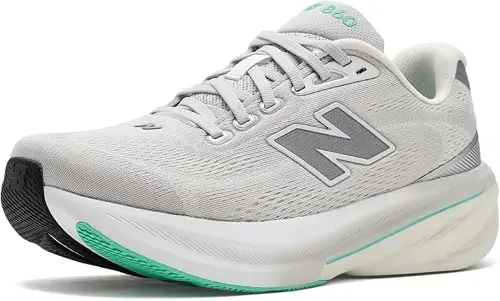
Best for: Wide feet and traditional daily training
The New Balance Fresh Foam X 860v15 is one of the strongest stability choices for runners who need more than a standard-width shoe. (Check price | read full review)
The men’s 860v15 is offered in narrow, standard, wide and extra-wide versions. That range does not guarantee the correct fit, but it gives runners more options than many competing stability lines.
New Balance combines Fresh Foam X cushioning with its Stability Plane system. The Stability Plane is embedded within the platform to add structure without relying on a hard medial post. A rocker profile helps the relatively substantial shoe roll through the stride.
The men’s version weighs 11.7 ounces, making it one of the heavier everyday trainers in this guide. Runners who prioritize low weight should consider the Saucony Guide 19 or another moderate-support shoe.
The weight matters less during easy running, walking and long periods on your feet. In those settings, the 860 feels planted and dependable.
This model makes the most sense for someone who wants a stable daily trainer, enjoys Fresh Foam cushioning and has struggled to find the right width elsewhere. It is less appealing for runners who want a highly flexible forefoot or a barely noticeable shoe.
The official launch price is $149.99, placing it close to the Guide 19.
Nike Structure 26
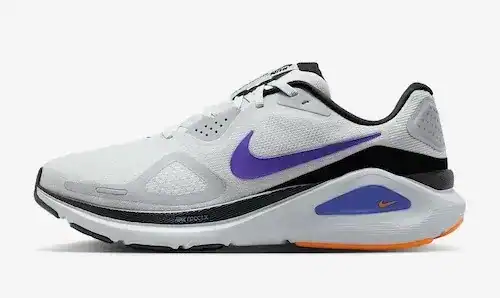
Best for: Value and familiar Nike fit
The Nike Structure 26 is a practical stability shoe for runners who want full-length ReactX cushioning without paying for the more expensive Structure Plus. (Check price | Read full review)
Nike uses a midfoot support system that wraps around the arch and heel. It is designed to slow ankle eversion, which is the outward movement of the ankle that accompanies the foot rolling inward. The system also provides a firm base as the foot moves toward toe-off.
The Structure 26 replaces the mixed midsole setup of the previous model with full-length ReactX foam. Nike says ReactX is 13% more responsive than its older React foam. Nike also removed the forefoot Air Zoom unit and uses softer rubber in that area to create a smoother transition.
The men’s version weighs approximately 11.3 ounces and has a 10 mm drop. It is heavier than its streamlined appearance suggests, but the cushioning feels smoother than the weight might imply.
Nike says the shoe fits small and recommends considering a half-size increase. A wide version is available, but runners with broad feet should compare it with the more extensive width options offered by New Balance and Brooks.
At $145, the Structure 26 has the lowest official launch price in this group. It is a good choice for everyday road running, walking and runners who already know Nike’s general fit works for them.
Asics GT-2000 15
Best for: Lighter stability and versatile daily training
The Asics GT-2000 15 is the better choice for runners who like Asics support but find the Gel-Kayano 33 too heavy or substantial. (Check price)
Asics has given the GT-2000 a meaningful cushioning update. The shoe now uses a softer version of FF Blast Max with 2 mm more foam than the GT-2000 14. The added cushioning makes landings feel more protective without turning the shoe into another maximum-cushion trainer.
The 3D Guidance System provides adaptive support through the shape and construction of the platform. It guides the foot when needed without placing a hard corrective post under the arch.
The men’s version weighs 8.9 ounces and has an 8 mm heel-to-toe drop. That makes it significantly lighter than the 10.5-ounce Gel-Kayano 33, 11-ounce Glycerin GTS 23 and 11.7-ounce New Balance 860v15.
Choose the GT-2000 15 for everyday road running, moderate-distance training and runners who want stability without a bulky feel. The Kayano remains better for maximum cushioning and long-distance protection, but the GT-2000 feels quicker and less intrusive.
Asics lists the launch price at $150. Amazon currently has separate men’s and women’s listings, although sizes and colors can change.
Saucony Guide 19
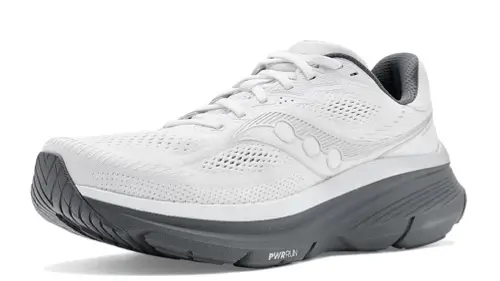
Best for: Natural-feeling support and forefoot flexibility
The Saucony Guide 19 is a good option for runners who want stability but do not want the shoe to feel heavily corrective. (Check price | Read full review)
Saucony uses CenterPath technology instead of a traditional medial post. Raised sidewalls and the shape of the platform help centre the foot while allowing it to move through a relatively natural transition.
The Guide 19 has an updated PWRRUN midsole with a softer blend than the previous generation. Saucony has also increased forefoot flexibility and added outsole material in high-wear areas. Those changes give the shoe a smoother toe-off while improving protection for daily mileage.
The Guide is not intended to provide as much structure as the Brooks Beast or another maximum-support shoe. It is better suited to mild or moderate stability needs, especially when a large corrective element feels uncomfortable under the arch.
Saucony offers the Guide 19 in regular, wide and extra-wide versions for men. Women’s versions include regular, wide and extra-wide options as well, although colors are more limited in the widest sizes.
At a launch price of $150, the Guide sits near the lower end of this comparison. It is a versatile choice for everyday road running, treadmill sessions, walking and runners transitioning from a neutral shoe to something more guided.
How to choose a stability running shoe
The best stability shoe is not automatically the model with the strongest correction. Too much structure can feel as uncomfortable as too little support.
Start by deciding what you want the shoe to do. A highly cushioned shoe such as the Gaviota 6 or Glycerin GTS 23 works well for relaxed running and walking. The Adrenaline GTS 25 and Guide 19 feel more like conventional daily trainers. The ForeverRun Nitro 3 adds responsive cushioning and strong road traction.
Pay particular attention to these features:
- Fit: Your foot should sit entirely on the midsole without pressing against the upper or spilling over the platform.
- Heel security: The heel should remain in place without requiring painful lace pressure.
- Support sensation: Guidance should feel comfortable. A shoe should not push sharply against your arch.
- Cushioning: Soft foam is useful only when the platform remains controlled.
- Width: Buying a larger size is not a reliable substitute for choosing the correct width.
- Intended use: A shoe that feels comfortable while walking may feel different when running.
Try shoes later in the day, when feet are more likely to be slightly swollen. Wear the same type of socks you plan to use for running.
You can also use our free shoe finder tool to compare support, cushioning, surface and fit needs.
Do stability shoes prevent running injuries?
Stability shoes should not be described as a guaranteed way to prevent injuries.
A 2022 Cochrane review examined 12 trials involving 11,240 participants. The reviewers found that the evidence was too uncertain to conclude that stability or motion-control shoes reduce injuries compared with neutral shoes. They also found that choosing shoes based only on static foot posture probably makes little or no difference to injury risk.
That does not mean stability features have no value. They can change how a shoe feels and how the foot moves while the shoe is being worn. Some runners feel more comfortable and controlled in them, especially when fatigue causes their movement to become less stable.
The practical lesson is to avoid treating stability shoes as medicine. Use them when the added guidance feels comfortable or when a qualified health professional has recommended a particular type of support.
Pain that continues, worsens or changes how you move deserves attention from a podiatrist, physical therapist or another qualified medical professional. A new pair of shoes should not be used to hide an injury that needs treatment.
Stability shoes versus motion-control shoes
Stability and motion-control shoes are related, but they are not always interchangeable.
A stability shoe usually provides mild to moderate guidance. Modern examples include the Saucony Guide 19, Nike Structure 26 and Brooks Adrenaline GTS 25. These shoes aim to reduce excess movement without making the ride excessively rigid.
Motion-control shoes provide more structure. They are typically heavier, broader and better suited to runners or walkers who have significant support needs or use orthotics. The Brooks Beast GTS and women’s Ariel GTS are examples of this more supportive category.
The boundary has become less clear as manufacturers move away from firm medial posts. A highly cushioned stability shoe such as the Gel-Kayano 33 or Gaviota 6 can offer considerable support while still feeling smoother than an older motion-control design.
Do not choose based on the category name alone. One company’s “structured support” shoe may feel less corrective than another company’s “stability” model.
Comfort under the arch, heel security and how confidently the shoe moves through each step are better comparison points.
Other stability shoes worth considering
Several current or upcoming shoes narrowly missed the main ranking.
The Puma ForeverRun Nitro 3 (check price) is a promising new stability trainer with dual-density Nitrofoam, RUNGUIDE support and a grippy PumaGRIP outsole. However, availability remains too limited for it to earn a primary place in this ranking. It may be added when a useful range of men’s and women’s sizes becomes consistently available in early fall 2026.
The Nike Structure Plus places ZoomX foam over ReactX foam. It is softer and more responsive than the regular Structure 26, but its $170 launch price puts it in direct competition with premium options such as the Kayano.
The Brooks Beast GTS 26 (check price) provides maximum support and a broad platform. It is worth considering for orthotics, severe overpronation and walking, but it is heavier and more controlling than the mainstream stability shoes in this comparison.
Hoka has announced the Arahi 9 (Fall 2026 | check current availability), which uses enhanced H-Frame technology and an 8 mm drop. The shoe looks like worthy addition to this stabilty show list.
The On Cloudrunner 3 is another useful option for mild stability needs, especially if you split your time between walking, standing and easy running. It is firmer and less energetic than many daily trainers, but the wide rearfoot platform and secure upper give it a planted, dependable feel. See the On shoes guide for the wider brand lineup.
Frequently asked questions about stability running shoes
The Asics Gel-Kayano 33 is the best overall stability running shoe. It combines FLUIDSUPPORT with FF Blast Max and FF Blast Plus cushioning. The result is a soft, protective ride with substantial guidance but no traditional hard medial post.
The Brooks Adrenaline GTS 25 is one of the best everyday choices. Its cushioning is neither extremely firm nor excessively soft, and GuideRails provide moderate support. The Saucony Guide 19 is a good alternative if you prefer less noticeable guidance and more forefoot flexibility.
The New Balance Fresh Foam X 860v15 is the strongest starting point because it comes in narrow, standard, wide and extra-wide versions for men. Brooks also provides several widths in the Adrenaline GTS 25, while Hoka offers the men’s Gaviota 6 in regular, wide and extra-wide.
Yes. Modern stability shoes can work for neutral runners who prefer a broad, controlled platform. Hoka specifically says the Gaviota 6 has inherent stability features that can also work with neutral gaits. The shoe should still feel natural and comfortable rather than forcing your foot outward.
They can be, but having flat feet does not automatically mean you need stability shoes. Some people have low arches without excessive inward movement. Others overpronate despite having visible arches. See our guide to the best running shoes for flat feet for a more specific comparison.
A stability shoe may feel more structured than a neutral model, but it should not create sharp or uncomfortable pressure under the arch. Modern systems use frames, geometry and sidewalls to distribute guidance across the platform. Persistent arch pressure is a sign that the shoe may not match your foot.
Yes. Stability running shoes often work well for fitness walking and daily wear. The Hoka Gaviota 6, Brooks Adrenaline GTS 25 and Asics Gel-Kayano 33 are especially versatile. Walkers should prioritize heel security, a stable base and a transition that feels comfortable at slower speeds.