Last Updated on October 6, 2026
Quick Answer: The Asics Gel-Nimbus 28 is our best cushioned running shoe for most runners in 2026 because it combines soft impact protection with a broad, controlled platform. If you want the cushiest, bounciest feel, choose the Nike Vomero Plus. The New Balance 1080v15 is better for wide feet, while the Brooks Ghost Max 4 offers a stable rocker and room for orthotics. Compare all seven picks.
Cushioning can make daily miles feel more comfortable, but the softest shoe is not automatically the best one. Foam firmness, heel-to-toe drop (?), rocker shape, platform width and fit all affect how a shoe feels once you start moving. A very soft shoe may feel relaxing at an easy pace but less controlled during turns or faster running. A firmer shoe can still provide excellent impact protection if it has enough foam and a stable shape.
The cushioned running shoes below cover different versions of comfort, from the springy Nike Vomero Plus to the structured Brooks Ghost Max 4. All are neutral road-running shoes, although several use wide platforms or shaped sidewalls to add guidance. If your priority is comfort that holds up over higher mileage, compare our best long-distance running shoes. Runners who need more control for overpronation should also see our guide to the best stability running shoes. If you are specifically trying to balance both support and cushioning, see our running shoes for extra support and cushioning. If cushioning is only one factor in your decision, compare our broader best road running shoes roundup.
Not sure which type suits your gait, foot shape and training? Try our free shoe finder for a more personalized starting point.
Best Cushioned Running Shoes at a Glance
These are our top cushioned running shoes based on comfort, ride, fit and intended use:
| Shoe (click to scroll to review) | Best For | Cushioning | Drop | Price |
|---|---|---|---|---|
| Asics Gel-Nimbus 28 | Best overall | FF Blast Plus and PureGEL | 8 mm | $170 | Check latest price |
| Nike Vomero Plus | Softest and bounciest | Full-length ZoomX | 10 mm | $180 | Check latest price |
| Brooks Glycerin 23 | Premium daily training | DNA TUNED | 8 mm | $175 | Check latest price |
| New Balance 1080v15 | Wide feet | Infinion foam | 6 mm | $169.99 | Check latest price |
| Hoka Clifton 11 | Lighter everyday cushioning | Compression-molded EVA | 8 mm | $155 | Check latest price |
| On Cloudmonster 3 | Responsive rocker | CloudTec and Helion | 6 mm | $190 | Check latest price |
| Brooks Ghost Max 4 | Stable max cushioning | DNA LOFT v3 | 6 mm | $165 | Check latest price |
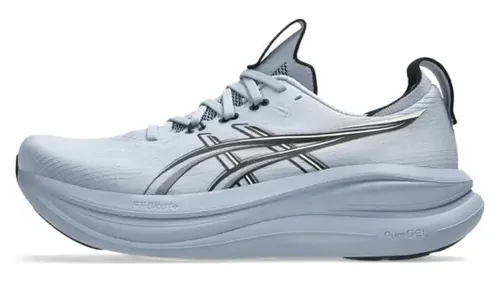
Asics Gel-Nimbus 28
Best overall cushioned running shoe
The Asics Gel-Nimbus 28 earns the top spot because it balances softness, protection and everyday usability better than most max-cushion shoes. Asics uses FF Blast Plus foam through the midsole and places PureGEL cushioning in the rearfoot. The result is a well-padded landing that does not feel as loose or wobbly as some ultra-soft alternatives.
This version is about 20 grams lighter than the Gel-Nimbus 27, according to Asics. The engineered knit upper wraps the foot comfortably, and the broad sole creates a settled platform for easy runs, recovery days and long road mileage. Its 8 mm drop is familiar enough for many heel strikers while remaining moderate compared with traditional 10 mm or 12 mm trainers.
The Gel-Nimbus 28 is not a speed shoe. Runners who want a light, aggressive feel for intervals may find it too substantial. For steady mileage, however, it provides what most people expect from a cushioned running shoe: a soft landing, smooth transition and enough structure to remain predictable as fatigue builds.
Specs
- Cushioning: FF Blast Plus foam and PureGEL
- Drop: 8 mm
- Weight: About 9.9 ounces for men
- Support: Neutral
- Launch price: $170
Pros
- Plush without feeling uncontrolled
- Comfortable for long and recovery runs
- Lighter than the previous version
- Broad, stable landing platform
Cons
- Too heavy for most speed sessions
- Thick cushioning reduces ground feel
Additional info: Read our detailed review.
If you like Asics cushioning but want a more noticeable rolling sensation, the GlideRide Max 2 adds a stronger rocker and broad platform for easy miles and walking.
Amazon links for gender-specific models: Men’s Gel-Nimbus 28 | Women’s Gel-Nimbus 28
Nike Vomero Plus
Read our full Nike Vomero Plus review.
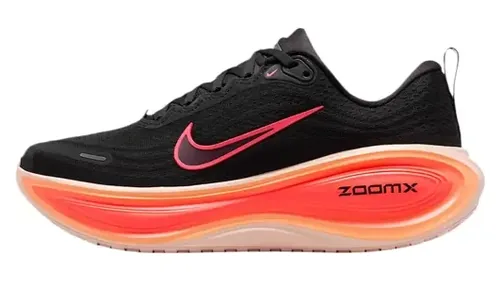
Softest and bounciest
The Nike Vomero Plus is the standout choice for runners who want cushioning to feel both soft and energetic. Nike fills the entire midsole with ZoomX, the brand’s premium foam, instead of combining it with a denser carrier. That gives the shoe a lively rebound that separates it from max-cushion trainers designed mainly to absorb impact.
The tall sole and 10 mm drop make the Vomero Plus particularly appealing for easy runs, long road sessions and recovery days. A broad platform helps control the soft foam, while high-abrasion rubber covers the outsole for everyday durability. The engineered mesh upper is padded and comfortable, although runners with lower-volume feet may need to tighten the laces carefully for a secure hold.
ZoomX makes this shoe fun, but the soft ride will not suit everyone. Runners who prefer a firm push-off or sharp ground feedback may feel disconnected from the road. It is also not a dedicated stability shoe, despite its wide base. For neutral runners who value cushioning and bounce above all else, the Vomero Plus delivers the most distinctive ride in this guide.
Specs
- Cushioning: Full-length ZoomX foam
- Drop: 10 mm
- Weight: About 10.3 ounces for men
- Support: Neutral
- Launch price: $180
Pros
- Soft and springy
- Comfortable for recovery and long runs
- Durable rubber coverage.
Cons
- May feel unstable to some runners
- Limited ground feel.
Gender-specific buy links: Men’s version | Women’s version
Brooks Glycerin 23
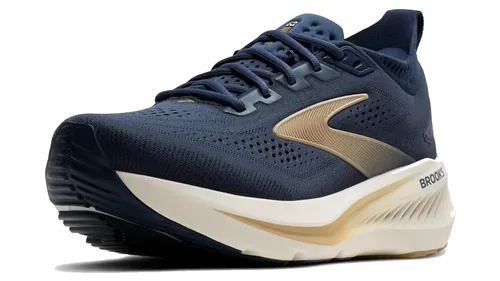
Best premium daily trainer
The Brooks Glycerin 23 is built for runners who want plush comfort without the exaggerated softness of the Vomero Plus. Its DNA TUNED midsole uses differently sized cells in the heel and forefoot. Brooks tunes the heel for softer landings and the forefoot for a more energetic toe-off, helping the shoe feel protective without turning every stride into a slow sink through the foam.
For runners who want maximum cushioning without the usual heavy feel, the On LightSpray Cloudmonster 3 Hyper is an unusually light high-cushion option. Its laceless upper is the main tradeoff because fit adjustment is much more limited than in a conventional trainer.
Brooks added 2 mm of cushioning under the forefoot compared with the previous version. The wide platform and secure heel also give the neutral shoe a stable feel, especially when running at relaxed paces. An accommodating engineered knit upper makes it a practical choice for long runs and daily training, and men’s sizes are offered in medium, wide and extra-wide versions.
At 10.6 ounces for the men’s model, the Glycerin 23 is heavier than several alternatives here. It is better suited to easy and steady mileage than fast intervals. The payoff is a durable, controlled ride that feels more traditional than many towering max-cushion designs. Runners who need added guidance can choose the related Glycerin GTS 23, which adds Brooks GuideRails support.
Specs
- Cushioning: Dual-cell DNA TUNED foam
- Drop: 8 mm
- Weight: About 10.6 ounces for men
- Support: Neutral; GTS version available for stability
- Launch price: $175
Pros
- Plush but controlled
- Accommodating fit
- GTS version available for stability.
Cons
- Heavier than many daily trainers
- Not especially nimble.
Additional info: Read our detailed review.
If you want Brooks cushioning with more natural flexibility, see our Brooks Glycerin Flex review. It uses DNA TUNED foam but a much more flexible midfoot and forefoot than the standard Glycerin 23.
For a lighter cushioned ride, see our Mizuno Neo Zen 2 review. It gives you a high-cushion platform and smooth rocker without the heavier feel of many max-cushion trainers.
Gender-specific buy links: Men’s version | Women’s version | Men’s GTS | Women’s GTS
See also this article: GTS (stability version) vs Non-GTS Brooks shoes
New Balance 1080v15
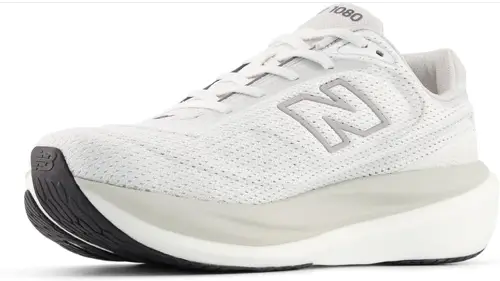
Best cushioned running shoe for wide feet
The New Balance 1080v15 is the most useful pick here for runners who struggle to find the right width. The men’s version is offered from narrow through extra wide, giving shoppers more fit choices than many competing premium trainers. That matters because cushioning cannot compensate for a shoe that pinches the forefoot or allows the heel to slide.
New Balance made a major change underfoot for version 15. The shoe moves from Fresh Foam X to a new Infinion foam, which the brand designed for lasting cushioning and improved energy return. The ride remains soft enough for easy runs and long mileage, but the foam is intended to keep its character over repeated use. A perforated mesh upper helps control weight and heat, while a rubber outsole protects the cushioning below.
The 6 mm drop is lower than the Gel-Nimbus, Vomero Plus and Glycerin. Runners moving from a 10 mm or 12 mm shoe may want to transition gradually, since a lower offset can shift more demand toward the calves and ankles. For runners who already tolerate a moderate drop, the 1080v15 offers soft comfort, manageable weight and unusually inclusive sizing.
Specs
- Cushioning: Infinion foam
- Drop: 6 mm
- Weight: About 9.2 ounces for men
- Support: Neutral
- Launch price: $169.99
Pros
- Extensive width range
- Soft cushioning
- Reasonable weight
- Breathable upper
Cons
- New foam differs from earlier 1080s
- Lower drop may require adjustment
Additional info: Read the full review
Gender-specific buy links: Men’s version | Women’s version
Hoka Clifton 11
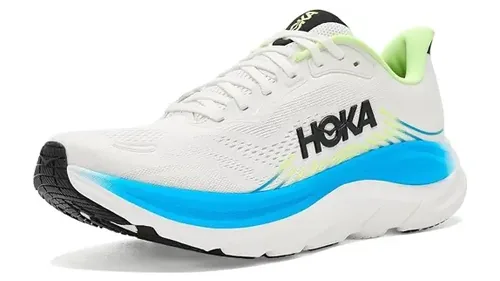
Best lighter everyday option
The Hoka Clifton 11 works best for runners who want cushioning without the full bulk of a max-cushion recovery shoe. Its compression-molded EVA midsole feels more balanced than extremely soft, and Hoka’s Smooth MetaRocker geometry helps the foot roll from landing to toe-off. The result is an easygoing trainer that can handle daily running and walking without feeling as oversized as some shoes in this category.
Version 11 keeps the basic ride of the Clifton line and focuses its changes on comfort and fit. Hoka gives it a refined engineered mesh upper, a softer sockliner and a double-lace lock intended to reduce tongue movement. The Active Foot Frame seats the foot within the midsole geometry, while a broad base adds inherent stability without converting the Clifton into a corrective stability shoe.
The main tradeoff is that the Clifton 11 is no longer exceptionally light at about 9.97 ounces for the men’s shoe. It also uses conventional EVA rather than a modern superfoam, so runners seeking dramatic bounce should look at the Vomero Plus. Choose the Clifton for a predictable rocker, balanced cushioning and the ability to use one comfortable shoe for both running and walking.
Specs
- Cushioning: Compression-molded EVA
- Drop: 8 mm
- Weight: About 9.97 ounces for men
- Support: Neutral with inherent stability
- Launch price: $155
Pros
- Smooth rocker
- Comfortable for running and walking
- Three men’s widths
- Stable geometry
Cons
- Heavier than older Cliftons
- Less springy than superfoam shoes.
Additional info: Read the full review
Gender-specific buy links: Men’s version | Women’s version
On Cloudmonster 3

Best responsive rocker
The On Cloudmonster 3 is for runners who want a cushioned shoe that feels more responsive than pillowy. Its triple-layer CloudTec system compresses through On’s hollow cushioning elements, while Helion foam and a Speedboard add structure and help drive the shoe forward. An enhanced rocker further encourages a rolling transition through toe-off.
That combination gives the Cloudmonster 3 a distinct personality. It feels firmer and more mechanical than the Nike Vomero Plus, but it also feels quicker when the pace increases. On rates its cushioning as medium and its responsiveness as medium-high, which is an important distinction for shoppers. This is a high-cushion design, but it is not the softest shoe on the list.
The engineered knit upper uses targeted ventilation zones and provides a secure fit. A wide version is also available. The Speedboard may feel stiff to runners who prefer a flexible forefoot, and the $190 launch price is the highest here. It makes the most sense for runners who enjoy a pronounced rocker and want one cushioned trainer for everyday mileage, steady runs and occasional quicker efforts.
Specs
- Cushioning: Triple-layer CloudTec and Helion foam
- Plate: Speedboard
- Drop: 6 mm
- Weight: About 8.5 ounces for women; varies by model and size
- Support: Neutral
- Launch price: $190
Pros
- Responsive ride
- Useful at moderate paces
- Secure knit upper
- Wide version available
Cons
- Firmer than expected
- Expensive for a daily trainer.
Additional info: Read the full review
Gender-specific buy links: Men’s version | Women’s version
Brooks Ghost Max 4

Best stable max-cushion option
The Brooks Ghost Max 4 combines a high stack of protective cushioning with a broad base and a pronounced rocker. It is a useful option for neutral runners who want a planted feel or need enough interior room for orthotics. The DNA LOFT v3 midsole is soft but not excessively squishy, helping the shoe feel more controlled than many max-cushion competitors.
Brooks calls its rocker GlideRoll. It works with the shoe’s 6 mm drop to assist the transition from heel strike to toe-off, reducing how much the forefoot must bend during each step. That can feel smooth during easy running and walking, although runners who prefer a flexible, natural toe-off may find the geometry restrictive. The stable base adds guidance, but the Ghost Max 4 remains a neutral model rather than a substitute for a prescribed motion-control shoe.
At about 10.3 ounces for men, this is a substantial trainer. It is not designed for track intervals or race-day speed. Its strengths are comfort, predictable landings and versatility for daily runs, long runs and walking. Wide and extra-wide versions also make it one of the more accommodating options in the category, particularly for runners fitting custom or over-the-counter insoles.
Specs
- Cushioning: DNA LOFT v3
- Geometry: GlideRoll rocker
- Drop: 6 mm
- Weight: About 10.3 ounces for men
- Support: Neutral with a broad, stable base
- Launch price: $165
Pros
- Stable platform
- Smooth rocker
- Room for orthotics
- Multiple widths
Cons
- Too heavy for most speed workouts
- Rocker limits natural forefoot flex.
You can also read our full review.
Gender-specific buy links: Men’s version | Women’s version
Which Running Shoe Has the Most Cushioning?
If by “most cushioned” you mean the softest, bounciest sensation underfoot, the Nike Vomero Plus is the standout in this group. Its full-length ZoomX midsole gives it a deeper, more springy feel than the other shoes here. If you want cushioning that feels more controlled, the Asics Gel-Nimbus 28 is a better all-around choice.
“Most cushioned” can mean several things: the tallest stack, the softest foam, the most impact protection or simply the shoe that feels plushest to you. Those are not always the same shoe. That is why the cushiest running shoe is not automatically the best cushioned running shoe for every runner.
How to Choose a Cushioned Running Shoe
The best shoe should feel comfortable immediately and remain stable when you run, not just when you stand in a store. Cushioning is only one part of that experience. Fit, drop, flexibility and geometry can change where your body absorbs load and how naturally you move.
Consider these factors before buying:
- Softness: Soft foam can feel comfortable during easy miles, but some runners prefer a firmer platform that feels more controlled.
- Stack height: More foam can increase impact protection, but a taller shoe may reduce ground feel and feel less secure on sharp turns.
- Heel-to-toe drop: A higher drop generally shifts more demand toward the knees, while a lower drop can increase work at the calves and ankles. Neither is automatically better.
- Rocker shape: A curved sole can help the foot roll forward, but it may feel restrictive if you prefer a flexible forefoot.
- Width and volume: Leave roughly a thumb’s width in front of the longest toe and make sure the upper does not squeeze the forefoot. Use our shoe size converter when comparing sizing systems.
- Support: A wide platform can make a neutral shoe feel stable, but runners who need structured guidance should compare dedicated stability shoes.
Try shoes later in the day, when feet may be slightly larger, and wear the same type of socks you use for running. If possible, test both shoes at a jogging pace. A model that feels luxurious while standing still can behave very differently once the foam compresses under a moving stride.
Are More Cushioned Running Shoes Better for Your Joints?
More cushioning can reduce the force you feel at impact, but it does not guarantee less stress throughout the body or a lower risk of injury. Runners adapt their stride to different shoes, and a very soft midsole can require additional stabilization from the legs. Comfort is useful evidence, but stack height alone does not tell you whether a shoe is right for your mechanics.
A 2020 randomized trial of 848 recreational runners, published in the American Journal of Sports Medicine, found a lower injury risk among runners assigned to softer shoes, with the effect most apparent among lighter runners. That does not mean the softest available shoe is the safest choice for everyone. Training load, previous injuries, strength, sleep and sudden changes in mileage can matter more than a single footwear feature.
If you are changing from a firm or low-profile shoe to a high, soft model, introduce it gradually. Alternate it with your current pair for short, easy runs before using it for all your weekly mileage. Persistent pain, numbness or a change in gait is a reason to stop and consult a qualified medical professional.
Frequently Asked Questions
The Nike Vomero Plus provides the softest and bounciest ride among our picks because it uses a tall, full-length ZoomX midsole. The Asics Gel-Nimbus 28 feels more controlled and is the better all-around choice for many runners. “Most cushioned” can refer to stack height, softness or impact protection, so the answer depends on the sensation you want.
Yes. Most cushioned running shoes are designed for easy runs, long runs and recovery days. Models such as the Gel-Nimbus 28, Glycerin 23 and 1080v15 can handle most daily mileage. Very soft or heavy shoes may feel less efficient for intervals, hill repeats and races, so some runners pair them with a lighter, faster shoe.
Cushioned shoes can be excellent for beginners when the fit is secure and the ride feels stable. New runners do not automatically need maximum cushioning, however. Start with comfort, appropriate sizing and a neutral or stability design that matches your needs. Increase running time gradually rather than expecting the shoe to protect you from a rapid jump in training load.
Not necessarily, but many heavier runners prefer a deeper midsole with a broad base and foam that does not collapse too easily. The Brooks Ghost Max 4 and Asics Gel-Nimbus 28 are strong starting points because they combine cushioning with stable geometry. Durability, fit and the runner’s preferred firmness matter as much as the amount of foam.
They may feel more comfortable, but no shoe is a universal treatment for knee pain. A higher-drop model may reduce demand at the ankle while shifting load elsewhere, and changing shoe geometry can affect each runner differently. Stop running and seek professional advice if pain is sharp, worsening, associated with swelling or changing your gait.
Many road-running shoes last roughly 300 to 500 miles, but there is no exact replacement number. Runner weight, gait, surfaces, foam type and rotation habits all affect wear. Replace a shoe when cushioning feels noticeably flat, the outsole is worn through, the upper no longer holds the foot securely or familiar runs begin causing unusual discomfort.
Many are. The Hoka Clifton 11 and Brooks Ghost Max 4 are both marketed for running and walking, and their rocker shapes can make forward movement feel smooth. Some walkers dislike tall, soft platforms or stiff rockers, especially on uneven ground. A secure heel, adequate forefoot room and stable landings matter more than the “max cushion” label.