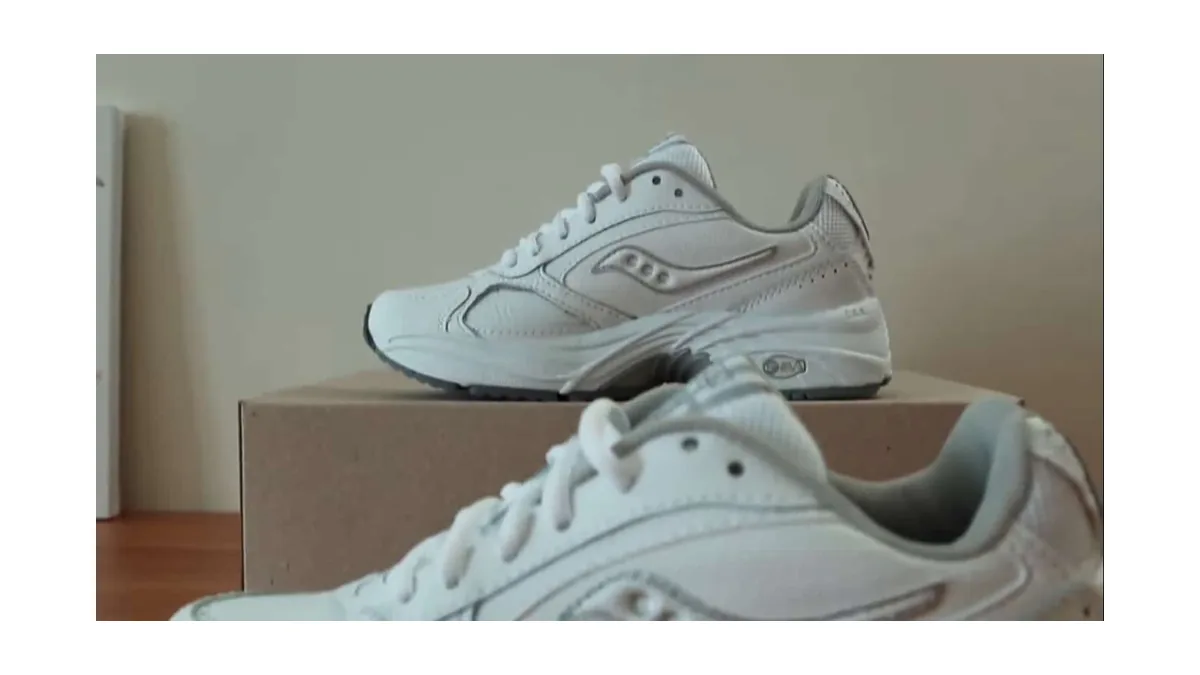
Quick Answer: Saucony Omni 23 ST Review: The Saucony Omni 23 ST is a cushioned stability shoe for walkers and easy-pace runners whose feet roll inward and who want support without a hard, clunky feel. Saucony pairs its springy PWRRUN PB foam with a supportive frame and a guiding zone under the arch, so it feels soft when you land and steady as you roll through. It comes in standard and wide fittings for men and women, which makes it a strong pick for long walks and long shifts. It is not a quick shoe, and it costs more than many support shoes.
The Omni is one of Saucony’s long-running stability shoes, sitting alongside the Guide and the Hurricane in the brand’s supportive lineup. The ST in the name stands for stability, and you will see it written two ways while you shop: Omni 23 ST on most US listings and Omni ST 23 on some of Saucony’s own pages. It is the same shoe either way.
What makes this version interesting is the foam. Support shoes have a reputation for feeling firm and a bit lifeless, because firmness used to be how brands kept a foot from rolling inward. Saucony has built the Omni 23 ST around PWRRUN PB, a lighter, bouncier foam from its faster shoes, and then added the guidance around it. The goal is a shoe that holds your foot in line without making every step feel like work.
That makes it a good match for a fairly specific buyer: someone in their 30s, 40s or 50s who walks a lot, jogs a few easy miles or spends long days on hard floors, whose feet flatten or roll in as they tire, and who wants comfort first. If that sounds like you, keep reading.

Men’s Saucony Omni ST 23 in Debonair/Anchor. Image: Amazon.
View the shoe’s upper, sole and overall shape. Check the correct model and width when comparing options.
Specs
Here are the specifications for the Saucony Omni 23 ST:
| Type | Cushioned stability shoe for road running and walking |
| Best for | Overpronation, easy runs, long walks and long days on your feet |
| Midsole | PWRRUN PB foam, Saucony’s lighter, springier cushioning |
| Support | PWRRUN stability frame plus a Stable Zone under the arch |
| Stack height | 38 mm heel, 30 mm forefoot (retailer listing; measurements can vary) |
| Heel-to-toe drop | 8 mm |
| Weight | About 9.7 oz men’s and 8.9 oz women’s (retailer listings; weight varies by size) |
| Upper | Engineered mesh with extra padding in the tongue and collar |
| Outsole | XT-900 rubber with grooves across the forefoot |
| Widths | Standard and wide, men’s and women’s |
| Price | Launched at $170 in February 2026. Check latest price |
Pros
- A soft, springy feel underfoot that most support shoes do not offer, so long walks and easy runs feel less like a chore.
- Real guidance through the heel and arch for feet that roll inward, wrapped around soft foam so it does not feel harsh.
- Wide fittings for both men and women, which matters for broad feet, swelling and orthotics.
- Plenty of cushioning between you and the ground, which helps on concrete floors and long pavement walks.
- A durable rubber outsole that should hold up to the daily mileage this kind of buyer puts in.
Cons
- It costs more than several good support shoes, so you pay for the premium foam.
- The support can feel like too much if your feet do not roll inward, and you would be better off in a neutral shoe.
- It is built for steady paces, so it feels heavy and slow if you try to run fast.
- Independent reviews report some heel movement and a tapered forefoot, making a try-on useful.
What PWRRUN PB foam changes in a Saucony support shoe
The big change in the Omni 23 ST is under your foot. Saucony describes PWRRUN PB as its premium foam for energetic cushioning, and it is made from small expanded beads rather than one solid block, which is what gives it a lighter, bouncier feel. Put simply, you should notice more softness when your heel lands and a little more spring as you push off, compared with the firmer foams that support shoes have traditionally used.
The support has not been watered down to make room for that softness. Around the soft foam, Saucony adds what it calls a PWRRUN stability frame, a firmer supportive structure along the sides of the shoe, plus a Stable Zone, which is its name for the shaping under the arch that discourages your foot from collapsing inward. The brand says the combination guides the foot into a balanced stride on every run. For you, that means the shoe should feel steady and planted without the stiff, harsh feel that older support shoes were known for.
The rest of the shoe is familiar Saucony. The engineered mesh upper is woven to breathe in some places and hold the foot in others, and Saucony has added extra padding to the tongue and collar for a more cushioned, locked-in fit. Underneath, XT-900 rubber covers the outsole, with grooves across the forefoot that help the shoe bend and roll forward smoothly as you step off your toes.
Who the Omni 23 ST suits best
The Omni 23 ST is for people whose feet roll inward, which is called overpronation, and who are tired of support shoes that feel stiff and dull. If you have been advised that you overpronate, or have found stability shoes comfortable for longer walks, this is the kind of shoe designed for you. Wear patterns alone cannot diagnose overpronation. It pairs real guidance with soft cushioning, and that combination is still fairly rare.
It is a smart choice for walkers who cover real distance, for easy-pace runners doing 5K training or weekend long runs and for people who work on their feet, such as nurses, teachers and retail staff. Because it comes in a true wide fitting for men and women, it is also a good option if you have broad feet, if your feet swell during long shifts or if you wear an orthotic and need extra room inside the shoe. Heavier runners and walkers who want a stable, well-cushioned platform should also take a look.
If you are not sure whether you need a stability shoe at all, our guide to what a stability shoe is explains the difference in plain language.
Who should probably skip it
Skip the Omni 23 ST if your feet do not roll inward. A neutral foot does not need a stability frame, and you may feel the guidance as pressure under the arch rather than help. Skip it too if you want a shoe for faster running: this is a comfortable, steady shoe, not a quick one, and it will feel sluggish if you try to pick up the pace. And if you only need a little support, or the price makes you wince, there are lighter and less expensive options that may suit you better.
If any of that sounds like you, these are better places to start:
- Saucony Guide 19: a lighter Saucony with gentler support, for people whose feet roll in only a little (check price | read review)
- Asics GT-1000 15: a less expensive support shoe that still offers a wide fitting, for buyers who want guidance on a tighter budget (check price | read review)
- Hoka Mach 7: a light, lively neutral trainer for runners who have decided they do not need a stability shoe at all (check price | read review)
Still not sure which way to go? Our Free Shoe Finder asks a few quick questions about your feet and how you walk or run, then points you toward shoes that fit.
A secure fit that runs true to size, with real wide options
Start with your usual running shoe size. The Omni 23 ST is built to hold your foot in place, so it feels secure through the heel and midfoot rather than loose and roomy. That is a good thing in a stability shoe: guidance only works if your foot stays where the shoe expects it to be. The padded tongue and collar make that snug hold feel comfortable rather than tight. The forefoot is shaped more for a secure hold than a roomy one, so if you have a broad forefoot or bunions, the wide fitting is the better starting point. Some testers have noted heel movement. A heel-lock lacing pattern may help, but do not accept persistent slipping.
If standard-width shoes usually press on the sides of your feet, choose the wide fitting rather than going up a size. Sizing up only adds length, which can leave your heel slipping and put the arch support in the wrong place under your foot. Saucony makes the Omni 23 ST in wide for both men and women, so you can get extra room where you need it while keeping the support lined up with your arch. Men’s sizes run up to 15.
If you wear a custom or over-the-counter orthotic, take the original insole out before you put yours in, so you do not lose toe room or raise your heel too high in the collar. The wide fitting is the safer bet if your orthotic is bulky. For persistent foot, knee or hip pain, a podiatrist or physical therapist can tell you whether a stability shoe is the right call for you; a shoe can make walking more comfortable, but it cannot correct your gait on its own.

Saucony Omni ST 23, men’s alternate angle. Image: Amazon.
View the shoe’s upper, sole and overall shape. Check the correct model and width when comparing options.
Soft when you land, steady as you roll through
Stack height is simply how much material sits between your foot and the ground, and the Omni 23 ST has a lot of it: about 38 mm under the heel and 30 mm under the forefoot. That puts it in the well-cushioned category, closer to a modern max-cushion trainer than a thin, traditional support shoe. The 8 mm drop means your heel sits a little higher than your toes, which some walkers prefer to a very low-drop shoe. If you land on your heel, as most walkers and many easy-pace runners do, that higher heel gives you a cushioned place to land.
Because of the PB foam, we expect the ride to feel soft on landing with a bit of rebound, rather than flat or mushy. The stability frame keeps that soft foam from feeling wobbly, which is a common complaint with very soft neutral shoes. There is no carbon plate or dramatic rocker here, so the shoe rolls forward at a relaxed pace, helped along by the forefoot grooves. It is at its best at easy and steady paces: walks, recovery jogs, weekend long runs and days when you just want your feet to feel looked after.
This is a stability shoe, not a motion control shoe. Motion control shoes use very firm, rigid structures to limit how much the foot moves, and they suit severe overpronation. The Omni 23 ST guides rather than locks, using the shaped frame and the Stable Zone to nudge your foot toward a straighter path. That makes it a good fit for mild to moderate overpronation and for people whose arches tire and drop over a long day. If you need maximum control, our roundup of the best motion control running shoes covers firmer options.
Grip comes from Saucony’s XT-900 rubber, a hard-wearing compound designed for road use. It should feel secure on dry and wet pavement, sidewalks and indoor floors, and it handles packed gravel paths, but it is not a trail shoe and has no deep lugs for mud. Durability should be a strength, with generous rubber coverage and plenty of foam. As a rough guide, most running shoes need replacing somewhere between 300 and 500 miles, and a cushioned stability shoe like this one is built to sit toward the upper end of that range. Actual lifespan depends on walking surface, use and individual wear. Check the cushioning and tread regularly.

Women’s Saucony Omni ST 23 in Celestial. Image: Amazon.
View the shoe’s upper, sole and overall shape. Check the correct model and width when comparing options.
Is the Saucony Omni 23 ST good for walking?
Yes, and for many buyers walking will be its main job. Walking puts less force through your feet than running, but you do it for longer, and that is where support and cushioning really pay off. The thick, soft midsole takes the edge off concrete, tile and pavement, the stability frame helps stop your arches sagging as your feet tire and the wide fitting gives swollen feet room late in the day.
That makes it a strong choice for daily fitness walks, travel days spent on your feet, long shifts in a hospital or store and anyone who stands on hard floors for hours. It looks and feels like a running shoe, so it is not the pick if you need a dressy or slip-resistant work shoe. But for comfort on the move, it is one of Saucony’s best options. For more choices, see our guides to the best walking shoes, the best walking shoes for overpronation and the best shoes for standing all day.
Saucony Omni 23 ST Alternatives
If you like the idea of the Omni 23 ST but want a slightly different balance, these four are worth comparing.
Within Saucony, the Hurricane 26 is the shoe to weigh it against. It stacks even more cushioning under your foot and steadies you mainly through its shape and a wide base, so it suits you if maximum cushioning comes first and you want guidance you notice less underfoot (check price | read review).
Brand loyalty often decides this category, and Asics fans should look at the Gel-Kayano 33. It is Asics’ flagship stability shoe and a popular choice for walkers and runners who want support that feels smooth rather than pushy (check price | read review).
For heavier runners and walkers who want the most structure and the broadest base, the Brooks Beast GTS 26 goes further than the Omni. It trades some of the bounce for a sturdier, more planted feel and comes in extra-wide sizes (check price | read review).
Finally, the New Balance Fresh Foam X 860v15 makes sense when fit is the hardest part. New Balance sells it in more widths than most brands offer, which helps if both standard and wide shoes feel wrong on your feet (check price | read review).
Price and value
The Omni 23 ST launched at $170 in February 2026, which puts it at the premium end of the support category. What that money buys is the foam. PWRRUN PB is the reason this shoe feels soft and lively rather than stiff, and you also get a full stability frame, wide fittings for men and women and a durable outsole designed to last.
It is worth it if you need real guidance and you will wear it a lot, for daily walks, easy runs and long days on your feet. Spread over hundreds of miles and many work shifts, the cost per wear comes down quickly. If you only need a little support, or you mainly want a shoe for occasional errands, a lighter or less expensive stability shoe will serve you just as well. Check latest price.
Final verdict
Best for: walkers, easy-pace runners and people who work on their feet whose feet roll inward and who want soft, comfortable support, including those with wide feet or orthotics.
Avoid if: you have neutral feet, you want a shoe for faster running or you only need a light touch of support.
Fit: start with your usual running-shoe size, try wide if needed, and check carefully for heel movement.
Verdict: The Saucony Omni 23 ST shows that a stability shoe does not have to feel stiff. It keeps your foot steady, cushions every step and comes in widths that fit real feet. If you overpronate and want comfort first, it is one of the best-rounded support shoes Saucony makes.
Frequently Asked Questions for Saucony Omni 23 ST
Yes. Most US retailers call it the Omni 23 ST, while some of Saucony’s own pages and European stores use Omni ST 23. Both names refer to the same stability shoe.
It may feel comfortable for some people with heel pain, thanks to its thick, soft cushioning, raised heel and arch guidance. Plantar fasciitis has many causes, though, so if heel pain is persistent or getting worse, see a podiatrist or physical therapist before relying on any shoe.
Flat feet often roll inward, and the Omni 23 ST is designed for that pattern, so many people with low arches may find it supportive. If you use a prescribed orthotic, the removable insole and the wide fitting make it easier to fit one.
Most people should start with their usual running shoe size. If the shoe feels tight across the width rather than short, try the wide fitting instead of going up half a size, so the arch support stays in the right place.
Yes, if you run at a steady, comfortable pace and need stability. The deep cushioning suits long distances, but runners chasing a fast time usually prefer a lighter shoe for race day.
As a broad guideline, most running shoes last somewhere between 300 and 500 miles, and well-cushioned shoes with generous rubber like this one tend to sit toward the upper end. Replace it when the cushioning feels flat or the outsole wears smooth.
Find your fit: Men’s Omni ST 23 | Women’s Omni ST 23.