Last Updated on September 27, 2026
Quick Answer: Flat Feet and Fallen Arches: Flat feet mean the arch becomes very low or disappears when you stand. Some people have flat feet from childhood, while fallen arches usually describe an arch that collapses later in life. Many people with flat feet have no pain and need no treatment. When symptoms occur, supportive shoes, appropriate exercises, physical therapy and orthotics may help. A new or worsening fallen arch should be evaluated because tendon problems can sometimes cause progressive arch collapse. For footwear, start with stable, comfortable shoes that fit your individual gait. Check latest prices on Amazon. See also our recommended shoes for flat feet.
Flat feet are common, but having a low arch does not automatically mean something is wrong with your feet.
Some people have lived comfortably with flat feet their entire lives. Others begin to notice arch pain, ankle discomfort, inward rolling of the foot or fatigue after long periods of standing, walking or running.
There is also an important difference between naturally flat feet and an arch that begins collapsing in adulthood. The second condition deserves more attention because it can sometimes be linked to a weakened posterior tibial tendon or what doctors now call progressive collapsing foot deformity.
This guide explains what flat feet are, how fallen arches differ, when they become a problem, what treatment options are available and which current shoes may work well if you prefer additional stability.
Related: See our Best Shoes for Flat Feet
What Are Flat Feet?
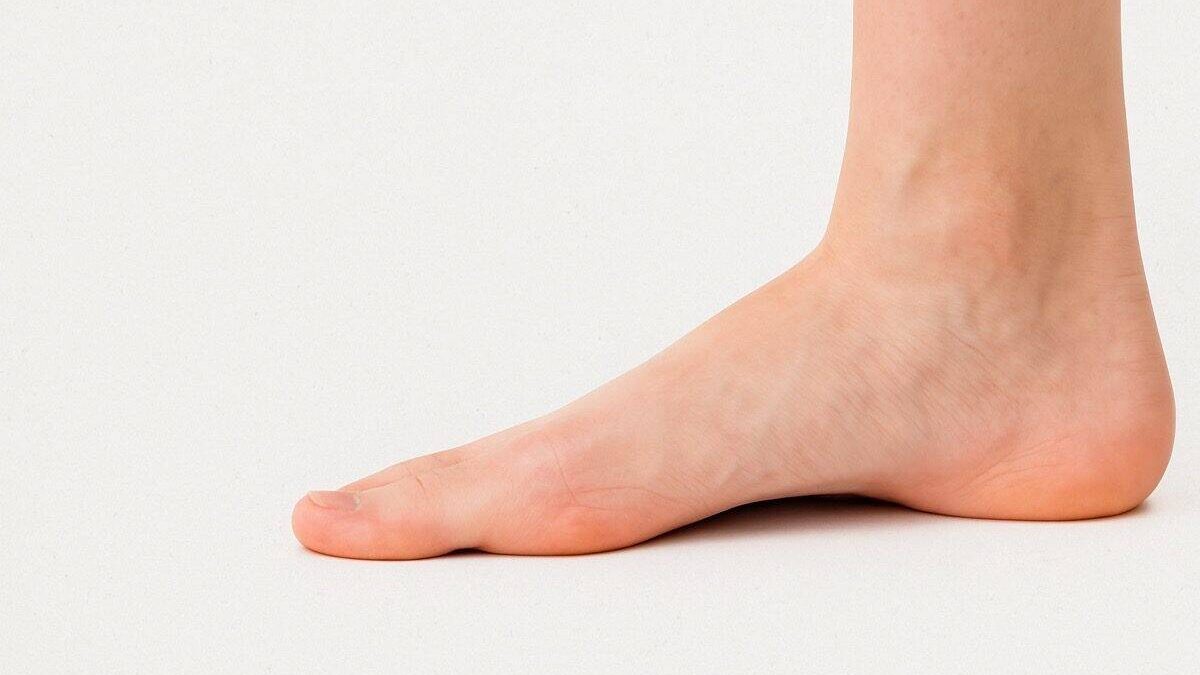
Flat feet, medically called pes planus, describe feet with little or no visible arch when you are standing.

The arch along the inside of the foot normally changes shape as you move. It helps the foot adapt to the ground, absorb force and transfer energy as you walk or run.
Having a lower arch does not necessarily prevent your foot from doing those jobs effectively. In fact, many people with flat feet have no symptoms at all. Cleveland Clinic notes that many people with flat feet do not require treatment when the condition is painless.
Flat feet can generally be divided into several types.
Flexible flat feet have an arch when the foot is not bearing weight, but the arch becomes much lower when you stand.
Rigid flat feet remain flat whether you are standing or sitting. The foot may also have less normal movement.
Congenital flat feet are present from childhood or develop because an arch never fully forms.
Acquired flat feet, commonly called fallen arches, develop after the foot previously had a more normal arch. This is the type that deserves closer medical attention, particularly when the change happens in only one foot or is accompanied by pain or swelling.
Flat Feet vs. Fallen Arches
Flat feet and fallen arches are often used as if they mean exactly the same thing, but there is a useful distinction.
Someone can simply have naturally low arches. Their feet may have looked that way since childhood, and they may never experience pain or difficulty walking.
A fallen arch describes a change.
An adult who previously had a visible arch may gradually notice that the foot has become flatter, the heel is turning outward or the ankle appears to roll farther inward.
Doctors may refer to this as progressive collapsing foot deformity, or PCFD. The condition was previously known as adult-acquired flatfoot.
One common cause involves the posterior tibial tendon. This tendon runs along the inside of the ankle and helps support the foot’s arch. When it becomes damaged or weakened, the arch can gradually lose support.
That is why a foot that has “always been flat” is different from a foot that suddenly or progressively becomes flat.
If you notice a significant change in the shape of one foot, pain or swelling around the inside ankle, increasing difficulty walking or an inability to rise onto your toes normally, have the foot assessed by a podiatrist, orthopedic specialist or other qualified health professional.
What Causes Flat Feet?
There is no single cause of flat feet. Genetics play a major role. Some families simply have lower arches, and many children naturally have flat-looking feet while their feet are developing. Cleveland Clinic notes that children’s arches may continue developing through childhood.
Adult arch collapse can have different causes. Posterior tibial tendon dysfunction is an important one. Damage to this tendon can reduce one of the structures helping support the arch.
Arthritis can also change the joints and alignment of the foot. Injuries to bones, ligaments or tendons may alter the structure of the arch.
Certain neurological, connective tissue and medical conditions may also contribute to flat feet or arch collapse.
Body weight can affect symptoms because additional load places more force through the feet, but weight should not be treated as the sole explanation for flat feet. Many thin, athletic people have naturally low arches, while many people in larger bodies have completely normal arches.
The key question is not simply whether your arch looks low. It is whether the shape of your foot is causing pain, limiting movement or changing.
Symptoms of Flat Feet and Fallen Arches
Many people with flat feet never experience symptoms. When problems do occur, they can vary considerably from person to person. This is one reason it is risky to assume that everyone with flat feet needs the same shoe, insole or treatment.
Possible symptoms include pain in the arch or inside of the foot, aching after long periods of standing, ankle discomfort, swelling along the inside of the ankle and a feeling that the feet become unusually tired.
Some people with flat feet also overpronate.
Pronation is a normal inward movement of the foot as it absorbs force. Overpronation means that inward motion becomes greater than is comfortable or useful for the individual.
Flat feet and overpronation are related, but they are not identical conditions. You can have flat feet without problematic overpronation, and you can overpronate without having completely flat arches.
You can learn more in our guide to overpronation. If you mainly want footwear for walking, see our best walking shoes for overpronation.
Changes farther up the body can sometimes accompany altered foot mechanics, but knee, hip or back pain has many potential causes. Do not assume your arches are responsible for pain elsewhere without a proper assessment.
How Do You Know If You Have Flat Feet?
You can often see a low arch by looking at your feet while standing, but appearance alone does not tell you whether you have a medical problem.
A popular home check is the wet-foot test. You wet the bottom of your foot and step onto a surface that shows your footprint. A broad footprint through the midfoot can suggest a lower arch. Treat this as a rough observation, not a diagnosis.
A clinician evaluating flat feet may look at your foot shape while standing and sitting, heel alignment, ankle movement, walking pattern and whether the arch changes when you rise onto your toes.
Imaging such as X-rays may be used when the cause or severity needs further investigation.
Best Walking Feet also has a simple shoe arch calculator that can help you think about your arch type, but online tools should not replace a professional evaluation when you have pain, swelling or a changing foot shape.
Do Flat Feet Need Treatment?
Not necessarily. This is one of the most important points missing from a lot of flat-feet advice online. If you have had flat feet for years, can walk and run comfortably and do not have pain or other symptoms, there may be nothing that needs to be “fixed.”
Cleveland Clinic specifically notes that many people with asymptomatic flat feet need no treatment. Treatment becomes more relevant when flat feet contribute to pain, instability or difficulty with normal activities, or when an arch is progressively collapsing.
The goal is usually not to force every foot into a visually perfect arch. It is to improve comfort, function and stability. Depending on the individual, conservative management may include supportive footwear, activity modification, physical therapy, strengthening exercises, orthotic inserts or other forms of support.
More significant progressive collapsing foot deformity may require bracing and, in some severe cases, surgery.
The right treatment depends on why the foot is flat rather than simply how flat it looks.
How to Manage Painful Flat Feet
Most people with symptomatic flat feet begin with nonsurgical approaches.
Wear Shoes That Feel Stable
The best shoe for flat feet is not automatically the shoe with the biggest lump of arch support. Instead, look for a shoe that gives your foot a comfortable and stable platform.
For many people, useful features include a broad base, secure heel fit, enough forefoot room, cushioning that does not feel excessively unstable and some structure through the midfoot. If your flat feet are accompanied by overpronation, a modern stability shoe may help.
Today’s stability shoes are very different from older models that relied on a hard medial post under the inside edge of the foot. Brands increasingly use wider platforms, sidewalls, frames and shoe geometry to guide movement more gradually.
Consider Insoles or Orthotics
Over-the-counter insoles can be useful if they make your feet feel better. The key phrase is feel better. More arch support is not automatically better, particularly if an aggressive insert creates pressure against a naturally low arch.
Custom orthotics may be appropriate for certain foot conditions, but not everyone with flat feet needs them. If an insert causes new pain, numbness, pressure or changes your gait in an uncomfortable way, stop assuming that you simply need to “break it in.”
Read our guide to orthotics.
Strengthen the Foot and Ankle
Exercises may help improve the muscular support around the foot and ankle. Common exercises used in foot and ankle rehabilitation include heel raises, arch or “doming” exercises, towel curls and picking up small objects with the toes.
The American Academy of Orthopaedic Surgeons includes exercises such as towel curls and marble pickups in its foot and ankle conditioning program.
Exercise should be matched to the condition. Someone with painless flexible flat feet is different from someone with an injured posterior tibial tendon.
If exercise increases pain or you have a recently collapsing arch, get professional guidance rather than trying to strengthen through the problem.
Use Physical Therapy When Appropriate
A physical therapist can evaluate much more than your arch height. They may look at ankle mobility, calf strength, balance, hip strength, walking or running mechanics and how your entire lower leg responds to movement. That can be particularly useful when foot pain continues despite changing shoes.
Treat the Cause, Not Just the Shoe
Shoes can help manage symptoms, but they cannot repair every cause of flat feet. If arthritis, tendon injury, diabetes-related changes or another medical condition is contributing to the problem, footwear is only one part of treatment. Persistent pain deserves a diagnosis before it becomes an endless search for the “perfect” shoe.
Best Shoes for Flat Feet in 2026
There is no single best shoe for everyone with flat feet. In fact, someone with painless flat feet may do perfectly well in a neutral shoe. Stability becomes more relevant when flat arches are accompanied by excessive inward movement, instability, fatigue or simply a preference for more structure.
These are some of the strongest current stability options for 2026.
| Shoe | Best for | Review link | Stability approach | Check Price |
|---|---|---|---|---|
| Asics Gel-Kayano 33 | Premium stability and cushioning | Read full review | FLUIDSUPPORT dual-foam guidance | About $170 | Check latest price |
| Hoka Gaviota 6 | Maximum cushioning and broad stability | Read full review | H-Frame and wide platform | $180 | Check latest price |
| New Balance Fresh Foam X 860v15 | Wide feet and substantial support | Read full review | Stability Plane and broad base | $150 | Check latest price |
| Saucony Hurricane 26 | Plush cushioning with stability | Read full review | CenterPath geometry and wide base | $170 | Check latest price |
| Brooks Adrenaline GTS 25 | Everyday running and walking | Read full review | GuideRails support | $155 | Check latest price |
| Saucony Guide 19 | Everyday stability and roomy sizing | Read full review | CenterPath geometry | $150 | Check latest price |
Also see our detailed guide about best shoes for flat feet.
The Asics Gel-Kayano 33 received a major update for 2026. Its new FLUIDSUPPORT system combines two foam densities with supportive geometry rather than relying on a traditional hard post. Asics specifically lists the shoe for neutral runners and overpronators, including people with low arches or flat feet. Check the Kayano 33 on Amazon.
The Hoka Gaviota 6 is a better fit if you like a large, highly cushioned shoe. Its wide base and H-Frame provide substantial stability without the hard arch pressure associated with old motion-control designs. It works particularly well for walking, easy running and long periods on your feet. Check the Gaviota 6 on Amazon.
The New Balance Fresh Foam X 860v15 is one of the strongest choices if fit is a problem. New Balance offers multiple widths and combines Fresh Foam X cushioning with its Stability Plane technology. The result is a substantial, supportive shoe that works particularly well for easy running and walking. Check the 860v15 on Amazon.
The Saucony Hurricane 26 combines a high stack of cushioning with CenterPath stability. It is one of the better options for someone who wants plenty of softness but does not want the shoe to feel unstable. Check the Hurricane 26 on Amazon.
The Brooks Adrenaline GTS 25 remains a dependable middle-ground option. Brooks uses GuideRails to help control unwanted side-to-side movement, while DNA Loft v3 provides a softer ride than earlier generations. Brooks currently lists it for both road running and walking. Check the Adrenaline GTS 25 on Amazon.
The Saucony Guide 19 is another current everyday stability option. Saucony now prices the Guide 19 at $150 and offers standard, wide and extra-wide versions. Check the Guide 19 on Amazon.
What to Look for in Shoes for Flat Feet
Do not shop by the words “arch support” alone. Start with fit.
Your heel should feel secure, the shoe should not squeeze the forefoot and your toes should have enough space to spread comfortably. Cleveland Clinic specifically recommends enough toe-box room for the toes to spread.
Next, consider how stable the shoe feels. A wider base often feels more secure than a narrow platform, particularly when the shoe has a lot of cushioning. Modern stability shoes may also use raised sidewalls or structural frames to keep the foot centered.
The arch itself should feel supportive rather than intrusive. If you immediately feel a hard pressure point pushing into your arch, that shoe may not match your foot.
People who overpronate may prefer a stability shoe. People with painless flat feet and a stable gait may not need one.
Also pay attention to width. A shoe that is too narrow can push the foot into an unnatural position regardless of how much “support” the midsole provides.
Ultimately, comfort remains one of the most useful tests. A shoe intended to help your feet should feel better when you wear it, not worse.
Flat Feet vs. Plantar Fasciitis
Flat feet and plantar fasciitis are different conditions, although one person can have both.
Flat feet describe the structure and shape of the arch.
Plantar fasciitis involves irritation of the plantar fascia, the strong band of tissue that runs along the bottom of the foot from the heel toward the toes.
Plantar fasciitis commonly causes pain near the heel or along the bottom of the foot, particularly after periods of rest. Flat feet may cause arch fatigue, ankle discomfort or no symptoms whatsoever.
This distinction matters when buying shoes.
Someone with painless flat feet does not necessarily need the same footwear as someone experiencing acute plantar fascia pain. Likewise, buying a stability shoe does not automatically treat plantar fasciitis.
If you have persistent heel or arch pain, identify the cause rather than assuming your low arches are responsible.
When Should You See a Podiatrist About Fallen Arches?
Long-standing, painless flat feet usually are not an emergency. A foot that is changing is different. Consider having your feet professionally evaluated if you notice a new loss of arch height, especially if it affects only one foot.
Pain or swelling along the inside of the ankle can also be important because the posterior tibial tendon runs through this area.
Other reasons to seek medical advice include increasing stiffness, difficulty walking, worsening ankle instability, pain that interferes with normal activity or an inability to rise onto the toes on the affected foot.
People with diabetes should be particularly careful about new changes in the shape, swelling or sensation of the feet.
Progressive collapsing foot deformity can advance through several stages, so earlier assessment may provide more conservative treatment options than waiting until the foot becomes rigid.
Frequently Asked Questions About Flat Feet
Flat feet generate a lot of confusing footwear advice. These answers focus on the distinction between simply having low arches and having flat feet that actually cause symptoms.
Not exactly. Flat feet can describe naturally low arches that have existed since childhood. Fallen arches usually describe feet whose arches developed normally and then began collapsing later. Doctors may refer to acquired fallen arches as progressive collapsing foot deformity.
No. Flat feet and overpronation frequently occur together, but they describe different things. Flat feet describe arch shape. Overpronation describes how the foot moves while walking or running.
A progressively collapsing arch may require more specific treatment. Severe cases sometimes require surgery.
No. Some people feel much better with an over-the-counter or custom orthotic. Others with flat feet are completely comfortable without one. Cleveland Clinic notes that asymptomatic flat feet generally do not require treatment.
Not automatically. Comfort and symptoms matter more than a blanket rule. Some people with flat feet are comfortable barefoot, while others feel better with footwear or an insole beneath the arch. If barefoot walking consistently increases pain or fatigue, use the support that feels better and discuss persistent symptoms with a health professional.
Avoid shoes that feel unstable, painful or poorly fitted. That can include shoes that are too narrow, worn-out shoes with collapsed midsoles or very soft shoes that allow your foot to wobble excessively. Minimal shoes are not automatically bad for every person with flat feet, but switching suddenly from supportive footwear to minimal shoes can place different demands on the foot and lower leg.
Many children naturally have low or flat-looking arches. Arch development continues through childhood, and painless flexible flat feet frequently require no treatment. Cleveland Clinic notes that children’s arches may continue developing until around age 10. A child with significant pain, stiffness, difficulty walking or an unusual foot shape should be evaluated rather than treated based solely on appearance.