Remarkable value for the money, with no depth behind the first few miles
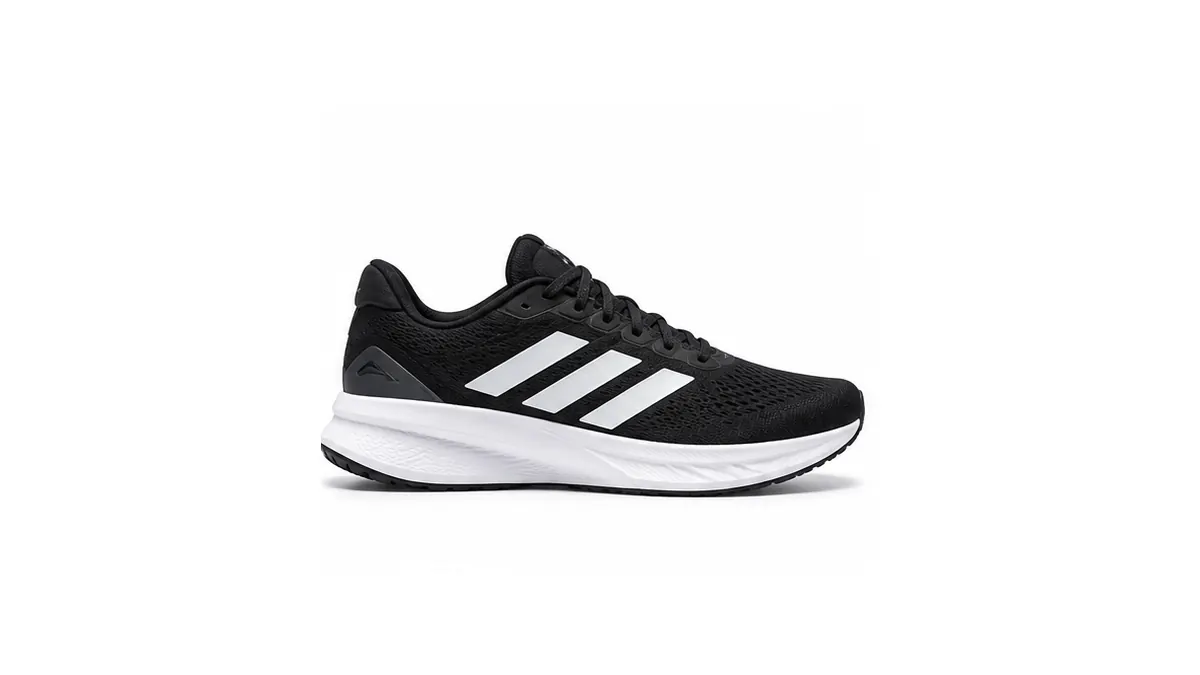
Quick Answer: Adidas Runfalcon 6 Review: The Runfalcon 6 is the cheapest road shoe Adidas sells, and it is best treated as a walking and everyday shoe that can handle a short run. What you get for the money is genuinely soft Cloudfoam cushioning, a sensible amount of height underfoot and a wide fitting, all of which is unusual this far down the price list. What you do not get is depth: the foam flattens quickly, so anything past a few miles gets uncomfortable. Check latest price.
Gender-specific buy links: Men’s version | Women’s version
The Adidas Runfalcon 6 sits right at the bottom of the Adidas running range, well below the Supernova and a long way below the Adizero line. Adidas sells it in two closely related versions, a plain Runfalcon 6 and a Runfalcon 6 Cloudfoam, and they share the same basic shoe. For most buyers it is the price that does the talking: $65 is less than half what a mainstream trainer costs.
The midsole, meaning the layer of foam between your foot and the road, is Cloudfoam. That is the soft, cushiony compound Adidas uses across its everyday and lifestyle shoes rather than in anything built for performance. It is not clever, it is not springy, and it is not durable. What it is, and this is the whole point, is comfortable the moment you put the shoe on.
The numbers are better than you would expect too: about 36 mm of foam under the heel and 26 mm under the forefoot, which is a normal amount for a proper running shoe rather than the thin slab budget models usually get. What follows covers the fit, the ride, how it copes with a day of walking and exactly where the $65 shows.
Specs
Here are the specifications for the Adidas Runfalcon 6:
| Type | Neutral road running and walking shoe, entry level |
| Gait type | Neutral |
| Midsole | Cloudfoam, the soft everyday foam Adidas uses in its comfort and lifestyle shoes |
| Plate | None |
| Stack height | About 36 mm heel and 26 mm forefoot |
| Heel-to-toe drop | About 10 mm, a traditional figure that suits people who land heel first |
| Weight | Not published by Adidas for this model |
| Upper | Mesh, lightly built with a padded collar |
| Outsole | Rubber across the heel and forefoot |
| Widths | Standard and wide |
| Variants | Adidas lists both a Runfalcon 6 and a Runfalcon 6 Cloudfoam, which share the same platform |
| Best use | Walking, everyday wear, gym and treadmill work, runs under about 6 miles |
| Price | $65 at Adidas’ US list price, from its June 2026 release. Check latest price |
Pros
These are the reasons the Runfalcon 6 punches above its price:
- $65 is genuinely cheap for a current shoe from a major brand, rather than last year’s model on clearance.
- Cloudfoam is soft straight away, so there is no break-in period and nothing to get used to.
- 36 mm under the heel is a normal running-shoe amount of foam, not the thin budget slab you often get at this money.
- A wide fitting is offered, which is unusual below $80 and makes a real difference to comfort for broad feet.
- The 10 mm difference between heel and forefoot suits the way most walkers and casual runners land, which is heel first.
Cons
These are the limits, and they are real:
- Cloudfoam compresses and stays compressed. The softness that impresses you in week one will be noticeably flatter within a few months of daily use.
- Adidas positions this for runs under about 6 miles, and that is honest rather than conservative. Beyond that the cushioning simply is not there.
- There is no energy return to speak of, so the shoe never helps you along.
- Adidas does not publish a weight for this model, which makes it harder to compare against rivals.
- Nothing in the design steadies a foot that rolls inward, and soft foam makes that more noticeable rather than less.
What is new versus the Adidas Runfalcon 5
Adidas treats the Runfalcon as a volume shoe rather than a flagship, so the changes between versions are modest and mostly cosmetic. The sixth version keeps the Cloudfoam midsole, the rubber outsole and the traditional 10 mm difference between heel and forefoot that has defined the line for years.
What has been refreshed is the upper and the range. The mesh is cleaner and lighter, with fewer stitched pieces laid over it, which improves both breathability and how forgiving the shoe is across the top of the foot. Adidas also now sells the shoe in two closely related trims, the plain Runfalcon 6 and the Runfalcon 6 Cloudfoam, giving buyers more colors to choose from.
Underfoot the experience is much the same as before. If you own a pair of Runfalcon 5s that are still soft, there is no reason to replace them yet. If you are buying new, take whichever version is cheaper and available in your width, because the ride will not tell you which one you bought.
Who should buy the Adidas Runfalcon 6
This is a shoe for someone who wants a comfortable, inexpensive pair of sneakers that will not embarrass them. It covers the school run, the supermarket, an hour on the treadmill and a couple of miles around the block, and at $65 it does not matter much if you wear it out.
The wide fitting deserves attention. Below $80 the options for broad feet are thin, and most cheap shoes solve width by telling you to buy a bigger size, which leaves you sliding around in too much shoe. Adidas offering a real wide here is genuinely useful, and it is combined with a soft, unstructured upper that has little to press on a bunion.
It is also a sensible choice for anyone buying shoes they will wear hard and replace often. Gardeners, people who are hard on footwear and anyone who ruins a pair every few months are better off buying cheap and buying again than spending $150 on something that will meet the same end.
Not sure this is the right shoe? Use our free Shoe Finder to narrow your choices by fit, cushioning, support and how you plan to use the shoe.
Who should probably skip it
Anyone running regularly should spend more, and Adidas effectively says so by positioning this for runs under about 6 miles. Soft, cheap foam flattens under repeated impact, so within a few hundred miles the cushioning you bought the shoe for will have gone, even though the upper still looks fine. That is a false economy if you run three or four times a week.
It is also the wrong pick if your feet roll inward. There is nothing in the shoe to steady them, and soft foam allows more movement than a firm one, so the problem gets worse rather than better. Anyone working a full shift standing on concrete should also look elsewhere, because this foam will be flat by the afternoon.
These suit those situations better:
- Nike Winflo 12: more foam, an air unit underfoot and wide and extra-wide fittings, for anyone whose running is a regular habit (check price | read review).
- Asics Gel-Cumulus 26: a proper neutral daily trainer that stays comfortable well past the distances the Runfalcon can manage (check price | read review).
- Brooks Adrenaline GTS 25: the shoe to buy if your arches flatten as you tire and you need guidance rather than softness (check price | read review).
How does the Adidas Runfalcon 6 fit?
The Runfalcon 6 fits like an everyday sneaker rather than a running shoe: a bit relaxed through the midfoot, soft around the heel and with a toe box that is neither tight nor generous in the standard width. The wide fitting is where it gets more interesting. Here is what to expect.
Fit and sizing
Take your usual size. Adidas running shoes sometimes run a touch long, and the soft upper gives a little as it beds in, so if you are between sizes the smaller one is usually the safer choice here. There is no exotic shaping to account for.
The wide version is the reason to pay attention to sizing at all. It adds room across the ball of the foot rather than making the shoe longer, which is the correct way to solve the problem. If your feet are broad, or they swell through the day, order the wide rather than going up half a size in the standard.
Upper and step-in comfort
The upper is a plain mesh with a padded collar and a soft tongue, and it is built to feel comfortable immediately rather than to hold your foot precisely. There are few stitched overlays, which is a small mercy for anyone with a bunion or a prominent joint, and nothing rubs out of the box.
Step-in comfort is the shoe’s strongest selling point. Cloudfoam gives underfoot straight away and the upper wraps rather than grips, so the first impression is of a comfortable, soft, easy shoe. The flip side is that lockdown is loose by running-shoe standards, and the foot will move on the platform if you try to run quickly or turn sharply.
How does the Adidas Runfalcon 6 perform?
The Runfalcon 6 is a comfortable shoe for a short while and a limited one after that, which is exactly what $65 buys. It works within a narrow range and does not pretend otherwise. The sections below cover the cushioning, the ride, the steadiness and how long it will last.
Cushioning and ride
Stack height is the amount of foam between your foot and the ground, and about 36 mm under the heel is a respectable figure. Combined with the softness of Cloudfoam, that makes the shoe feel plush underfoot on concrete and tile, which is where most of these shoes will actually be worn.
The important caveat is what happens under load. Soft, inexpensive foams compress a long way and then stop, so the further and harder you go, the closer you get to the bottom of the cushioning. Heavier wearers will notice this sooner. For walking and short runs it never becomes an issue.
Ride and running performance
At easy paces over short distances the Runfalcon 6 is comfortable and uncomplicated. The 10 mm heel rolls a heel-first landing forward without drama, and the shoe is flexible enough to bend where your foot does. There is nothing to dislike about the first 3 miles.
Beyond that the shoe runs out. Cloudfoam absorbs impact and returns almost none of it, so there is no help with forward motion and the effort is all yours. The loose upper adds to the vagueness at speed. Adidas’ own guidance of under 6 miles is a fair description of the ceiling, and most people will find their own limit lower.
Stability and support
This is a neutral shoe with no support features, and the soft foam means it is a less steady one than firmer budget rivals. There are no raised sidewalls to cradle the foot, no firmer section along the inside edge and no widened base, so the platform simply gives way under whatever you do on top of it.
For walking on flat ground that is fine and even pleasant. On uneven surfaces, or for anyone who feels unsteady on their feet, a firmer shoe is the safer choice. If you have been told you need support, or the inside edges of your old shoes wear faster than the outside, this is not the shoe to buy.
Outsole, grip and durability
Rubber covers the heel and forefoot with exposed foam between, which is normal at this price. Grip on dry sidewalks, gym floors and treadmill belts is reliable. In the wet it is acceptable rather than reassuring, so take care on painted lines and smooth surfaces.
Durability is where the price shows most clearly. Soft everyday foam loses its cushioning faster than a dense one, so the shoe will feel flat long before the upper wears through. The usual 300 to 500 mile guideline varies a great deal with your weight, stride and surfaces, and no shoe comes with a guaranteed lifespan, but a Cloudfoam midsole belongs at the bottom of that range. Treat the shoe as something to replace rather than to nurse along.
Is the Adidas Runfalcon 6 good for walking?
Yes, and walking is what it is really for. Walking loads a shoe far more gently than running does, so the soft Cloudfoam has an easy life and the cushioning that feels shallow on a run feels perfectly adequate at strolling pace. Combined with a roomy, soft upper and a wide fitting, it makes a comfortable and very cheap everyday shoe.
The limit is time rather than distance. For errands, travel days, dog walks and a few miles at a stretch it is excellent value. For a full shift standing on a hard floor it is not, because there is no structure holding the foam up and it will be flat by the end of the day. If you are on your feet for eight hours, spend more on something with a firmer frame around the softness.
Adidas Runfalcon 6 vs. Adidas Runfalcon 5
Here is how the two generations compare:
Feature | Runfalcon 6 | Runfalcon 5 |
Midsole | Cloudfoam | Cloudfoam |
Stack and drop | About 36 mm / 26 mm, roughly 10 mm drop | Comparable stack and traditional drop |
Upper | Cleaner mesh with fewer stitched overlays | Mesh with more overlays |
Widths | Standard and wide | Standard and wide |
Ride | Soft and cushioned, no energy return | Soft and cushioned, no energy return |
Buy the Runfalcon 6 when you are replacing a flattened pair anyway, or when you want the fresher upper and the wider color choice.
Buy the Runfalcon 5 when it turns up cheaper in your size and width. The ride is effectively the same, so the discount is pure gain.
Adidas Runfalcon 6 Alternatives
Most people outgrow the Runfalcon by starting to run more. If that is you and you want a shoe that will still be cushioned in six months, the Nike Pegasus 42 is the sensible destination: much firmer, far more durable, with air units underfoot and enough structure to stay dependable when you are tired. It costs a good deal more and lasts proportionally longer.
If the issue is width rather than distance, the Asics Gel-Contend 10 solves it more completely. It runs all the way to an extra-wide 4E in men’s sizing, which no Adidas budget shoe matches, and pairs soft foam with a GEL insert under the heel. It is heavier, and it costs a little more.
For anyone who finds the Runfalcon too soft and wobbly, the Brooks Revel 9 takes the opposite approach at a similar price: a firm midsole and a broad base that feels planted rather than plush. That firmness is also why its cushioning holds up longer.
- Nike Pegasus 42: the step up to a proper daily trainer, firmer and far more durable (check price | read review).
- Asics Gel-Contend 10: similar money with widths up to 4E, for feet the Runfalcon’s wide still cannot cover (check price).
- Brooks Revel 9: a firm, broad and very steady budget shoe for anyone who finds soft foam unsettling (check price).
Price and value
At $65 from its June 2026 release, the Runfalcon 6 is one of the cheapest current shoes any major brand sells, and it does not feel like a cynical product. Real foam depth, a soft ride and a wide fitting at this money is a good deal. The catch is that the cushioning has a short working life, so judged per mile it is less of a bargain than it looks. Judged as a comfortable everyday sneaker you will replace without thinking about it, it is hard to beat.
Final verdict
Best for: walkers, everyday wearers, people with broad feet shopping on a tight budget, and anyone who wears out shoes quickly and would rather replace them cheaply.
Avoid if: you run more than a few miles at a time, you stand on hard floors all day, or your feet roll inward and need steadying.
Fit: true to size and slightly relaxed, with a genuine wide fitting available.
Verdict: a surprising amount of comfort for $65, spoiled only by how quickly the foam gives up. Buy it for walking and treat the running as a bonus. Check the latest price.
Frequently Asked Questions for Adidas Runfalcon 6
Yes. Adidas offers a wide fitting alongside the standard version, which is unusual for a shoe at this price. The wide adds room across the ball of the foot rather than making the shoe longer.
Cloudfoam is the soft, everyday midsole foam Adidas uses in its comfort and lifestyle shoes rather than in its performance models. It feels plush immediately, which is its selling point, but it compresses over time and does not return much energy.
Adidas lists both, and they share the same platform and midsole material. In practice the difference is trim and colorway rather than ride, so choose on price, availability and which one comes in your size and width.
Adidas positions it for runs under about 6 miles, and that is a fair description. The foam is soft rather than deep, so past that distance the cushioning runs out and your legs feel it. For walking there is no practical distance limit.
Expect it at the lower end of the usual 300 to 500 mile guideline, which is only a rough guide and varies with weight, stride and surfaces. Soft budget foams flatten well before the upper looks worn, so the shoe often feels finished while it still looks new.
Not really. The foam is soft but has no firmer frame holding it up, so hours of constant pressure flatten it and your foot ends up on a compressed platform. For a full shift on hard floors, a shoe with more structure around the cushioning is a better investment.