Light and genuinely springy, at a price that asks a lot of a second shoe
Quick Answer: Nike Pegasus Plus 2 Review: The Pegasus Plus 2 is the quick one in the Pegasus family, and it is the shoe to buy if you already have a daily trainer and want something livelier for the days you push. Nike pairs its bounciest foam with curved air units under the forefoot, which makes the toe-off noticeably snappier than before. The tall heel is also kind to a sore Achilles. It is expensive, though, and too specialized to be your only pair. Check latest price.
Gender-specific buy links: Men’s version | Women’s version
The Nike Pegasus Plus 2 is the third member of a family that now covers three jobs. The Pegasus 42 is the workhorse, the Pegasus Premium is the plush one, and the Pegasus Plus is the fast one. If you are choosing between them, that is the whole decision in a sentence.
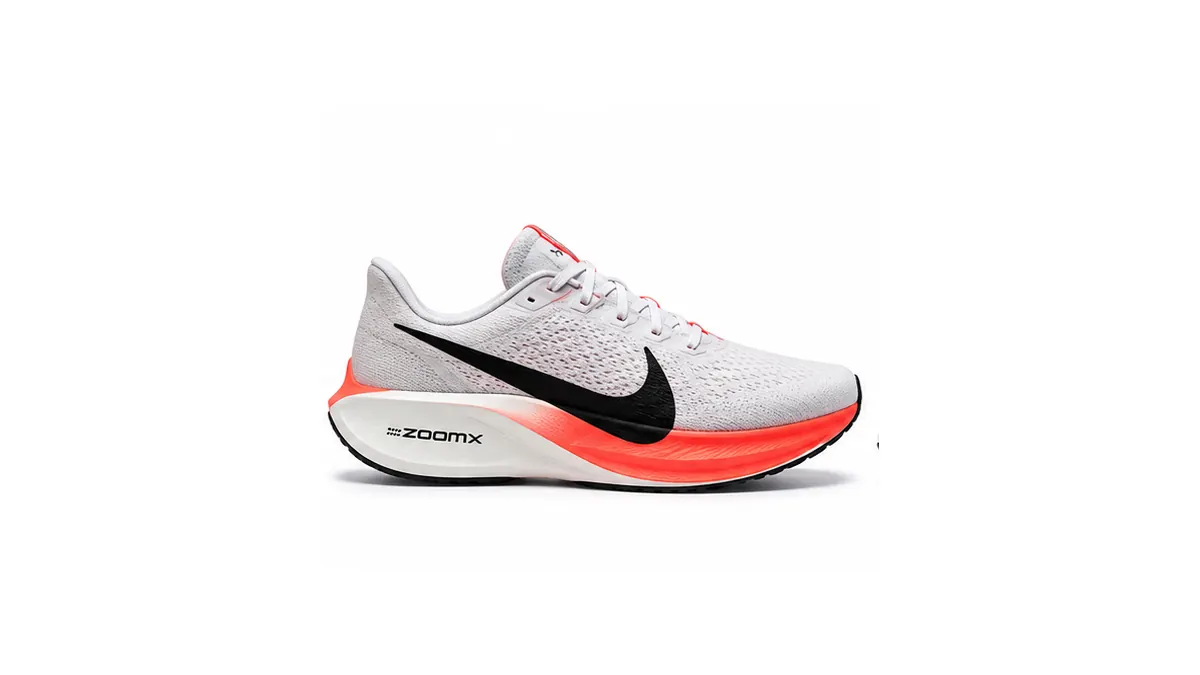
What makes this version different is a return to visible air. Nike has set curved Air Zoom units into the forefoot, which you can see through a window in the sole, and paired them with a full midsole of ZoomX. ZoomX is Nike’s lightest and springiest foam, the same family used in its racing shoes, and the midsole is simply the layer of cushioning between your foot and the road. Nike states the combination returns 18 percent more energy than the original Pegasus Plus.
Energy return means how much of the force you put into a shoe comes back out to help you along, and it is the difference between a shoe that feels flat and one that feels like it wants to go. That is the promise here. What follows covers how it fits, who it suits, how the tall heel changes things and whether $170 is defensible for a shoe most people will wear twice a week.
Specs
Here are the specifications for the Nike Pegasus Plus 2:
| Type | Neutral road running shoe, uptempo daily trainer |
| Gait type | Neutral |
| Midsole | Full-length ZoomX foam with curved, visible Air Zoom units in the forefoot |
| Plate | None; the air units provide the snap instead |
| Stack height | 38 mm heel and 28 mm forefoot |
| Heel-to-toe drop | 10 mm, which is high for a modern performance trainer |
| Weight | About 9.1 oz men’s and 7.7 oz women’s |
| Energy return | Nike states an 18 percent increase over the original Pegasus Plus |
| Upper | Engineered mesh, reworked for a better hold than the first version |
| Outsole | Rubber across the high-wear zones |
| Best use | Tempo runs, progression runs, faster daily miles, race day for most club runners |
| Price | Launched at $170 on 3 September 2026. Check latest price |
Pros
These are the reasons the Pegasus Plus 2 is worth the attention:
- It is light. Under 9.5 oz for a shoe with this much foam underfoot is a genuinely good number, and you feel it the moment you start moving.
- The curved air units in the forefoot give the push-off a distinct snap, which is the bit the previous version was missing.
- A full ZoomX midsole means the cushioning is lively rather than dead, so the shoe stays fun over an hour.
- The 10 mm heel takes tension off the calf and the Achilles tendon, which matters if either has given you trouble.
- Nike has fixed the upper. The first Pegasus Plus was criticized for a vague hold, and this one locks the foot down properly.
Cons
These are the reasons to think twice:
- $170 is a lot for a shoe that is not a racer and not really an everyday trainer either.
- ZoomX is the softest and least durable of Nike’s foams, so this will not last as long as a firmer daily shoe.
- The high heel is divisive. If you have moved to lower-drop shoes deliberately, this will feel like a step backward.
- It is a neutral shoe with nothing to steady a foot that rolls inward, and the soft foam makes that more noticeable at the end of a run.
- There is no wide fitting, which narrows who can wear it.
What is new versus the original Nike Pegasus Plus
The headline change is the return of visible Air Zoom. The original Pegasus Plus was a full-length ZoomX shoe with nothing else in it, and while it was light and soft, it lacked bite at the front of the stride. Nike has now set curved air units into the forefoot, which compress as you roll onto the ball of your foot and spring back as you leave the ground. Nike puts the gain at 18 percent more energy returned.
The second change is the upper, and it is the one that will matter most to anyone who tried the first version and gave up on it. The original was frequently called out for a hold that let the foot slide on corners. The Pegasus Plus 2 uses a reworked engineered mesh that keeps the foot planted on the platform, which also makes the springy foam feel more trustworthy.
The geometry moves as well. At 38 mm under the heel and 28 mm under the forefoot, the difference between the two is 10 mm, which is tall by current standards and taller than most shoes in this category. That is a deliberate choice aimed at runners who land heel first and at anyone who prefers a shoe that is gentle on the calf.
Who should buy the Nike Pegasus Plus 2
This is a second shoe. If you already own something sturdy for your easy miles and you want a pair that makes the faster days enjoyable, the Pegasus Plus 2 does that job well. Tempo runs, progression runs and the last few miles of a long run when you want to press are where it comes alive.
It is also a sensible race-day shoe for a lot of people. Carbon-plated racers are stiff, expensive and unforgiving, and plenty of runners are better served by something light and bouncy that does not demand a perfect stride. For a 5K, a 10K or a first half marathon, this is enough shoe.
Anyone with a grumbling Achilles tendon or tight calves should take note of the heel height. A taller heel means your calf and Achilles are asked to stretch less at each step, which many people with those complaints find noticeably more comfortable. That is not a treatment for an injury, and persistent pain deserves a proper assessment, but it is a real comfort difference.
Not sure this is the right shoe? Use our free Shoe Finder to narrow your choices by fit, cushioning, support and how you plan to use the shoe.
Who should probably skip it
If this would be your only running shoe, buy something else. ZoomX is soft and wears faster than a standard training foam, so using it every day is an expensive way to run, and the shoe offers nothing in the way of steadiness when you are tired. One pair covering everything should be sturdier than this.
It is also the wrong shoe if your feet roll inward or if you have settled into low-drop shoes. Neither issue is fatal on its own, but a soft neutral platform with a tall heel is the opposite of what someone in either camp usually wants. And if you mostly walk rather than run, none of what makes this shoe special will do anything for you.
These are better starting points in those cases:
- Nike Pegasus 42: the family workhorse, firmer and far more durable, and the right pick if you want one Nike shoe for everything (check price | read review).
- Asics Gel-Cumulus 26: a dependable neutral daily trainer that handles running and walking equally well for much less money (check price | read review).
- Brooks Adrenaline GTS 25: the answer if your arches collapse as you tire and you need guidance rather than bounce (check price | read review).
How does the Nike Pegasus Plus 2 fit?
The Pegasus Plus 2 fits like a performance shoe: snug through the midfoot, close around the heel and tapered at the toe. It is a closer fit than the standard Pegasus, which is deliberate, because a springy foam only feels good when your foot is not sliding on top of it. Here are the details.
Fit and sizing
Take your usual size. Nike’s running shoes have a reputation for running slightly short and narrow, and while the Pegasus Plus 2 is not extreme, it is not a roomy shoe either. If you are between sizes or have a broad forefoot, go up half a size rather than hoping the mesh will give.
There is no wide fitting. That is a real limitation for a shoe at this price, and it is worth knowing before you order. If width is the priority, see our guide to wide shoes for walking. Anyone who needs 2E or wider should look at Brooks, New Balance or Saucony, all of which make comparable uptempo shoes in extra widths.
Upper and step-in comfort
The upper is the most improved part of the shoe. Nike has rebuilt the engineered mesh so the foot sits down into the platform instead of on top of it, and the difference is obvious the first time you lean into a corner. The first version had a reputation for feeling loose at speed, and that is gone.
Step-in feel is soft and light, with modest padding at the collar and a thin tongue that stays put. The mesh is airy, which suits a shoe meant for harder efforts. Nothing rubs out of the box, though the snug shape means you should wear your usual running socks when you try it on.
How does the Nike Pegasus Plus 2 perform?
This shoe is at its best when you are working. It is light, it is bouncy, and the air units give the front of the stride a distinct kick that rewards a faster turnover. At easy paces it is pleasant but unremarkable. The sections below break that down.
Cushioning and ride
Stack height is the amount of foam between your foot and the ground, and 38 mm at the heel is a tall, protective platform. Because it is ZoomX rather than a standard foam, that height does not come with much weight, which is the whole trick of the shoe: deep cushioning that still feels quick.
The feel is soft and springy rather than plush and slow. You sink in and come back out, and the sensation is closer to a race shoe than to a cushioned trainer. Heavier runners should note that soft foam compresses further under more weight, so the effective cushioning will feel shallower the more you weigh.
Ride and running performance
The air units are the point of difference. Sealed pockets of pressurized air compress as you roll forward and push back as you lift off, and because they sit under the forefoot you feel them exactly where a faster stride loads the shoe. The effect is a crisp, slightly bouncy toe-off rather than the vague push of foam alone.
That makes it a shoe that gets better the harder you go. On a steady jog the extra spring goes largely unused and you are simply wearing an expensive soft trainer. On a tempo run or a progression it comes into its own. The high heel suits runners who land heel first and keeps the transition smooth rather than abrupt.
Stability and support
This is a neutral shoe with no guidance features, and the soft foam means it is a less steady one than most. There is no firm rim, no plate and no widened base to keep the foot upright, so as you tire and your form loosens, the platform will move under you more than a firmer shoe would.
The reworked upper offsets some of that by holding the foot centered, which is the main reason the shoe feels more trustworthy than its predecessor. But if your arches collapse noticeably or you have been advised to use a support shoe, this is not the one. That is a category choice rather than a criticism: fast shoes are rarely stable shoes.
Outsole, grip and durability
Rubber covers the areas that take the most wear, with foam exposed elsewhere to keep the weight down. Grip on dry roads and tracks is good, and adequate in the wet, though a shoe built for speed inevitably has less rubber on it than a workhorse trainer.
Durability is the honest weak point. ZoomX is the softest foam Nike makes and it loses its liveliness sooner than a standard training compound, so expect the bounce to fade before the shoe looks worn out. The usual 300 to 500 mile figure is only a broad guideline and no shoe carries a guaranteed lifespan, but a soft, light shoe like this sits at the lower end of that range. Rotating it with a sturdier pair is the sensible way to use it.
Is the Nike Pegasus Plus 2 good for walking?
Not especially, and it is the wrong shoe to buy for it. Everything that makes the Pegasus Plus 2 interesting is aimed at running quickly: the air units only compress meaningfully under a hard push-off, and the springy foam wants a fast turnover to feel good. At walking pace you are paying $170 for a soft shoe and using almost none of what you paid for.
There are practical problems too. The soft foam is less steady than a firm walking shoe, which matters over hours on your feet, and it will compress and age quickly under the constant, unhurried loading that walking and standing put through a midsole. There is no wide fitting either. For walking, standing all day or travel, a firmer and cheaper shoe will be more comfortable and will last far longer.
Nike Pegasus Plus 2 vs. the original Nike Pegasus Plus
Here is how the two generations compare:
Feature | Pegasus Plus 2 | Pegasus Plus |
Midsole | Full-length ZoomX plus curved forefoot Air Zoom units | Full-length ZoomX, no air units |
Energy return | Nike states 18 percent more than the original | Baseline |
Stack and drop | 38 mm / 28 mm, 10 mm drop | Lower drop, less forefoot structure |
Upper | Reworked mesh with a much firmer hold | Criticized for a loose hold at speed |
Weight | About 9.1 oz men’s | Comparable, slightly lighter |
Buy the Pegasus Plus 2 when you want the snappier forefoot and the better lockdown, which together turn a pleasant soft shoe into a genuinely quick one.
Buy the original Pegasus Plus when you find it discounted, you prefer a lower heel and you were happy with how the first one held your foot.
Nike Pegasus Plus 2 Alternatives
Most people who pass on this shoe do so on price or on the specialization. If you want the same lively Nike feel but with far more foam for easy days, the Pegasus Premium is the sibling to look at: it combines a curved plate and a visible air unit with a much deeper platform, so it works as a cushioned trainer rather than as a faster one.
Runners who want to go genuinely fast should consider the Zoom Fly 6 instead. It adds a stiff plate through the midsole, which produces a firmer and more insistent forward roll than air units alone, and it is the better choice if your goal is a half or full marathon time rather than a quick Tuesday.
And if what appeals is the soft, deep cushioning rather than the speed, the Saucony Triumph 24 gives you more of it for less money, in a shoe that is comfortable to walk in as well. You lose the snap entirely, which is the trade.
- Nike Pegasus Premium: the plush Pegasus, with a plate and a deeper platform for cushioned daily miles (check price).
- Nike Zoom Fly 6: a plated shoe with a firmer, more aggressive roll, for runners chasing race times (check price).
- Saucony Triumph 24: deeper, softer cushioning at a lower price, and far better suited to walking (check price | read review).
Price and value
At its $170 launch price in September 2026, the Pegasus Plus 2 asks race-shoe money for something that is not a race shoe. What justifies it is the combination of low weight, a full ZoomX midsole and the air units, which together do something no cheaper shoe does. What undercuts it is durability: soft foam does not last, and this is a shoe you will use two or three times a week at most. As a treat for the days you want to run fast, it is worth it. As a value purchase, it is not.
Final verdict
Best for: runners who already own a daily trainer and want a light, springy shoe for tempo days and shorter races, and anyone whose calves or Achilles prefer a taller heel.
Avoid if: this would be your only pair, you need a wide fitting or support, you prefer a low drop, or you are mainly walking.
Fit: true to size but snug and tapered, with no wide fitting available.
Verdict: the air units fix what the first Pegasus Plus was missing and the new upper fixes the rest, leaving a fast, fun shoe with a high price and a short working life. Buy it as a second pair and it earns its place. Check the latest price.
Frequently Asked Questions for Nike Pegasus Plus 2
The Pegasus 42 is the everyday workhorse, firm and durable. The Pegasus Premium is the plush one, with the deepest cushioning. The Pegasus Plus 2 is the fast one: the lightest of the three, with springy ZoomX foam and forefoot air units aimed at quicker runs.
No. Nike lists it in a standard width only, and the fit is fairly snug and tapered. If you need a wide fitting, Brooks, New Balance and Saucony all make comparable uptempo trainers in extra widths.
You can, and for many runners it is enough shoe. It is light and bouncy without the stiffness of a carbon-plated racer, which suits runners who find plated shoes punishing. Those chasing a specific time will still get more from a plated race shoe.
ZoomX is Nike’s lightest and springiest midsole foam, first developed for its racing shoes. It returns more energy than a standard training foam, which is what gives the shoe its bounce, but it is also softer and wears out faster.
Expect it at the lower end of the usual 300 to 500 mile guideline, which is only a rough guide and varies with weight, stride and surfaces. Soft foams lose their spring before the shoe looks worn, so most people rotate a shoe like this with a sturdier trainer.
A taller heel asks the calf and Achilles tendon to stretch less at each step, which many runners with tight calves or a sore Achilles find more comfortable, and it suits people who land heel first. Runners used to low-drop shoes will notice the change and may not like it.