Quick Answer: The Hoka Bondi SR is our best overall work shoe for women who spend long shifts walking or standing on hard floors and do not need a safety toe. Choose the Alegria In8 if you want a roomy, toe-shaped forefoot with firm arch support, the Dansko XP 2.0 for a supportive work clog, and the New Balance 626v2 for wide and extra-wide sizing. The Clove Prima is the better choice for spill-prone healthcare work, while the Reebok Sublite Cushion Work RB041 is worth considering when your job requires a protective toe. Compare the picks below.
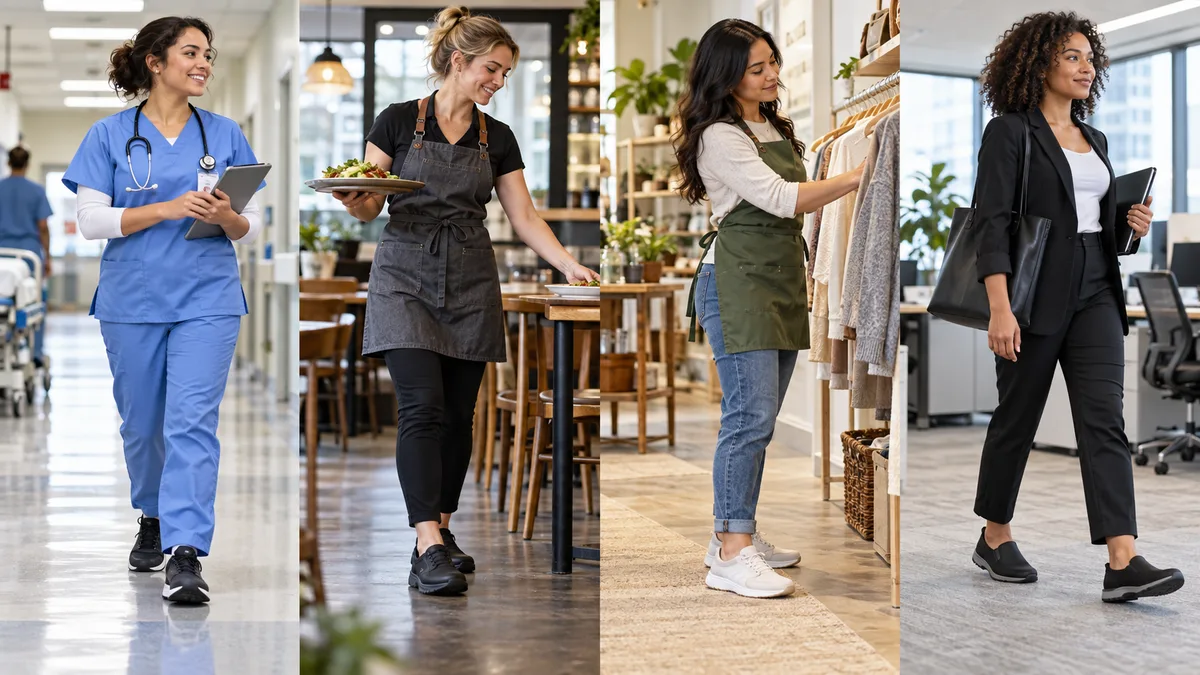
The best work shoes for women depend on the job, the floor and the safety requirements. A nurse walking hospital corridors needs something different from a warehouse worker who needs toe protection. A teacher may care most about cushioning and support, while someone working around spills needs traction and an upper that is easy to clean.
That is why this guide does not simply rank six comfortable shoes from best to worst. Each pick solves a different work problem.
If hard flooring is your main concern, also see our best shoes for walking on concrete all day. For wet or greasy floors, compare our best slip-resistant work shoes. Women who need more room should also see our best wide work shoes.
Best work shoes for women compared
| Shoe | Best for | Main strength | Safety toe | Launch or original price |
|---|---|---|---|---|
| Hoka Bondi SR | Best overall for hard floors | Maximum cushioning, leather upper, slip resistance | No | $180 | Check latest price |
| Alegria In8 | Roomy toe box and arch support | Women-specific fit, wide forefoot, contoured footbed | No | About $120 | Check latest price |
| Dansko XP 2.0 | Standing and clog wearers | Structured support, rocker sole, slip-resistant outsole | No | About $140–$170 | Check latest price |
| New Balance 626v2 | Wide and extra-wide feet | ABZORB cushioning, leather upper, multiple widths | No | Original MSRP not confirmed | Check latest price |
| Clove Prima | Healthcare and spill-prone work | Fluid-proof upper, easy cleaning, healthcare-focused traction | No | Check manufacturer price | Check latest price |
| Reebok Sublite Cushion Work RB041 | Lightweight safety-toe work | Athletic feel with protective toe | Alloy | Original price not confirmed | Check latest price |
Launch or regular manufacturer pricing is shown where we could confirm it. Work-shoe prices can change considerably as colors and older models move through inventory, so the buying links say “Check latest price” rather than hard-coding a temporary sale price.
Hoka Bondi SR: Best overall work shoe for women
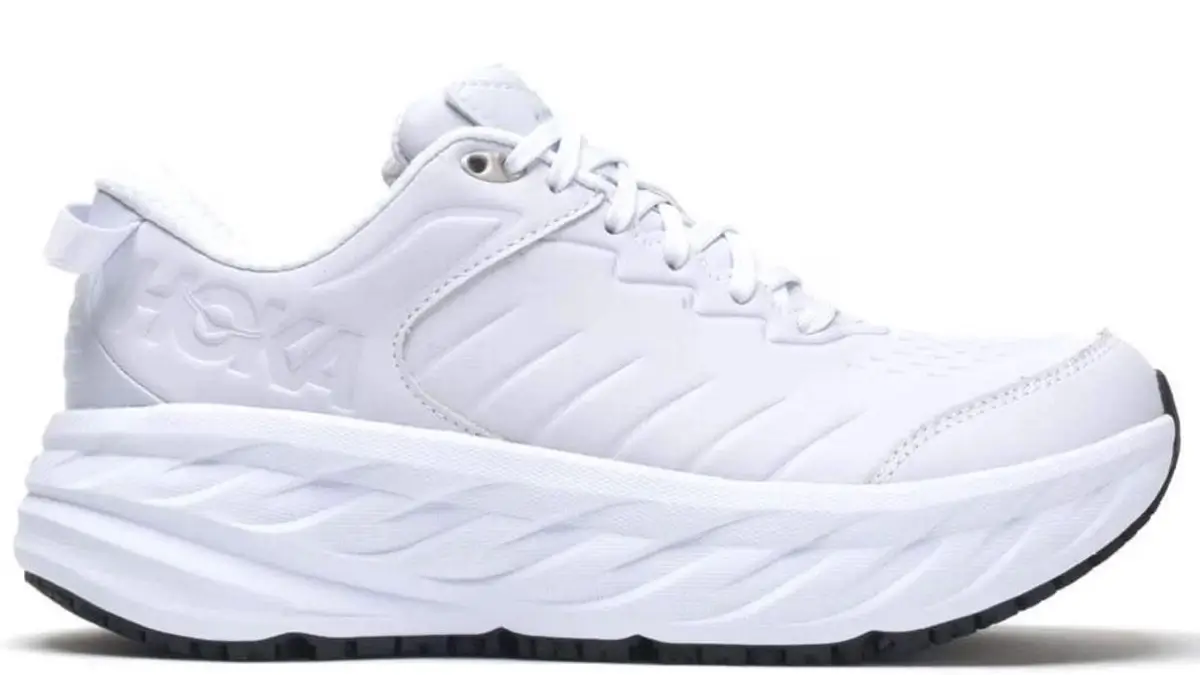
The Hoka Bondi SR is our starting point for women whose biggest work problem is spending hours on concrete, tile or other hard floors. Hoka takes the thick cushioning of the regular Bondi, replaces the mesh upper with water-resistant full-grain leather and adds a work-focused slip-resistant outsole.
That combination works particularly well for healthcare, hospitality, retail, salon work and other jobs that involve a mixture of standing and walking. The leather upper is easier to wipe down than ordinary running-shoe mesh, while the thick midsole gives you much more protection from hard flooring than a traditional flat work sneaker.
The trade-off is bulk. The Bondi SR is heavier and warmer than a running shoe, and the tall platform can feel unusual if you normally wear flatter footwear. It is also expensive for a work shoe.
Choose the Bondi SR if your job allows a soft-toe shoe and cushioning is your top priority. Skip it if your employer requires steel, composite or alloy toe protection.
Check latest Hoka Bondi SR price and sizes.
Alegria In8: Best for a roomy toe box and firm arch support

The Alegria In8 gives this women’s roundup something the men’s guide does not have: a shoe developed specifically around a women’s comfort-work fit.
Its standout feature is the front of the shoe. Alegria uses a wide, toe-shaped forefoot designed to follow the natural outline of the toes rather than tapering sharply inward. That can make the In8 particularly useful for women with broad forefeet, bunions or toes that feel crowded in conventional work sneakers.
Underfoot, the In8 takes a different approach from the Hoka. It is not soft and bouncy. Instead, its polyurethane-and-cork footbed has a noticeably shaped arch and a firmer, more supportive feel. The medium-width version has a removable footbed, which can also help if you use your own orthotic.
This is a strong option for nurses, teachers, retail staff and others who want a sneaker-shaped shoe with more structure under the foot.
Choose it if toe room and arch shape matter more to you than plush cushioning. Skip it if you want the soft feel of a running shoe.
Check latest Alegria In8 price and sizes.
Dansko XP 2.0: Best work clog for women
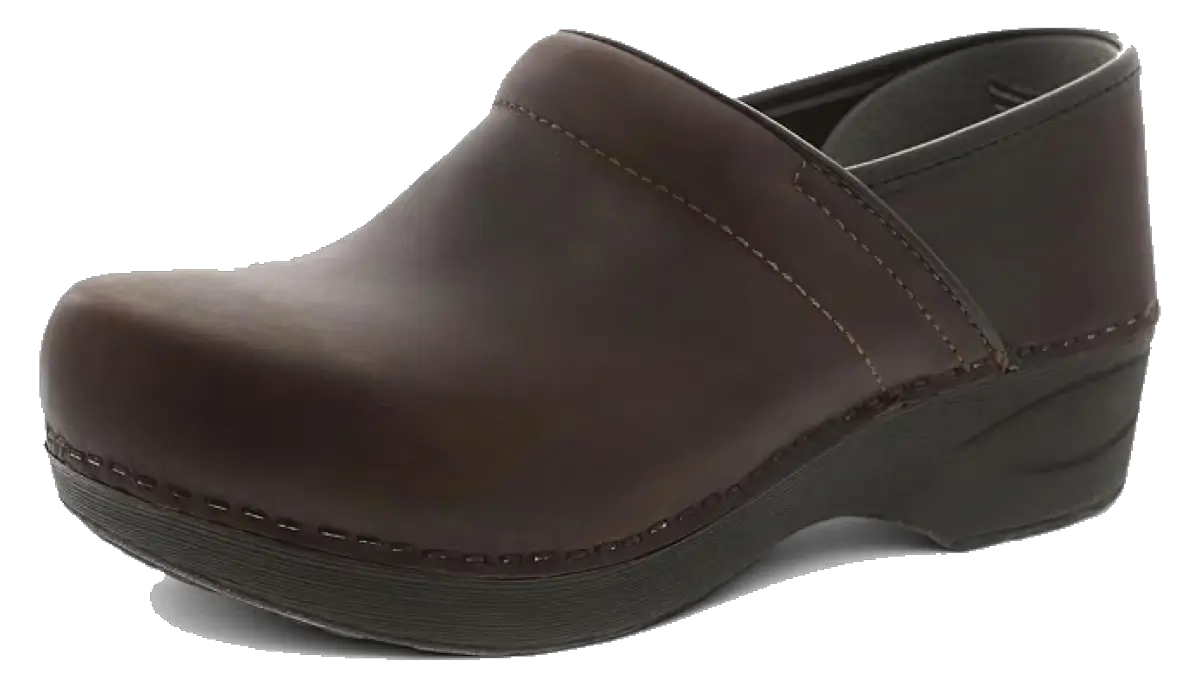
The Dansko XP 2.0 makes sense for women who prefer the stable, structured feel of a clog rather than an athletic work shoe.
Dansko builds the XP 2.0 around a roomy toe box, removable dual-density footbed and rocker-shaped sole. The curved sole helps the shoe roll forward instead of asking the forefoot to bend as much during each step. Its slip-resistant outsole is designed for dry, wet and oily-wet surfaces, making the XP 2.0 particularly relevant to healthcare, restaurant and hospitality work.
It is also lighter and somewhat softer than the classic Dansko Professional. That makes it a useful middle ground for women who like the support of a traditional clog but find the Professional too rigid.
The biggest limitation is the open heel. Some people love being able to step in and out easily; others feel less secure when moving quickly, using stairs or changing direction frequently.
Choose the XP 2.0 if you spend much of your day standing and like firm, shaped support. Skip it if you want a locked-in sneaker fit.
Check latest Dansko XP 2.0 price and sizes.
New Balance 626v2: Best for wide and extra-wide feet

The New Balance 626v2 is one of the most practical options here for women who need more width but still want a conventional lace-up work shoe.
New Balance offers the 626v2 in multiple widths, including wide and extra-wide choices. That is unusually useful in work footwear, where women are often forced to choose between a shoe that is too narrow and a larger size that creates heel slip.
The shoe uses a leather upper, ABZORB cushioning under the heel and a lugged work outsole tested for slip resistance. It looks more like a traditional black work sneaker than the Bondi SR and sits lower to the ground.
The 626v2 is a soft-toe shoe, so it is better suited to healthcare, hospitality, retail and similar environments than jobs that require impact protection. The leather upper also runs warmer than mesh, and the cushioning is firmer through the forefoot than a max-cushion athletic shoe.
Choose it if fit and width are your biggest problems. Skip it if you need a safety toe or want deep, plush cushioning.
Check latest New Balance 626v2 price and sizes.
Clove Prima: Best for healthcare and spill-prone work

The Clove Prima is the most healthcare-specific shoe in this group. Clove designs its footwear around clinical work, where shoes may need to handle long shifts, quick changes of direction, frequent cleaning and accidental exposure to liquids.
Clove currently describes the Prima upper as fluid-proof and stain-proof. It also uses a slip-resistant outsole built for work environments. That makes it different from simply wearing a comfortable running shoe in a hospital. A mesh running upper may breathe well, but it can absorb whatever lands on it.
The Prima keeps a sneaker-like shape rather than using a clog or bulky leather work-shoe design. That should appeal to women who want something that looks and feels closer to an athletic shoe but is built around healthcare needs.
It is not the best choice if maximum cushioning is your priority. The Bondi SR gives you more foam underfoot. Nor is it necessary if your job rarely involves spills and allows ordinary athletic shoes.
Choose the Clove Prima when easy cleaning and healthcare-specific protection matter as much as cushioning. For a deeper comparison of moisture-resistant healthcare shoes, see our best waterproof and water-resistant shoes for nurses.
Check latest Clove Prima price and sizes.
Reebok Sublite Cushion Work RB041: Best lightweight safety-toe work shoe for women
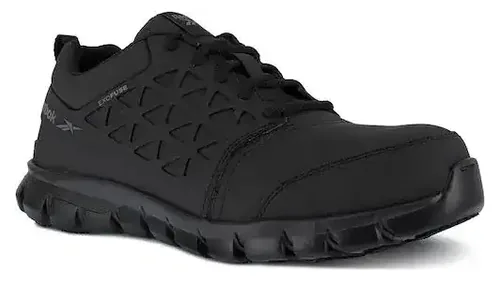
The women’s Reebok Sublite Cushion Work line is the place to look when your workplace requires a protective toe but you do not want to spend the entire shift in a heavy traditional work boot.
The women’s RB041 follows the same basic Sublite Cushion Work idea as the men’s RB4041: combine workplace protection with a lower, more athletic shape. The family uses flexible Sublite cushioning, a work-focused outsole and a protective alloy toe rather than building the shoe like a tall leather boot.
That type of design is particularly useful for warehouse, distribution and light-manufacturing jobs where workers may take thousands of steps during a shift. Carrying less bulk can matter by hour eight.
The key is to buy by exact model number. “Sublite Cushion Work” is a family of shoes, and Reebok sells versions with different toe materials and certifications. Your employer’s exact requirement comes first.
Choose the RB041 when you need legitimate toe protection but want something closer to an athletic work shoe. Skip it if your job requires waterproofing, substantial ankle coverage or a specific certification the model does not carry.
Our Reebok Sublite Cushion Work review explains the construction and trade-offs of the family in more detail.
Check latest Reebok RB041 price and sizes.
Which women’s work shoe should you choose?
The easiest way to narrow the list is to start with the problem your workplace creates.
- If you walk and stand on concrete or tile all day and do not need a safety toe, start with the Hoka Bondi SR.
- If typical women’s shoes crowd your toes, the Alegria In8 gives you a more naturally shaped forefoot.
- If you prefer firm arch support and spend more time standing than walking, consider the Dansko XP 2.0.
- If width is the issue, start with the New Balance 626v2 rather than simply buying a longer shoe.
- If you work in healthcare and regularly deal with spills or frequent cleaning, the Clove Prima makes more sense than an ordinary mesh sneaker.
- If your employer requires a protective toe, start with the exact safety requirement and compare the Reebok Sublite Cushion Work line with our steel-toe and warehouse-shoe guides.
What makes a work shoe comfortable for women?
Comfort over a full shift is more complicated than how soft a shoe feels when you first put it on. Feet can swell during the day, particularly when you spend hours standing. A shoe that feels snug in the morning may become cramped later. Look for enough space around the toes without allowing your heel to move around inside the shoe.
Cushioning also needs to be stable. Deep foam can protect you from concrete, but a narrow or unstable platform may make your feet work harder to stay balanced. Women who prefer more structure may be happier in a shoe such as the Alegria In8, Dansko XP 2.0 or New Balance 626v2 than in the softest shoe they can find.
Arch support is similarly personal. More support is not automatically better. If a strong arch shape presses into your foot all day, it can become uncomfortable. If you already know that you prefer structured shoes, choose accordingly.
If support is your main concern, see our best arch support shoes.
Do women need different work shoes from men?
Not always. Several strong work shoes, including the Hoka Bondi SR and New Balance 626v2, are sold in both men’s and women’s versions.
The important differences are fit and available sizing rather than the label printed on the box. Women’s versions may use different lasts, heel shapes, widths and size ranges. A woman with a broad forefoot, for example, may get a better fit from the women-specific Alegria In8 than from a unisex-style work shoe.
The reverse can also be true. Some women with very wide feet may find that a men’s version of a particular shoe gives them a more suitable shape. Fit matters more than gender marketing.
What should not be ignored is workplace safety. If a job requires certified footwear, choose a model that meets the requirement regardless of whether a different shoe feels more comfortable.
Slip resistance and safety toes solve different problems
A slip-resistant shoe and a safety-toe shoe are not the same thing.
Slip resistance is about traction between the outsole and the floor. It matters in restaurants, hospitals, hotels, grocery stores and other environments where water, grease or cleaning products can make floors slippery.
A safety toe protects the front of the foot against impact or compression. It is more common in warehouses, construction, manufacturing and industrial work.
Some shoes include both features, but many do not. The Bondi SR and New Balance 626v2 are work-focused soft-toe shoes. The Reebok Sublite Cushion Work safety models add protective toe caps.
Follow your employer’s requirement before comparing cushioning or appearance. Our slip-resistant shoe standards guide explains common traction terminology.
More work-shoe guides for women
- Best Shoes for Nurses
- Best Waterproof Shoes for Nurses
- Best Work Boots for Women
- Best Wide Work Shoes
- Best Slip-Resistant Work Shoes
- Best Shoes for Standing All Day
- Best Shoes for Walking on Concrete
If you are unsure where to start, use the Free Shoe Finder to narrow shoes by activity, support, cushioning, width and fit.
Frequently asked questions
The Hoka Bondi SR is our comfort-first choice for women who spend long shifts walking or standing on hard floors and do not require a protective toe. It combines thick cushioning with a leather upper and work-focused slip-resistant outsole. Women who prefer firmer support may be happier in the Alegria In8 or Dansko XP 2.0.
The New Balance 626v2 is one of the strongest choices because it is available in wide and extra-wide sizes. The Alegria In8 is also worth considering if the main problem is a broad forefoot or crowded toes rather than overall foot width.
The Alegria In8 and Dansko XP 2.0 provide more noticeable under-arch shaping than most athletic-style work shoes. The correct amount of support depends on your foot, so a stronger arch is not automatically better for everyone.
The Hoka Bondi SR is our best overall nursing shoe when cushioning and a wipe-clean leather upper matter. The Clove Prima is particularly useful for healthcare workers who want a fluid-resistant, easy-clean sneaker. See our dedicated best-shoes-for-nurses guide for more options.
Women who stand on hard floors should look for stable cushioning, enough toe room and a secure heel. The Hoka Bondi SR works well if you prefer deeper cushioning, while the Dansko XP 2.0 and Alegria In8 suit people who prefer firmer, more structured support.
Only if the workplace or employer requires them. Jobs involving falling objects, compression hazards or particular industrial risks may require certified toe protection. Do not substitute a soft-toe comfort shoe for required safety footwear.
Replace work shoes when the cushioning has flattened, the outsole has lost useful traction, the upper no longer holds your foot securely or any protective component is damaged. There is no single replacement interval because body weight, walking mileage, flooring and workplace conditions affect wear.