Last Updated on September 23, 2026
| Quick Answer: The Brooks Glycerin GTS 23 Review. This running shoe is a plush stability running shoe for runners and walkers who want soft cushioning with added support. It uses Brooks’ DNA TUNED foam for cushioned landings and a more responsive forefoot, while GuideRails help control excess side-to-side movement. It is especially good for easy runs, long runs, everyday walking and people who want more stability as they get tired. Neutral runners who do not need GuideRails may prefer the lighter standard Glycerin 23. Speed-focused runners will also find faster, lighter options elsewhere. Check the Brooks Glycerin GTS 23 price on Amazon |
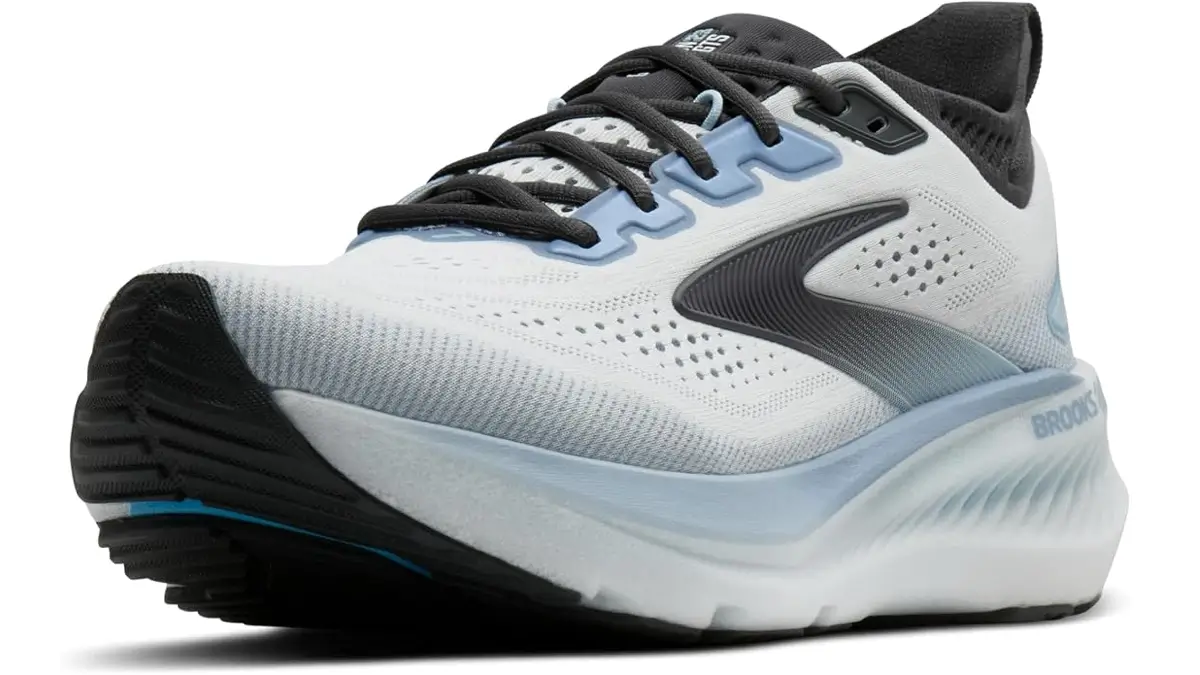
The Brooks Glycerin GTS 23 is the support-focused version of Brooks’ premium Glycerin trainer. It is built for runners and walkers who like a soft, cushioned ride but want more structure underfoot than a neutral shoe provides.
Replacing an older Brooks Transcend? Brooks moved the Transcend’s plush support role into the Glycerin GTS family. Read our Brooks Transcend replacement history or browse the running shoe replacements hub.
The biggest difference from the standard Glycerin 23 (read separate review) is Brooks’ GuideRails system, which adds stability without using the firm medial post found in many traditional stability shoes. That makes the GTS 23 a strong option for long runs, easy daily mileage, walking and anyone who prefers a secure feel as fatigue sets in. Learn more about GuideRails.
This review looks at how the Glycerin GTS 23 performs for running and walking, how its cushioning and support compare with the standard Glycerin 23, who should consider it, and who may be better served by another shoe.
Brooks Glycerin GTS 23 Specs
The Glycerin GTS 23 combines the soft ride of the regular Glycerin 23 with Brooks’ GuideRails support system. That makes it the stability-focused version of Brooks’ premium cushioned trainer.
| Specification | Brooks Glycerin GTS 23 |
|---|---|
| Shoe type | Plush stability road running shoe |
| Best for | Everyday runs, long runs, easy runs and walking |
| Cushioning | DNA TUNED nitrogen-infused foam |
| Support | GuideRails structured support (learn more.) |
| Heel-to-toe drop (?) | 8 mm |
| Men’s weight | 11.0 oz. |
| Women’s weight | 9.8 oz. |
| Men’s widths | Medium, wide and extra wide |
| Surface | Road |
| Upper | Engineered knit |
| Cushion level | Plush |
| APMA Seal of Acceptance | Yes |
| Price | $180 USD at launch on Feb. 3, 2026. Check latest price. |
The GTS 23 is not a lightweight running shoe. Its appeal is the combination of cushioning, stability and a broad platform that feels secure underfoot.
What’s New in the Brooks Glycerin GTS 23?
The Glycerin GTS 23 is an update rather than a complete redesign.
The most important change is under the forefoot. Brooks added 2 mm more DNA TUNED cushioning there, giving runners more foam beneath the front of the foot.
The heel-to-toe drop also changes from 10 mm in the Glycerin GTS 22 to 8 mm in the GTS 23. Heel-to-toe drop is the difference in height between the heel and forefoot. A lower number means the heel sits less dramatically above the front of the foot.
Brooks also replaced the previous double-jacquard knit with a streamlined engineered knit upper. The GuideRails stability system remains in place.
Compared with the Glycerin GTS 22, the main changes are:
- 2 mm more cushioning under the forefoot
- An 8 mm drop instead of 10 mm
- A new engineered knit upper
- A slightly heavier men’s shoe
- The same basic GuideRails stability approach
The result is a shoe that feels more balanced between the heel and forefoot while keeping the support that separates the GTS from the standard Glycerin.
How the Glycerin GTS 23 Performs for Running
The Glycerin GTS 23 works best when comfort matters more than speed.
It is well suited to easy runs, everyday training and long road miles. The generous cushioning gives runners plenty of protection from repeated impact, while the broad platform keeps the shoe from feeling unstable.
DNA TUNED is Brooks’ nitrogen-infused cushioning system. The foam is designed with different cell sizes in different parts of the midsole. The heel is tuned for softer landings, while the forefoot is designed to feel more responsive when you push off.
The result is a ride that feels soft without becoming overly squishy.
That distinction matters in a stability shoe. Foam that is too soft can allow the foot to move around more than some runners want. The Glycerin GTS 23 manages to feel plush while still providing a controlled platform.
It also feels better suited to steady running than aggressive workouts. At 11.0 oz. for the men’s version, the shoe has enough weight that fast intervals and hard tempo sessions are not its strongest use.
For daily mileage, recovery days and long runs, however, that extra substance can work in its favor.
The GTS 23 is especially appealing late in a run. Many runners become less stable when they are tired. That is when the broad base and GuideRails can become more noticeable.
Stability and Support
Support is the main reason to choose the Glycerin GTS 23 instead of the regular Glycerin 23.
Brooks uses GuideRails rather than a traditional medial post. Older stability shoes often used a firm piece of foam under the inside of the foot to reduce inward rolling. GuideRails take a different approach.
They add structure around the foot and are designed to help control extra movement when it occurs.
This can make the shoe useful for runners who overpronate, but you do not need to have obvious overpronation to appreciate the design.
The GTS 23 can also work well for runners who:
- Want a more stable platform under soft cushioning
- Feel less steady late in long runs
- Prefer added guidance without a firm corrective feeling
- Walk long distances and want extra structure
- Spend many hours standing on hard surfaces
The support is noticeable, but it does not dominate the ride.
That is one of the Glycerin GTS 23’s strengths. It feels like a cushioned running shoe first and a stability shoe second.
If you do not need or want that extra structure, the standard Glycerin 23 is probably the better choice.
Cushioning and Ride
Cushioning is one of the biggest reasons to buy the Glycerin GTS 23.
Brooks uses DNA TUNED foam throughout the midsole. It is nitrogen infused, but the practical effect matters more than the technical name.
The heel is designed to compress more softly when you land. The forefoot is tuned to feel more responsive when you move toward your toes.
That gives the GTS 23 a softer landing without making the entire shoe feel slow or mushy.
The extra 2 mm of forefoot cushioning is also important. Many highly cushioned shoes put most of the softness under the heel. The GTS 23 gives the front of the foot more protection than its predecessor.
The move from a 10 mm drop to an 8 mm drop also contributes to the more balanced feel.
This does not turn the GTS 23 into a low-drop shoe. An 8 mm drop is still fairly conventional for a daily running shoe. It simply makes the platform less heel-heavy than before.
If you want to understand how Brooks’ cushioning compares with other running-shoe foams, see our running shoe foam guide.
The overall ride is plush, smooth and stable. Runners who want a highly flexible or very lively shoe may find it too substantial, but runners who value comfort over long distances should find plenty to like.
Fit and Upper
The Glycerin GTS 23 has an accommodating fit by performance-running-shoe standards.
The engineered knit upper wraps the midfoot securely without feeling unusually stiff. It also gives the shoe a softer feel than more heavily reinforced stability uppers.
Most runners should start with their normal Brooks size.
Width is important, though. Brooks offers the men’s Glycerin GTS 23 in medium, wide and extra-wide widths, making it a useful option for people who often struggle to find enough room in stability shoes.
Do not automatically buy a longer size if the shoe feels tight across the forefoot. Moving up in length can create heel movement while failing to solve the real problem.
A wider version may be the better answer.
Brooks’ current customer fit data also strongly favors true-to-size sizing for the men’s version.
The toe box is reasonably accommodating, but this is not a foot-shaped shoe with an unusually wide, square front. Runners who need a lot of toe splay may still prefer a wider width or a brand designed around a broader natural toe shape.
Outsole and Traction
The Glycerin GTS 23 is a road shoe. It is best suited to pavement, sidewalks, treadmills and other firm surfaces. The outsole provides enough coverage for regular daily mileage while maintaining the broad base that helps make the shoe feel stable.
Traction should be suitable for normal road-running conditions, including typical wet pavement. This is not a trail shoe, however. Loose dirt, mud, deep snow and technical terrain require a more aggressive outsole than the Glycerin GTS 23 provides.
The outsole design makes the most sense for runners and walkers who spend most of their time on predictable surfaces.
Is the Brooks Glycerin GTS 23 Good for Walking?
Yes. The Brooks Glycerin GTS 23 is also a strong walking shoe, especially for people who like plenty of cushioning with extra stability.
The broad base gives walkers a secure platform, while GuideRails can help control excess movement as the feet and legs become tired. The extra forefoot cushioning is useful for walking because your weight moves forward through the foot with every step. The 8 mm drop also avoids making the shoe feel excessively built up under the heel.
The GTS 23 may work particularly well for:
- Long-distance walkers
- Older walkers who prefer a stable platform
- Heavier walkers who want substantial cushioning
- People who spend long workdays on their feet
- Travelers expecting hours of walking on pavement
- Walkers who prefer extra guidance underfoot
The weight is less of a drawback for walking than it is for fast running.
Someone looking for a light casual sneaker may find the GTS 23 more shoe than necessary. For long periods on hard surfaces, though, the cushioning and structure are useful advantages.
Glycerin 23 vs. Glycerin GTS 23
The biggest difference between the Brooks Glycerin 23 and Glycerin GTS 23 is stability. Both shoes use DNA TUNED cushioning. Both have an 8 mm drop. Both are designed for road running, everyday runs and longer distances.
The GTS 23 adds GuideRails. That makes the decision fairly simple.
Choose the Glycerin 23 if you want plush cushioning and a naturally stable platform but do not need added guidance. Check price and availability.
Choose the Glycerin GTS 23 if you want the same general cushioning experience with more help controlling excess movement. Check price and availability.
There is also a weight difference. The men’s Glycerin 23 weighs 10.6 oz., while the GTS version weighs 11.0 oz.
For many runners, the extra 0.4 oz. is a reasonable trade-off for added support. Neutral runners who do not benefit from GuideRails have little reason to carry the extra weight.
Who Is the Brooks Glycerin GTS 23 Best For?
The Glycerin GTS 23 is best for runners and walkers who want a soft, premium shoe with meaningful stability.
It makes particular sense if you:
- Want plush cushioning without an unstable feel
- Prefer structured support for overpronation
- Need a comfortable long-run shoe
- Want stability that does not feel overly corrective
- Become less stable when tired
- Need wide or extra-wide sizing
- Walk long distances
- Spend much of the day standing or walking
- Prefer a broad, secure platform
It can also make sense for older runners who care more about comfort and control than minimum shoe weight. Check size and availability on Amazon.
Who Should Skip the Glycerin GTS 23?
The GTS 23 will not suit every runner. You may want another shoe if you:
- Do not need added stability
- Prefer lightweight trainers
- Focus heavily on intervals or speedwork
- Want a very flexible shoe
- Prefer low-drop or zero-drop footwear
- Run mostly on trails
- Want a highly aggressive rocker
- Prefer a very wide, foot-shaped toe box
Neutral runners should look closely at the standard Glycerin 23 before paying for support they may not need. See price for the standard Glycerin 23 on Amazon.
Brooks Glycerin GTS 23 Pros and Cons
The Glycerin GTS 23’s biggest strengths come from pairing premium cushioning with a stable platform.
Pros
- Plush DNA TUNED cushioning
- GuideRails support without a traditional medial post
- Stable, broad platform
- More forefoot cushioning than the GTS 22
- Good for easy runs and long runs
- Strong walking performance
- Wide and extra-wide sizes available
- More balanced 8 mm drop
- APMA Seal of Acceptance
Cons
- Heavier than many neutral daily trainers
- More stability than some runners need
- Not designed primarily for fast workouts
- May feel bulky to runners who prefer lightweight shoes
- Toe box is not especially foot shaped
Alternatives to the Brooks Glycerin GTS 23
Several shoes are worth considering if the GTS 23 is close to what you want but not quite right.
Brooks Glycerin 23
The regular Glycerin 23 is the most obvious alternative. It keeps the plush DNA TUNED cushioning and 8 mm drop but does not include GuideRails. The men’s version is also lighter. It is the better choice for neutral runners who want Glycerin comfort without extra stability. (check price | read review)
Brooks Adrenaline GTS 25
The Adrenaline GTS 25 (check price | read review) is another Brooks stability option and may make more sense if you prioritize everyday support over maximum cushioning. The Glycerin GTS 23 feels more plush and premium. The Adrenaline GTS line has traditionally been the more straightforward everyday stability choice.
See our Brooks running shoe comparison guide for a broader look at the current Brooks lineup.
Asics Gel-Kayano
The Gel-Kayano 33 is a strong alternative for runners who want a cushioned stability shoe from Asics. (check price | read review)
It may appeal to runners who prefer a more structured stability experience, while the Glycerin GTS 23 uses GuideRails to provide support with a less corrective feel.
Fit can also differ considerably between Brooks and Asics, so runners switching brands should not assume the same size will feel identical.
Hoka Gaviota 7
The Hoka Gaviota 7 is worth considering if you want high cushioning and stability but prefer Hoka’s geometry. The Gaviota generally has a more rocker-driven feel, while the Glycerin GTS 23 provides a more traditional heel-to-toe transition. (check price)
Is the Brooks Glycerin GTS 23 Worth It?
The Brooks Glycerin GTS 23 is worth considering if you specifically want both plush cushioning and structured support. That combination is its strongest selling point.
You can find lighter running shoes. You can also find simpler stability shoes. The GTS 23 sits between those categories by offering premium cushioning without giving up a secure platform.
That makes it particularly useful for runners who need some support but do not want an old-fashioned stability shoe with a firm, corrective feel. It also has strong appeal as a walking shoe. Long-distance walkers and people who spend hours standing may value the stable platform as much as runners do.
The regular Glycerin 23 remains the smarter buy for neutral runners who do not need GuideRails.
For runners and walkers who do want added stability, the Glycerin GTS 23 is one of Brooks’ most comfortable support-oriented options.
Check the latest Brooks Glycerin GTS 23 price on Amazon
FAQ: Brooks Glycerin GTS 23
Yes. The Brooks Glycerin GTS 23 is a stability running shoe that uses GuideRails to help control excess movement. It provides more structured support than the standard Glycerin 23.
The GTS 23 adds Brooks’ GuideRails support system. Both shoes use DNA TUNED cushioning and have an 8 mm drop, but the GTS version provides more stability and weighs slightly more.
It can be a good option for runners who overpronate and want a highly cushioned shoe. GuideRails are designed to help control excess movement without using the firm medial post found in many older stability shoes. See also: Best shoes for overpronation.
Yes. Its plush cushioning, broad platform and GuideRails support make it well suited to long walks, travel and extended periods of standing.
Most runners should start with their normal Brooks running shoe size. Current Brooks customer-fit data shows that most men’s reviewers describe the GTS 23 as true to size.
It can be. Brooks offers the men’s version in medium, wide and extra-wide widths. Runners with broad feet should consider width rather than automatically buying a longer shoe.
The men’s Glycerin GTS 23 weighs 11.0 oz. The women’s version weighs 9.8 oz.
The Glycerin GTS 23 has an 8 mm heel-to-toe drop. That is lower than the 10 mm drop of the Glycerin GTS 22.
Yes. Long runs are one of the uses Brooks specifically identifies for the Glycerin GTS 23. Its cushioning and stability can become especially useful as the legs tire.
It can be. Older runners who prefer generous cushioning, a broad platform and added stability may find the GTS 23 appealing. Runners who value low weight or maximum flexibility may prefer another model.
Usually only if they prefer added stability. Neutral runners who do not benefit from GuideRails should also consider the standard Glycerin 23, which offers similar cushioning with less weight.
Yes. The cushioning and stable platform make it a reasonable option for people who spend long workdays standing or walking on hard surfaces. Its running-shoe design may feel more substantial than a lightweight casual shoe, but that can be an advantage during long days. See more of the best shoes for standing all day.