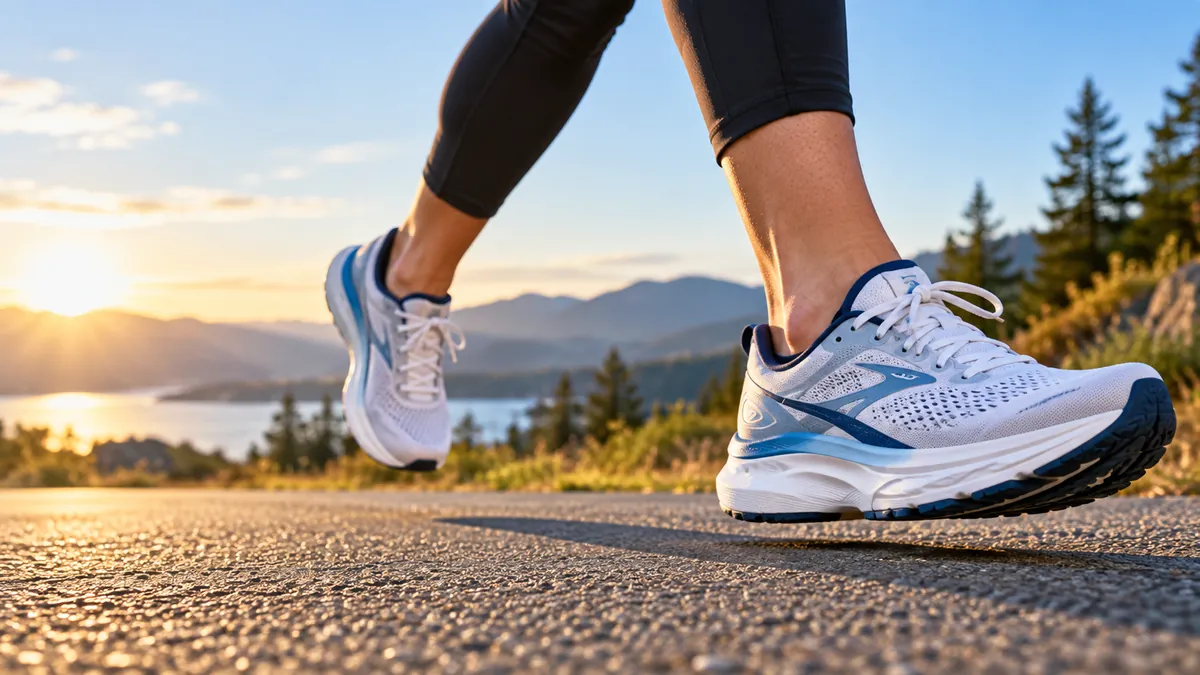
Quick Answer: Adidas Adizero Adios Pro 5 Review: The Adidas Adizero Adios Pro 5 is a lighter, softer version of Adidas’s marathon race shoe, built for runners chasing a goal time at the half marathon or marathon. The big change is underfoot: Adidas dropped the carbon rods of the Pro 4 for a carbon-infused rim around the edge of the sole, which leaves more springy foam directly under your foot. Expect a cushioned, smooth-rolling ride and a close, race-day fit. It is a specialist shoe for race day and key workouts, not an everyday trainer, and it is not built for wide feet.
The Adizero Adios Pro 5 is the newest version of Adidas’s main long-distance road racer, the shoe it sells to everyday runners rather than just elite athletes. It went on sale worldwide on Sept. 22, 2026, replacing the Adios Pro 4, and Adidas ties its design to the far more expensive Adios Pro Evo 3, the ultralight shoe it built for its top marathoners.
If you are new to this category, a “super shoe” pairs a very light, very bouncy foam with a stiff carbon element that helps you roll forward at speed. The Pro 5 fits that mold, with one twist. Instead of carbon running through the middle of the sole, Adidas wraps it around the outside edge. The point is simple: more foam under your foot for comfort late in a race, with the rim keeping things steady. This review is for the runner who has trained for a half or full marathon and wants race-day help, not for the casual jogger looking for one comfortable pair.
If you are deciding whether you need a race shoe at all, start with our best running shoes guide. For race-day alternatives, see our best racing shoes.
Specs
Here are the specifications for the Adidas Adizero Adios Pro 5:
| Type | Neutral carbon-infused road racing shoe |
| Best for | Half marathon and marathon races, plus race-pace workouts |
| Midsole foam | Updated Lightstrike Pro, which Adidas says is lighter and lower in density |
| Stiffening | ENERGYRIM, a carbon-infused frame around the edge of the sole |
| Stack height | 39 mm heel and 35 mm forefoot (about 1 1/2 and 1 3/8 inches of material under you) |
| Heel-to-toe drop | 4 mm, so your heel sits only slightly higher than your toes |
| Weight | About 6.2 oz (roughly 175 grams) on average, per launch figures |
| Upper | Redesigned Lightlock 2.0 mesh with internal support bands and a revised heel |
| Outsole | Lighttraxion with a Continental rubber patch at toe-off |
| Widths | Standard only; no wide version listed at launch |
| Price | $275 at launch in September 2026. Check latest price |
Pros
- At roughly 25 grams (close to an ounce) lighter than the Pro 4, it asks less of tired legs in the last miles.
- More foam sits directly under your foot, so landings should feel softer and more forgiving deep into a race.
- The lower 4 mm drop and thicker forefoot put more cushion under the ball of the foot, where you push off.
- Continental rubber at the toe gives dependable grip where it matters most.
- It brings Adidas’s elite racing ideas to a shoe most runners can actually buy.
Cons
- At $275 at launch, it is a big spend for a shoe you will mostly wear on race day.
- A light racer like this will not last as long as a training shoe, so it is not a daily pair.
- It comes in a standard width only, which rules it out for many wide feet.
- The tall, soft platform can feel less planted on tight turns than a lower shoe.
Adidas swapped the rods for a rim, and that changes how it feels
Every Adios Pro since the first one used Energyrods, thin carbon-infused rods that run along the bones of your foot instead of a single flat carbon plate. The Pro 5 drops them. Its new ENERGYRIM is a carbon-infused frame that sits around the midsole, and Adidas says the change lets it put more Lightstrike Pro foam directly beneath the runner while keeping the stiffness the shoe needs for stability and push-off.
For you, that should translate into a softer landing and a smoother roll forward. The foam is also new: Adidas says the updated Lightstrike Pro is lighter and lower in density, and it claims the foam and rim together return about 9 percent more energy than the Pro 4. Energy return just means how much of the push you put into the foam springs back. Treat the exact number as a brand claim; what matters is that the shoe is designed to feel bouncier and to take more of the sting out of the road.
The shape changed too. The heel stays at 39 mm, but the forefoot grows from 33 to 35 mm, so the drop falls from 6 to 4 mm. That puts a touch more cushion under the ball of your foot and sets you a little more level. Add the weight cut and a redesigned upper, and the Pro 5 is a broader update than the name suggests.
| Adios Pro 5 | Adios Pro 4 | |
| Weight | About 175 grams on average | About 25 grams heavier |
| Stiffening | Carbon-infused ENERGYRIM around the edge | Carbon-infused Energyrods through the middle |
| Stack (heel / forefoot) | 39 mm / 35 mm | 39 mm / 33 mm |
| Drop | 4 mm | 6 mm |
Buy the new model when you want the lighter weight, more cushion under the forefoot and a softer overall feel. Buy the previous model when you liked the Pro 4’s rod-based feel and slightly steeper heel-to-toe drop, or you want a proven racer you have already trained in.
Who the Adios Pro 5 is built for
This shoe makes sense if you have a goal race on the calendar, usually a half marathon or marathon, and you want a shoe that helps you hold pace when you are tired. The extra forefoot cushion and lighter weight are aimed squarely at the back half of a long race, where legs start to fade. It also suits marathon-pace long runs and tempo workouts in the final weeks of training, so you can get used to the feel before race day.
It is a good fit for runners with a narrow to average foot who like a close, secure upper, since race shoes are built to hold you in place rather than give you room to spread out. And if you already own a cushioned daily trainer for most of your miles, the Pro 5 slots in as the special-occasion pair. That is the right way to think about a $275 racer: a tool for a few important days, kept fresh for when they arrive.
Who should probably skip it
Skip the Pro 5 if you want one shoe for all your running. Light race shoes trade durability for speed, and putting daily miles on one wears it out fast and burns through your money. It is also the wrong pick if you have wide or high-volume feet, because there is no wide version. Newer runners and anyone running mainly for fitness will get more from a comfortable, durable trainer than from a race-specific shoe. And if you are a walker, this shoe simply is not designed for you.
If that sounds like you, these are better places to start:
- Adidas Adizero Boston 13: a tougher training shoe from the same Adizero family, built to take regular tempo runs and long runs without wearing out like a racer (check price | read review)
- Hoka Skyward X 2: a much more cushioned, carbon-plated shoe for long training runs and easier days, with a broader, steadier base (check price | read review)
- Asics Novablast 6: a bouncy, comfortable everyday trainer at a far lower launch price for runners who do not need a race shoe at all (check price | read review)
Not sure what you need? Try our Free Shoe Finder, which matches you to shoes based on how and where you run or walk.
A close, race-day fit with a reworked heel
Adidas redesigned the Lightlock 2.0 upper for this version, adding ventilation zones, internal support bands and a new heel construction. The goal of a race upper is lockdown: you want your foot held firmly in place so none of your effort is wasted sliding around inside the shoe. Expect a thin, close-fitting mesh with very little padding. That is great for a fast, secure feel and less great if you like a roomy, plush shoe.
The heel is where Adidas made the most visible fit changes. Adidas’s product copy describes anti-slip foam pods that help lock your heel in, paired with the revised heel shape. Heel slip is a common complaint with minimalist race uppers, so it is worth paying attention to how yours feels on a short run before race day. Lace it snugly, and use the top eyelet for a heel-lock lacing if you feel any movement.
Start with your usual running-shoe size and try the Pro 5 on with the socks you plan to race in. Thin race socks and thicker training socks can change the fit more than you would expect in a shoe this snug. There is only one width, so if standard-width running shoes already feel tight across the ball of your foot, sizing up will usually just add length without fixing the squeeze. In that case, look at a roomier racer instead.
Softer underfoot, with the rim doing the steadying
The ride is the reason to buy this shoe. With more Lightstrike Pro foam directly under your foot and the carbon moved to the edges, the Pro 5 is designed to feel softer and bouncier on landing than the Pro 4, while still feeling stiff enough to roll you forward. Think of it this way: the foam does the cushioning and springing, and the rim keeps the soft foam from feeling wobbly. The 4 mm drop and thicker forefoot add to that, giving you more padding under the ball of your foot where you push off.
That combination points the shoe toward steady, sustained effort rather than short bursts. A smooth, rolling feel suits holding marathon or half-marathon pace mile after mile. Runners who mainly race 5Ks and want a firm, snappy, close-to-the-ground feel may prefer a lower, firmer racer.
In stability terms, the Pro 5 is a neutral shoe. It has no features meant to guide feet that roll inward. The rim around the edge is meant to add some steadiness to a tall, soft platform, but 39 mm of foam under the heel is still a lot, so take tight corners and wet turns with a little care. If you rely on a stability shoe for daily runs, test the Pro 5 on a long workout before trusting it in a race.
Grip comes from a full-length Lighttraxion outsole with a Continental rubber patch at the toe, which is where you push off and where traction counts most. Like every super shoe, the Pro 5 is built light, and light shoes give up mileage. Save it for races and your most important sessions, and do the bulk of your running in a sturdier trainer so the foam still feels fresh on race day.
Is the Adios Pro 5 good for walking?
No. The Pro 5 is shaped and stiffened to roll you forward at running speed, so at walking pace it can feel tippy and oddly firm through the middle. The thin upper and light build offer little support for standing all day, the soft race foam will wear quickly on sidewalks, and the snug fit leaves no room for orthotics. It is an expensive shoe to wear for errands or sightseeing.
If you want something for walking, travel days or long hours on your feet, a cushioned daily trainer or a dedicated walking shoe will be far more comfortable and will last much longer. Our guide to the best walking shoes is a good place to start, and our best racing shoes guide covers the Pro 5’s race-day rivals.
Adidas Adizero Adios Pro 5 Alternatives
If you like the idea of the Pro 5 but want a different feel, these three racers are worth a look.
The Adidas Adizero Adios Pro 4 is the obvious pick if you prefer the rod-based design and slightly steeper heel-to-toe drop of the last version. It is a little heavier, but it is a known quantity if you have already raced in it (check price | read review).
Saucony’s Endorphin Pro 5 takes the more traditional route with a carbon plate and a pronounced rocker shape that rolls you onto your toes. Choose it if you want a more classic plated feel rather than the Pro 5’s rim (check price | read review).
For runners who lengthen their stride as they speed up, the Asics Metaspeed Sky Tokyo is built around exactly that running style, with a carbon plate and foam and geometry tuned for it rather than the Pro 5’s rim design (check price | read review).
Price and value
Adidas launched the Adios Pro 5 at $275 in September 2026. For that, you get a new foam, a new carbon-infused frame, a redesigned upper and a weight cut of roughly an ounce over the Pro 4, for far less than the $500 Adidas charged for the elite-level Adios Pro Evo 3 at its April 2026 launch.
Whether it is good value depends entirely on how you use it. As a race-day and key-workout shoe that you protect between big efforts, it delivers what you are paying for: lighter weight and more cushioning when you are most tired. As an everyday trainer, it is poor value, because a light racer will not last as long as a training shoe. Check latest price.
Final verdict
Best for: half marathon and marathon runners with a goal time who want a light, cushioned, smooth-rolling race shoe.
Avoid if: you want a daily trainer, have wide feet, mostly race short distances or are buying for walking.
Fit: close and secure, with a reworked heel; standard width only; try it with your race socks.
Verdict: The Adios Pro 5 is a thoughtful rethink of Adidas’s racer. Moving the carbon to the edges frees up more foam underfoot, and the result is designed to be lighter and kinder to your legs over 13.1 or 26.2 miles. It is pricey and specialized, so treat it as a race-day tool. For the right runner with the right foot, it is a strong marathon pick. Check the latest price.
Frequently Asked Questions for Adidas Adizero Adios Pro 5
Its listed 39 mm heel stack is under the World Athletics limit of 40 mm for road racing shoes. If you race in sanctioned events with strict shoe rules, check the World Athletics approved-shoe list before race day.
Adidas released the Adizero Adios Pro 5 worldwide on Sept. 22, 2026, at a launch price of $275.
Use it for race-pace workouts and a long run or two so you know how it feels before race day. For most of your miles, a sturdier training shoe will last longer and keep the Pro 5 fresh.
It can help if you are chasing a specific time and want a dedicated race shoe, but you do not need one to finish. A comfortable, cushioned trainer you have run in for months is a safe, cheaper choice for a first marathon.
Not a traditional one. Instead of a plate or the rods used in earlier versions, it uses ENERGYRIM, a carbon-infused frame around the edge of the sole that adds stiffness while leaving more foam under your foot.
It will work, but it is tuned for longer races. Its soft, rolling ride suits holding a steady pace for a half or full marathon, and runners who want a firmer, snappier feel for short races may prefer a lower, firmer racer.
Adidas lists the Adios Pro 5 as true to size with a regular fit and recommends ordering your usual size. It is still a close-fitting race shoe, and Adidas does not list a wide version at launch.