Last Updated on October 21, 2026
| Quick Answer: Best Everyday Walking Shoes. The best walking shoe in 2026 for most people is the Hoka Clifton 11 because it combines cushioning, a smooth rocker, moderate weight and a stable neutral platform. For maximum cushioning, choose the New Balance Fresh Foam X More v6. The Asics Gel-Kayano 33 is our top stability choice, while the Topo Phantom 4 stands out for its roomy toe box. Trail walkers should consider the Altra Timp 6, and women wanting a walking-specific shoe should look at the Nike Motiva 2. Check the Hoka Clifton 11 on Amazon. |
If you specifically like a curved sole that rolls you through each step, see our best rocker bottom shoes guide for walking, stability, orthotics and hard-floor options.
\n\n\n\nWalking shoes have changed significantly in the past few years. Many of the best options are now technically running shoes, but their cushioning, broad platforms, rocker geometries and lightweight foams can make them excellent choices for walking as well. The important part is matching the shoe to how you actually walk, your foot shape, your preferred cushioning level and whether you need neutral or stability support.
For this 2026 update, we focused on current shoe generations rather than recommending older models simply because they remain available online. The selections below cover everyday walking, long-distance fitness walking, overpronation, wide forefeet, trails, maximum cushioning and all-day use. If you need one shoe to bridge ordinary daily walking with long hours on your feet, see our guide to walking shoes for everyday use and long days.
Best Walking Shoes in 2026 at a Glance
These are our top current picks based on walking comfort, fit, support, cushioning, versatility and intended use.
| Walking shoe (click to scroll to review) | Best for | Why it stands out | Potential drawback | Price |
|---|---|---|---|---|
| Hoka Clifton 11 | Best overall walking shoe | Smooth rocker, balanced cushioning, stable neutral platform | Full review | Not enough support for significant overpronation | Check latest price |
| New Balance Fresh Foam X More v6 | Maximum cushioning | Very soft Fresh Foam X cushioning and broad platform | Full review | Bulkier than lighter daily trainers | Check latest price |
| Asics Gel-Kayano 33 | Stability and overpronation | Adaptive support with maximum cushioning | Full review | More structured than neutral walkers need | Check latest price |
| Topo Phantom 4 | Wide toe box | Anatomical forefoot with secure heel and midfoot | 5 mm drop may require adjustment | Check latest price |
| Brooks Ghost 18 | Everyday walking and standing | Predictable cushioning, secure fit and multiple widths | Full review | Less plush than max-cushion shoes | Check latest price |
| Saucony Triumph 24 | Long-distance fitness walking | PWRRUN PB cushioning feels protective and responsive | Full review | More shoe than casual walkers may need | Check latest price |
| Nike Motiva 2 | Walking-specific comfort for women | Strong rocker and soft Comfortgroove cushioning | Current Motiva 2 is primarily a women’s model | Check latest price |
| Altra Timp 6 | Trail walking | Vibram Megagrip outsole, roomy forefoot and zero drop | Zero drop requires adaptation for some walkers | Check latest price |
| On Cloudsurfer Max | Smooth premium walking | High cushioning and rolling CloudTec Phase transitions | Premium price and relatively subdued responsiveness | Check latest price |
How We Chose the Best Walking Shoes
There is no single walking shoe that works for every foot. A heavily cushioned neutral shoe might be excellent for one walker and uncomfortable for someone who prefers firmer support or greater ground feel. For this guide, we looked at several factors that directly affect walking performance:
- Cushioning and impact protection, particularly for pavement and long periods of standing
- Platform width and inherent stability during the slower gait cycle of walking
- Heel-to-toe transition and whether rocker geometry helps the foot roll forward smoothly
- Toe box shape, overall fit and availability of wider sizes
- Support level for neutral walkers and people who overpronate
- Outsole traction for pavement, indoor surfaces and trails
- Current model status as of 2026
We also favor shoes that can serve more than one purpose. A good walking shoe may also work for travel, standing all day, treadmill sessions, errands or occasional running.
Hoka Clifton 11
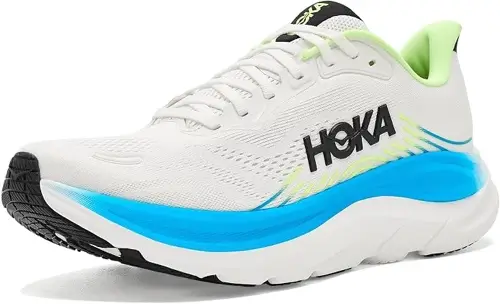
Best for: Overall walking, fitness walking and travel
The Hoka Clifton 11 is our best overall walking shoe for 2026 because it delivers a useful middle ground between lightweight everyday shoes and bulky maximum-cushion models. Its combination of an 8 mm heel-to-toe drop, compression-molded EVA cushioning and Hoka’s Smooth MetaRocker makes it particularly well suited to repetitive pavement walking.
A rocker sole curves upward toward the front of the shoe. Instead of forcing the foot to flex excessively at the toes during every stride, the shape helps the body roll from heel contact toward toe-off. That can feel especially comfortable during long walks.
The Clifton 11 is a neutral shoe, but its relatively broad platform and rearfoot-focused Active Foot Frame give it more inherent stability than its classification might suggest. It should work well for neutral walkers and people with minor stability needs, although it is not a substitute for a true stability shoe if you significantly overpronate.
It is also easier to wear casually than many maximum-cushion shoes. You get substantial protection from hard surfaces without quite as much bulk as a Hoka Bondi.
Key specs include an 8 mm drop, compression-molded EVA cushioning, a neutral support design and a men’s weight of about 10 ounces.
The Clifton 11’s strongest qualities are its smooth walking transition, moderate weight, versatile cushioning and wide-size availability. The main limitation is support. Walkers who need stronger pronation control should look at the Asics Gel-Kayano 33 (scroll to that shoe) instead.
Related: Read our full Hoka Clifton 11 review.
New Balance Fresh Foam X More v6

Best for: Maximum cushioning and long days on your feet
The New Balance Fresh Foam X More v6 ( check price | read review) is one of the strongest choices for walkers who deliberately want a soft, highly cushioned shoe. New Balance describes it as suitable for walking and all-day wear in addition to running, and its wide platform helps keep all that cushioning from feeling excessively unstable.
Fresh Foam X is New Balance’s premium cushioning material. In the More v6, there is a substantial amount of it underfoot, creating a soft ride that helps absorb repeated impacts from pavement and hard indoor flooring.
That makes the shoe particularly appealing for long recreational walks, travel days and occupations that involve hours of standing or moving. The relatively low 4 mm drop also creates a flatter geometry than traditional walking shoes with 10 mm or 12 mm offsets.
The More v6 weighs about 10.8 ounces in the men’s version. Standard, wide and extra-wide options also make it one of the more accommodating choices on this list for people who have trouble fitting conventional shoes.
The trade-off is bulk. Walkers who want a quick, nimble feel may prefer the Hoka Clifton 11 (scroll to it) or Brooks Ghost 18 (go to it). People accustomed to higher-drop shoes may also need a gradual transition to the 4 mm platform.
For more detail on the cushioning material, see our guide to New Balance Fresh Foam.
Related: Read our full review about the more V6 .
Asics Gel-Kayano 33
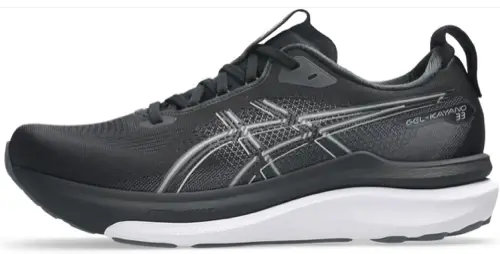
Best for: Overpronation, stability and supportive long-distance walking
The Asics Gel-Kayano 33 is our top walking shoe for people who want more stability than a neutral shoe provides. It combines maximum cushioning with Asics’ FLUIDSUPPORT system, which is designed to guide the foot without relying on an old-fashioned rigid medial post.
The midsole combines FF Blast Plus and FF Blast Max foams. For walkers, the important result is a cushioned but controlled platform rather than a shoe that simply feels soft.
This distinction matters for people who overpronate. Overpronation occurs when the foot rolls inward excessively during the gait cycle. Not everyone who pronates needs a stability shoe, since some inward movement is normal, but walkers who know they do better in supportive shoes should find the Kayano considerably more structured than the Clifton, Ghost or More v6.
The men’s Gel-Kayano 33 weighs about 10.5 ounces and has an 8 mm drop. Asics categorizes it as a maximum-cushion stability shoe.
Its broad footprint is another advantage during walking. Walking generally involves more continuous ground contact than running, so a stable platform can be as important as the softness of the foam.
Neutral walkers may find the Kayano 33 unnecessarily structured. If you do not need extra support, the Clifton 11 or Ghost 18 will generally feel more natural.
Related: Read our full Asics Gel-Kayano 33 review.
Topo Phantom 4

Best for: Wide forefeet, toe splay and stable neutral walking
The Topo Phantom 4 remains one of the most interesting walking shoes for people who dislike tapered toe boxes. Topo combines an anatomical forefoot with a more secure midfoot and heel, allowing the toes to spread without making the entire shoe feel loose.
That design can be particularly useful for walkers with broad forefeet or toes that feel compressed in traditionally shaped running shoes. Standard and wide versions are available.
The Phantom 4 has a 35 mm heel and 30 mm forefoot stack for a 5 mm drop. The men’s version weighs about 9.3 ounces. Topo uses its ZipFoam cushioning, which provides a balanced rather than extremely soft ride.
Although the Phantom 4 is a neutral shoe, the wide platform produces a planted sensation that should suit many walkers who value stability. It also carries the American Podiatric Medical Association Seal of Acceptance.
The 5 mm drop deserves consideration if you currently wear conventional high-drop shoes. Lower-drop footwear can alter how forces are distributed through the foot, ankle and lower leg, so changing gradually is sensible.
Walkers who need significant correction for overpronation should still choose a dedicated stability shoe rather than relying on the Phantom’s broad neutral platform.
Brooks Ghost 18
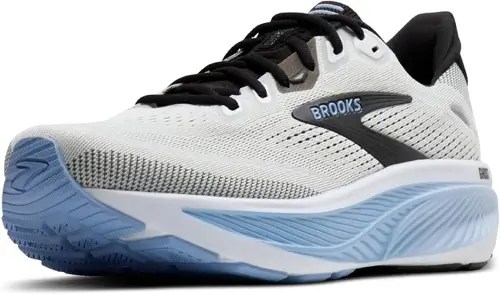
Best for: Everyday walking, standing and walk-run workouts
The Brooks Ghost 18 is one of the safest all-purpose choices on this list. Brooks specifically lists walking among its intended uses, and the shoe combines a familiar 10 mm drop with DNA LOFT v3 cushioning and a stable-feeling neutral platform.
DNA LOFT v3 is a nitrogen-infused foam. In practical terms, the Ghost 18 feels cushioned without becoming deeply soft or unstable. That controlled ride works well for walking because there is enough protection for pavement without the exaggerated softness some people experience in maximum-cushion models.
The men’s version weighs about 10.2 ounces. Brooks also offers multiple width choices, which is useful for walkers who need something narrower or wider than the standard fit.
The relatively high 10 mm drop may also appeal to people who have spent years wearing traditional running or walking shoes. It provides more heel elevation than the More v6, Phantom 4, Timp 6 or Cloudsurfer Max.
The Ghost 18 works particularly well for people who alternate between walking and occasional jogging because it does not push too far toward either extreme. It is not the lightest, softest or most supportive shoe here, but its predictability is precisely what makes it useful.
Walkers who want maximum softness should choose the New Balance More v6 (click to scroll to that shoe). Those needing structured stability should consider the Gel-Kayano 33 (scroll to the Kayano 33).
Saucony Triumph 24
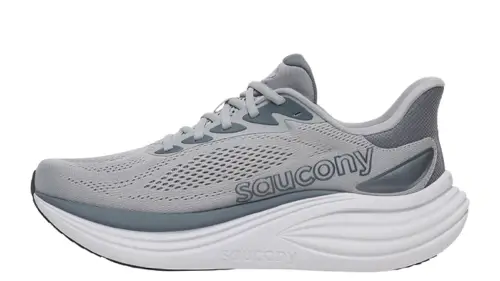
Best for: Long-distance walking and plush responsive cushioning
The Saucony Triumph 24 is one of the strongest choices for walkers who regularly cover longer distances and want substantial cushioning without the heavy, sluggish feel that can come with some maximum-cushion shoes.
The biggest change from the Triumph 23 is the midsole. Saucony replaced PWRRUN PB with its new incrediLUX foam, an aTPU-based cushioning material designed to provide a softer and more protective ride. Saucony says the Triumph 24 has 11% more cushioning than its predecessor while weighing about 0.4 ounce less.
That combination is particularly useful for walking. More cushioning helps reduce the repetitive impact of long sessions on pavement, while the lower weight can make the shoe feel less cumbersome as the miles accumulate.
Saucony also redesigned the outsole with strategically placed rubber cutouts that allow greater forefoot flexibility. This produces a smoother transition through toe-off, rather than making the walker fight against an overly stiff sole. The Triumph 24 therefore feels particularly well suited to steady fitness walks, long recreational walks, travel and days when you spend hours on your feet.
The breathable comfort-mesh upper has additional padding around the tongue and collar while maintaining a secure fit. Regular and wide versions are available for both men and women.
The Triumph 24 is still a neutral shoe, so walkers who need substantial pronation control should consider the Asics Gel-Kayano 33 instead. It also prioritizes plush comfort more than outright speed. Walkers wanting a lighter and slightly more versatile everyday option may prefer the Hoka Clifton 11 (scroll to it). If maximum softness is the goal, the New Balance More v6 (click to scroll to that shoe) is the best fit.
For high-mileage walkers who want a soft, smooth and protective shoe, however, the Triumph 24 is one of the best current choices in Saucony’s lineup.
Nike Motiva 2

Best for: Walking-specific cushioning for women
Unlike most shoes in this guide, the Nike Motiva 2 was designed specifically around walking rather than adapted from a running platform. The current Motiva 2 is primarily offered as a women’s walking shoe, so it is not the most universal recommendation on this list, but it deserves inclusion because its geometry directly targets everyday walking.
Nike uses an exaggerated rocker sole to move the foot through each step. Comfortgroove structures in the outsole allow the foam to compress under load, creating the soft sensation that made the original Motiva popular.
The second generation also receives a lighter design, a more breathable layered-mesh upper and additional room through the forefoot, arch and toe box.
That combination makes the Motiva 2 particularly attractive for casual walking, errands, travel and people beginning a regular walking routine. You do not need to be moving quickly to take advantage of its design.
The rocker is fairly noticeable, however. Walkers who prefer a traditional flat-feeling shoe may need time to get used to it. It is also not intended to provide substantial motion control for overpronation.
For women who specifically want a walking shoe rather than a running shoe that also walks well, the Motiva 2 is one of the most purpose-built choices available.
Altra Timp 6

Best for: Trail walking, hiking and natural toe movement
The Altra Timp 6 replaces the Timp 5 as our trail-focused choice. It combines a roomy FootShape toe box, Altra EGO MAX cushioning and a Vibram Megagrip outsole designed to handle natural surfaces.
For walkers, the biggest difference between the Timp 6 and most shoes in this guide is its zero-drop design. The heel and forefoot sit at the same height, rather than placing the heel several millimeters above the front of the foot.
Some walkers strongly prefer that geometry. Others may experience increased calf or Achilles loading when switching from conventional shoes, particularly if they make the change abruptly.
The Timp 6 has a 30 mm stack height and weighs about 11.45 ounces in the men’s version. It is heavier than the Timp 5, but the current design emphasizes durability, grip and confidence on trails.
The Vibram Megagrip outsole is the key reason to choose the Timp instead of one of the road shoes above. Pavement shoes can feel insecure on dirt, wet rock and uneven paths, while a trail outsole is designed to provide more aggressive traction.
For paved walking, the Timp 6 is unnecessary. For forest paths, hiking trails and mixed natural terrain, it is the strongest option in this roundup.
On Cloudsurfer Max
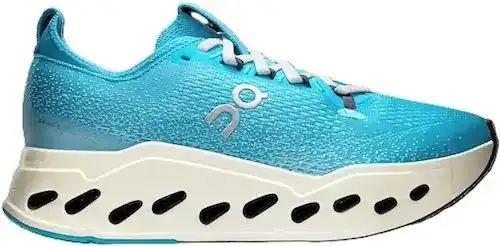
Best for: Smooth premium cushioning and long urban walks
The On Cloudsurfer Max is a better current choice for this guide than the older Cloudstratus 3. On specifically lists walking among the Cloudsurfer Max’s activities, and its high cushioning level is well suited to pavement, treadmills and long days in urban environments.
The shoe uses a double layer of CloudTec Phase cushioning with Helion foam. Instead of the more obvious hollow pods associated with some older On designs, CloudTec Phase is intended to compress progressively as the foot rolls forward.
That creates a smooth sensation rather than a sharply springy one. On rates the Cloudsurfer Max high for cushioning but only low to medium for responsiveness, which tells you a lot about how it feels underfoot. This is primarily a comfort-oriented shoe.
The men’s model weighs about 292 grams, or roughly 10.3 ounces, and has a 6 mm heel-to-toe drop. It is a neutral shoe, although On rates its inherent stability in the medium-high range.
The main disadvantage is value. There are less expensive shoes that provide excellent walking comfort. The Cloudsurfer Max makes more sense for someone who specifically likes On’s ride, styling and rolling transition.
Which Walking Shoe Should You Choose?
The best walking shoe depends less on which model receives the highest overall ranking and more on what your feet need. Here is the quickest way to narrow the list:
- Choose the Hoka Clifton 11 (check sizing availability and price) if you want the best balance of cushioning, smooth transitions and everyday versatility.
- Choose the New Balance Fresh Foam X More v6 (check sizing availability and price) if softness and maximum cushioning matter most.
- Choose the Asics Gel-Kayano 33 (check sizing availability and price) if you need a stability shoe or know you overpronate.
- Choose the Topo Phantom 4 (check sizing availability and price) if conventional shoes squeeze your toes or you prefer a naturally shaped forefoot.
- Choose the Brooks Ghost 18 (check sizing availability and price) if you want a traditional, dependable shoe for walking, standing and occasional running.
- Choose the Saucony Triumph 24 (check sizing availability and price) if you walk long distances at a brisk pace and want responsive cushioning.
- Choose the Nike Motiva 2 (check sizing availability and price) if you are a woman looking for a shoe designed specifically around walking.
- Choose the Altra Timp 6 (check sizing availability and price) if most of your walking happens on trails rather than pavement.
- Choose the On Cloudsurfer Max (check sizing availability and price) if you want a smooth premium ride for long pavement or city walks.
Fit still matters more than a ranking. A technically excellent shoe that presses on your toes, slips at the heel or puts pressure on the wrong part of your arch is not the right walking shoe for you.
What Makes a Good Walking Shoe?
A good walking shoe should provide enough cushioning for your surfaces without becoming unstable. It should also bend or roll naturally through your stride, hold your heel securely and leave adequate space around your toes.
Heel-to-toe drop is another useful specification. A 10 mm drop means the heel sits 10 mm higher than the forefoot. A 0 mm shoe keeps the heel and forefoot level. Neither is automatically better. What feels natural often depends on your current footwear, gait and how gradually you transition between different geometries.
Midsole foam can also change how a shoe behaves. Some foams emphasize softness, while others focus on energy return, durability or stability. Our running shoe foam guide explains technologies such as EVA, PEBA-based foams, Fresh Foam, PWRRUN and other cushioning compounds in more detail.
Finally, don’t assume that more cushioning automatically means greater comfort. A very soft shoe can feel unstable to some walkers, while a firmer platform may feel supportive but harsh to others. The best walking shoe balances cushioning with your preferred amount of structure.
Frequently Asked Questions About Walking Shoes
The Hoka Clifton 11 is our best overall choice because it combines cushioning, a smooth rocker, moderate weight and a stable neutral platform. The best shoe for an individual walker can still differ based on foot shape, support requirements and preferred cushioning.
The New Balance Fresh Foam X More v6 is a strong choice for long periods of standing because of its substantial Fresh Foam X cushioning and broad platform. The Brooks Ghost 18 is another good option for people who prefer a slightly firmer, more traditional feel.
The Asics Gel-Kayano 33 is our top choice for overpronation because it combines maximum cushioning with the FLUIDSUPPORT stability system. People with significant foot or gait problems should seek individualized advice rather than selecting footwear based only on a general category. See more: Best walking shoes for overpronation
The Topo Phantom 4 is particularly good for people with wide forefeet because its anatomical toe box gives the toes more room to spread. New Balance also offers the Fresh Foam X More v6 in multiple widths.
Yes. Several Hoka models work well for walking because of their cushioning and rocker geometry. The Clifton 11 is particularly versatile for everyday walking, while the Bondi line provides a more heavily cushioned alternative.
Many running shoes are excellent for walking. Modern running shoes often provide better cushioning materials, lighter construction and more developed outsole designs than traditional walking shoes. The key is choosing a model whose geometry and support level feel comfortable at walking speeds.
They should be comfortable without feeling unstable. Some people prefer a soft shoe such as the New Balance More v6, while others feel more secure in a controlled shoe such as the Brooks Ghost 18. Maximum softness is not automatically better.
There is no universal ideal. Traditional shoes often use an 8 mm to 12 mm drop, while modern walking and running shoes may use 0 mm to 6 mm. A gradual transition is advisable when making a large change from the drop you currently wear. Learn more about shoe drop,
They can be, particularly for people already accustomed to them. The Altra Timp 6 provides a zero-drop platform with substantial cushioning. People switching from higher-drop shoes should generally transition gradually because zero-drop footwear can increase demand on the calves and Achilles area.
For long walks on concrete, look for cushioning combined with a broad, stable platform. The New Balance More v6, Hoka Clifton 11, Brooks Ghost 18 and Asics Gel-Kayano 33 are all strong candidates depending on your support needs. See: Best shoes for walking on concrete.
The Altra Timp 6 is our top trail choice because it combines cushioning with a Vibram Megagrip outsole designed for dirt, rocks and uneven natural surfaces.
Your toes should not press against the front or sides of the shoe during normal walking. Since feet can swell during longer walks, a little extra space is usually preferable to a close-fitting toe box.
Replacement depends on mileage, body weight, walking surface, shoe construction and wear pattern. Rather than relying only on a mileage number, watch for compressed cushioning, worn outsole rubber, uneven wear, loss of stability or recurring discomfort that was not present when the shoe was newer.
Yes, provided the shoe works comfortably for both activities. Models such as the Hoka Clifton 11, Brooks Ghost 18 and Saucony Triumph 24 are particularly versatile for people who combine walking with occasional running.
No. Premium foams and construction can improve comfort or reduce weight, but price does not guarantee a better fit. Foot shape, cushioning preference and support needs should determine your choice before brand prestige or price. Read about shoe foam technology.