Last Updated on August 25, 2026
Quick Answer: Best Running Shoes for Flat Feet: The Asics Gel-Kayano 33 is our best overall running shoe for flat feet in 2026 because it combines maximum cushioning with modern stability that does not rely on a hard medial post. The Hoka Gaviota 6 provides more substantial support, while the Saucony Hurricane 26 is our choice for runners who want a softer, highly cushioned ride. The New Balance Fresh Foam X 860v15 is especially good for wide feet. Flat feet alone do not mean you need a stability shoe, so choose based on comfort, fit and how your foot moves. Check Latest Price.
Flat feet can make buying running shoes unnecessarily confusing. For years, the standard advice was simple: If you have low arches, buy a heavy motion-control shoe with a firm piece of foam pushing against the inside of your foot.
Running shoes have changed. So has our understanding of flat feet.
Some runners with flat feet also overpronate and feel better with additional stability. Other people have naturally low arches but run comfortably in neutral shoes.
That means the best running shoe for flat feet is not necessarily the shoe with the strongest arch support. You want a shoe that fits your foot, feels stable and provides the right amount of cushioning without creating uncomfortable pressure beneath your arch.
See related: Flat Feet and Fallen Arches: Causes, Symptoms, Treatment and Best Shoes
Here are the best current options we found for 2026.
Best Running Shoes for Flat Feet at a Glance
Here is the short version if you already know what kind of shoe you want.
Shoe | Best for | Cushioning | Stability | Width options | Price at Launch |
|---|---|---|---|---|---|
Asics Gel-Kayano 33 | Best overall | Maximum | Strong | Standard, wide, extra wide in selected versions | $170 | Check latest price |
Hoka Gaviota 6 | Maximum stability | Plush | Strong | Multiple widths | $180 | Check latest price |
Saucony Hurricane 26 | Soft, plush stability | Maximum | Strong | Standard, wide | $170 | Check latest price |
New Balance Fresh Foam X 860v15 | Wide feet | High | Strong | Narrow to extra wide | $150 | Check latest price |
Brooks Adrenaline GTS 25 | Everyday running | Moderate-high | Moderate | Multiple widths | $155 | Check latest price |
Saucony Guide 19 | Best value | High | Moderate | Standard, wide, extra wide | $150 | Check latest price |
Brooks Glycerin GTS 23 | Premium Brooks cushioning | Plush | Moderate-strong | Multiple widths | $180 | Check latest price |
Prices are U.S. launch prices and can change, often to a lower price as the product ages. Check the provided link for current pricing.
How We Chose the Best Shoes for Flat Feet
We did not simply look for shoes marketed as having “arch support.”
For this 2026 update, we compared current availability, stability design, platform width, cushioning, fit, width options, manufacturer specifications and how well each shoe works for everyday running.
We also looked closely at the way each shoe provides stability. Traditional stability shoes often relied on a medial post, a dense piece of foam placed beneath the inside of the foot. Most of our 2026 picks use broader platforms, sidewalls, frames, dual-density cushioning or shoe geometry instead. That can provide support without creating the hard pressure point some runners with low arches dislike.
We also gave extra consideration to shoes available in multiple widths. A stability shoe cannot do its job properly if your foot is hanging over the side of the platform or being squeezed into the wrong shape.
Finally, we considered versatility. Most runners are not buying a shoe exclusively for 5K races. Many want something they can run in, walk in and sometimes wear for several hours at a time.
Asics Gel-Kayano 33: Best Overall
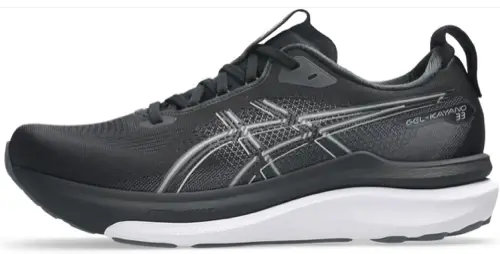
Best for: Runners who want maximum cushioning with substantial but relatively unobtrusive stability
Avoid if: You want a light, flexible shoe for speedwork or racing.
The Asics Gel-Kayano 33 gets our top spot because it represents how much stability shoes have changed.
Asics replaced the previous 4D Guidance System with FLUIDSUPPORT, which combines two different cushioning foams with supportive shoe geometry.
The upper layer uses FF BLAST MAX for softer cushioning. Beneath it is FF BLAST PLUS, which creates a firmer foundation. The broad platform and raised sidewalls also help keep the foot centred.
That means Asics does not need to put an old-fashioned hard medial post directly beneath your arch.
The Kayano 33 has maximum cushioning, an 8 mm drop and a $170 U.S. launch price. It is best suited to easy runs, long runs, run-walk programs, walking and long periods on your feet.
Its biggest weakness is weight. The men’s model is about 10.5 ounces, so this is not a nimble performance shoe.
Why Choose the Kayano 33 Over the Gaviota 6?
Choose the Kayano 33 if you want substantial stability but still want the shoe to feel recognizably like a traditional daily running shoe.
Choose the Gaviota 6 if you prioritize a broad, highly planted platform and maximum stability over weight and agility.
Read our full Asics Gel-Kayano 33 review.
Hoka Gaviota 6: Best for Maximum Stability
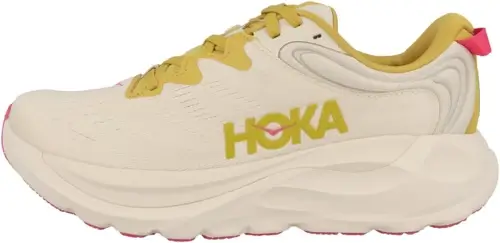
Best for: Runners and walkers who want a wide, planted platform with substantial cushioning
Avoid if: You prefer a light, flexible or fast-feeling running shoe.
The Hoka Gaviota 6 is the shoe we would choose when stability matters more than keeping the shoe small.
Hoka uses an enhanced H-Frame rather than an old medial post. The frame works with the broad base to help reduce excessive inward movement without relying on a hard block beneath the arch.
The Gaviota 6 also illustrates an important point about modern stability shoes: stability can come from the shape of the entire platform.
A broad shoe is naturally harder to tip toward one edge than a tall shoe built on a narrow base.
Hoka lists the Gaviota 6 for everyday running, walking and comfort, which accurately describes where it works best. It is particularly appealing if your runs are easy-paced or you want one supportive shoe for exercise and long days on your feet.
The men’s version has a 6 mm drop and weighs about 10.25 ounces.
Why Choose the Gaviota 6 Over the Hurricane 26?
Both provide maximum cushioning and meaningful stability.
Choose the Gaviota if you value the secure feel of its wide platform and H-Frame.
Choose the Hurricane 26 if you want softer, more luxurious cushioning and a somewhat livelier feel from its new incrediLUX foam.
Read our full Hoka Gaviota 6 review.
Saucony Hurricane 26: Best Plush Stability Shoe

Best for: Runners who want maximum cushioning without feeling unstable
Avoid if: You prefer a firm, low-profile shoe or need something designed primarily for faster running.
The Saucony Hurricane 26 gets one of the most interesting updates in this group.
The big change is incrediLUX, Saucony’s new cushioning foam.
Saucony designed incrediLUX to remain plush under load rather than feeling soft for the first few miles and then compressing excessively. The company positions the Hurricane 26 for running, walking and all-day wear.
That makes sense for this category.
Very soft cushioning can sometimes feel unstable, particularly when a shoe is tall. The Hurricane combines its cushioning with a broad, guided platform to provide a more controlled ride.
The Hurricane 26 has a 6 mm drop, and Saucony lists the men’s wide version around 9.2 ounces. It launched at $170 in the U.S.
For runners with flat feet who dislike firm traditional stability shoes, this could be the most appealing option on the list.
Hurricane 26 vs. Kayano 33
Choose the Hurricane 26 if softness is the priority.
Choose the Kayano 33 if you want a slightly more controlled and traditional stability-shoe feel.
The Hurricane also makes sense for runners who use one shoe for a mixture of running, walking and everyday wear.
Read our full Saucony Hurricane 26 review.
New Balance Fresh Foam X 860v15: Best for Wide Feet
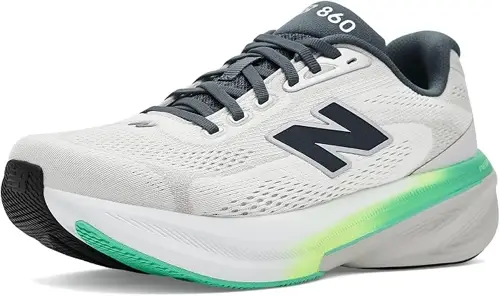
Best for: Runners with flat or wide feet who want substantial cushioning and several width choices
Avoid if: Weight matters to you or you want a lively shoe for tempo runs.
Getting the correct width can be just as important as choosing the correct type of stability. That is where the New Balance Fresh Foam X 860v15 stands out.
New Balance offers the men’s version in narrow B, standard D, wide 2E and extra-wide 4E sizes. Women’s versions are available from narrow 2A through extra-wide 2E in selected colors and sizes.
The shoe combines Fresh Foam X cushioning with New Balance’s Stability Plane.
Instead of depending on a traditional medial post, the stability system works with the broad platform and overall geometry to help guide the foot through the stride.
The v15 is much more heavily cushioned than older 860 models. That comes with a cost. The men’s version is listed around 11.7 ounces, making it one of the heavier shoes here.
For easy running, walking and long hours on your feet, that weight may not matter. For faster running, it will.
Why Choose the 860v15?
Choose it when getting the width right has been difficult.
Someone with a broad, flat foot may be much better served by a properly fitted wide 860v15 than a supposedly “better” stability shoe that squeezes the foot.
Read our full New Balance Fresh Foam X 860v15 review.
Brooks Adrenaline GTS 25: Best Everyday Stability Shoe
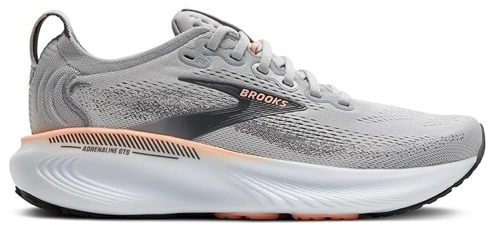
Best for: Runners who want moderate stability without moving into a bulky maximum-cushion shoe.
Avoid if: You want the softest cushioning available or prefer a lower heel-to-toe drop.
The Brooks Adrenaline GTS 25 is the sensible middle ground in this group.
It is not as large as the Gaviota or as plush as the Glycerin GTS, but it provides enough stability for runners who want additional guidance during everyday miles.
Brooks uses its GuideRails system to help keep excessive movement in check.
GuideRails do not try to hold your foot in a fixed position. The idea is to allow your preferred movement path while adding support when motion becomes excessive.
Brooks also added more cushioning under the heel and forefoot in the GTS 25. The shoe uses a 10 mm drop and weighs about 10.6 ounces in the men’s version.
That relatively high drop gives it a more traditional running-shoe feel than some modern alternatives.
It also works well for walking, which Brooks lists as one of its intended uses.
Adrenaline GTS 25 vs. Glycerin GTS 23
Buy the Adrenaline if you want a less expensive, more straightforward daily stability shoe.
Buy the Glycerin GTS 23 if you are willing to pay more for significantly plusher cushioning.
Read our full Brooks Adrenaline GTS 25 review and our explanation of Brooks GTS vs. non-GTS shoes.
Saucony Guide 19: Best Value
Best for: Runners who want modern stability, plenty of cushioning and multiple widths without moving above $150
Avoid if: You want maximum support or the plush feel of the Hurricane 26.
The Saucony Guide 19 sits below the Hurricane in Saucony’s stability lineup, but that may make it the better choice for many runners.
Not everyone with flat feet needs maximum intervention.
The Guide 19 provides a stable platform with PWRRUN cushioning while feeling less substantial than the Hurricane.
Saucony has also made width selection a major strength. The Guide 19 is available in standard, wide and extra-wide versions in selected men’s and women’s sizes. At a $150 U.S. list price, it is also one of the least expensive shoes in our main group.
That gives it an attractive combination of current technology, everyday cushioning and value.
Guide 19 vs. Hurricane 26
Choose the Guide 19 if you want a straightforward everyday stability trainer and do not need maximum cushioning.
Spend the additional $20 on the Hurricane 26 if you specifically want the softer incrediLUX experience and more substantial underfoot protection.
For many recreational runners, the Guide may actually be the more sensible purchase.
Read our full Saucony Guide 19 review.
Brooks Glycerin GTS 23: Best Premium Brooks Option

Best for: Runners who want plush cushioning plus Brooks GuideRails support.
Avoid if: You are looking for a light shoe or do not need structured support.
The Brooks Glycerin GTS 23 answers a simple question: What if you like the plush Glycerin but want more stability?
Brooks starts with its premium Glycerin 23 platform and adds GuideRails.
The GTS version uses Brooks’ DNA Tuned cushioning, including additional foam in the forefoot compared with the previous generation. The result is a soft, highly protective daily trainer aimed at easy runs and long runs.
It has an 8 mm drop and weighs about 11 ounces in the men’s version.
That makes it substantially different from a speed shoe. Comfort and support are the priorities.
The key question is whether you need the GTS version.
If you already feel stable in neutral shoes, the standard Glycerin 23 gives you the same basic cushioning concept with less structure and slightly less weight.
If you prefer additional guidance, choose the GTS.
Read our Brooks Glycerin 23 review and our guide to Brooks GTS vs. non-GTS shoes before deciding.
Which Running Shoe for Flat Feet Should You Buy?
There is enough overlap among these shoes that the easiest way to choose is by deciding what matters most to you.
If you want our best all-around choice, start with the Asics Gel-Kayano 33. Buy on Amazon.
If you want the widest, most planted feeling, look at the Hoka Gaviota 6. Buy on Amazon.
If you want maximum softness, choose the Saucony Hurricane 26. Buy on Amazon.
If your biggest problem is finding a shoe that accommodates a wide or extra-wide foot, start with the New Balance 860v15. Buy on Amazon.
If you want a familiar, dependable everyday stability trainer without maximum cushioning, choose the Brooks Adrenaline GTS 25. Buy on Amazon.
If price matters, the Saucony Guide 19 delivers a lot for $150 or less. Buy on Amazon.
If you already like Brooks but want its plushest stability experience, spend more on the Glycerin GTS 23. Buy on Amazon.
The right answer is not necessarily the shoe offering the most support. It is the shoe that gives you enough support while remaining comfortable.
Do Flat Feet Mean You Need Stability Running Shoes?
No. This is probably the most important thing to understand before spending money on a new pair of shoes.
Flat feet describe the shape of your arch. Overpronation describes movement. They are related, but they are not the same thing.
Pronation itself is normal. Your foot naturally rolls inward to some degree as it accepts your body weight.
Some people with flat feet experience more inward movement and prefer the feel of a stability shoe. Others do not. Many people with flat feet do not have symptoms and require no treatment.
If you have run comfortably for years in neutral shoes, there is no rule saying you suddenly need a stability shoe because you discovered that your arches are low.
If you have pain, a changing arch or significant concerns about your gait, get the problem assessed rather than trying to diagnose yourself from shoe wear alone.
For more detail, see our guide to flat feet and fallen arches and our overpronation guide.
What to Look for in Running Shoes for Flat Feet
Do not shop based on the phrase “arch support” alone. A shoe is a system. The width of the platform, shape of the midsole, heel fit, cushioning, upper and stability technology all affect how secure it feels.
A Broad, Stable Platform
Modern running shoes can contain huge amounts of foam (see our shoe foam guide). That cushioning can be comfortable, but a tall shoe built on a narrow platform may also feel unstable. A broader heel and forefoot create a more planted base beneath your foot. That is one reason shoes such as the Gaviota 6, Kayano 33 and 860v15 can provide substantial stability without an aggressive medial post.
An Arch That Feels Comfortable
More arch support is not automatically better. People with very low arches can actually find a high, hard arch uncomfortable because it creates concentrated pressure beneath the midfoot. You should feel supported, not poked. Do not buy a painful shoe assuming you need to “break your arch into it.”
Enough Width
Your foot should sit on the platform rather than spilling over its edges. Your toes also need room to move. If the standard shoe is too narrow, choose a wide version rather than simply buying a longer shoe. The New Balance 860v15 and Saucony Guide 19 are particularly strong choices for width selection.
Stable Cushioning
Soft cushioning feels good when you first step into a shoe, but softness alone tells you little about stability. A good shoe for someone who wants additional support should remain predictable when your weight moves through it. This is where features such as Hoka’s H-Frame, Brooks GuideRails, New Balance Stability Plane and Asics FLUIDSUPPORT come into play.
A Secure Heel and Midfoot
Your heel should not lift excessively inside the shoe. A secure heel counter and well-fitting midfoot help position your foot over the platform and reduce unnecessary sliding within the shoe.
Can You Run With Flat Feet?
Yes. Flat feet alone do not prevent someone from running. Many people with low arches run without pain and require no special intervention. The more useful question is whether your feet hurt, whether your gait feels unstable and whether your current footwear works for you. If you have painless flat feet and are comfortable in your running shoes, you may not need to change anything.
Pain is different. Persistent arch, foot or ankle pain deserves attention, particularly if your arch has recently changed shape. An adult arch that begins collapsing is different from having naturally low arches throughout your life.
If you notice a new change in one foot, swelling along the inside of the ankle, increasing difficulty walking or persistent pain, consider getting evaluated by a podiatrist or another qualified health professional.
Can Orthotics Help Flat Feet?
They can help some people, but not everyone with flat feet needs an orthotic. An over-the-counter insole can change the amount of cushioning and arch support inside a shoe.
A custom orthotic is different. It is prescribed based on an assessment of your individual feet and needs. If you wear orthotics, look for a running shoe with a removable factory insole and enough internal volume to accommodate your device comfortably. Do not assume that combining a strong stability shoe with an aggressive orthotic automatically gives you “more support.”
Sometimes that combination is too much. The best setup is the one recommended for your needs and comfortable enough to use consistently.
Are Running Shoes for Flat Feet Good for Walking?
Many are excellent walking shoes. In fact, the extra weight of a stability shoe becomes less important while walking because you are not trying to turn your legs over at race pace.
The Hoka Gaviota 6, Asics Gel-Kayano 33, New Balance 860v15, Brooks Adrenaline GTS 25 and Saucony Hurricane 26 are all reasonable running-and-walking crossover choices.
The Gaviota 6 is particularly strong if your priority is a planted platform.
The Hurricane 26 is better if softness matters more.
The Adrenaline GTS 25 provides a less bulky alternative.
Keep in mind that a road-running shoe is not automatically a work shoe. If your job requires certified slip resistance, a safety toe or another workplace feature, choose footwear designed for those requirements.
Frequently Asked Questions About Running Shoes for Flat Feet
Here are the questions that matter most when deciding whether your low arches should affect your running-shoe choice.
The Asics Gel-Kayano 33 is our best overall choice. Its FLUIDSUPPORT system combines dual-density cushioning with supportive geometry, giving runners meaningful stability without using a traditional hard medial post. Runners who want more substantial stability should also consider the Hoka Gaviota 6.
Some Hoka models can be. The Gaviota 6 is Hoka’s strongest current choice in this guide because it combines an enhanced H-Frame with a broad, stable platform. Not every person with flat feet needs a stability Hoka. Neutral models can also work if they match your gait and feel comfortable.
The Gel-Kayano 33 can work particularly well for runners with low arches who also prefer additional stability. The new FLUIDSUPPORT system is designed to provide guidance while allowing natural foot movement rather than relying on an old-style medial post.
Yes. Flat feet do not automatically mean you overpronate or need a stability shoe. If neutral shoes are comfortable and you run without pain, there may be no reason to change.
No. A high or aggressive arch can be uncomfortable for someone with very low arches. The shape of the shoe should match your foot comfortably rather than forcing the foot over a large arch mound.
The New Balance Fresh Foam X 860v15 is our top choice because of its unusually broad width selection. Men’s models are available from narrow through extra wide, while women’s versions also offer several widths. The Saucony Guide 19 is another strong option and is available in wide and extra-wide versions in selected sizes.
No. Flat feet describe arch height. Overpronation describes excessive inward movement of the foot during the gait cycle. A person can have flat feet without problematic overpronation. Likewise, arch height by itself is not enough to determine which running shoe you should wear.