Quick Answer: The New Balance Fresh Foam X 860v15 is our best starting point for plantar fasciitis and wide feet because it combines a steady, cushioned platform with genuine wide-size options. Choose the Saucony Echelon 11 if you use orthotics or need extra shoe volume, the Brooks Ghost Max 4 for a cushioned rolling stride, or the Hoka Bondi 9 for long walks on hard floors. The Brooks Adrenaline GTS 25 suits walkers who prefer more guidance, while the Addiction Walker 2 is a structured everyday alternative. Compare all six picks.
Plantar fasciitis often causes heel pain when you get out of bed or stand after resting. Long walks can also be uncomfortable. Wide feet add another challenge: a supportive shoe may cushion the heel but still squeeze the sides of the forefoot. This guide is for shoppers who need both a comfortable heel and enough shoe width, not just a pointy shoe advertised as having a roomy toe box. Fit and comfort are individual; footwear may help you walk more comfortably, but it does not cure plantar fasciitis.
We looked for current men’s and women’s models with meaningful width options, steady heel fit and useful cushioning. A wide label is not identical to a naturally shaped toe box, and wider is not always better if your heel slips. For the broader condition-specific options see best walking shoes for plantar fasciitis; for the shape of wide footwear see best wide shoes for walking.
These picks are editorial comparisons based on published model specifications, brand fit options and existing BWF reviews, not a claim that we personally wear-tested all six. Our free Shoe Finder can help narrow your choices. Do I need wide shoes or a wide toe box? explains the difference.
Best shoes for plantar fasciitis and wide feet at a glance
Shoe (jump to review below) | Best for | Width and fit | Launch Price |
|---|---|---|---|
Overall choice for wide feet needing stability | Men’s wide and extra-wide options; women’s wide options. Confirm widths by color and size. | $150 | Check latest price | |
Orthotics and extra foot volume | Regular, wide and extra-wide offered; verify gender and size inventory. | $150 | Check latest price | |
Rocker-style cushioned walking | Wide selections offered, with extra-wide availability varying by gender and retailer. | $160 | Check latest price | |
Maximum cushioning on hard floors | Wide and extra-wide options are offered for selected men’s and women’s versions; verify the chosen SKU. | $175 | Check latest price | |
A guided, everyday stability feel | Men’s 2E and 4E options and women’s wide variations offered by the brand; stock varies. | $155 | Check latest price | |
Structured walking and everyday wear | Several width categories including wide and extra-wide, subject to version and stock. | $140 | Check latest price |
Prices are U.S. launch/list-price reference points. Width options can differ by gender, color and size. In particular, ask for the actual wide or extra-wide SKU when the regular upper is too tight.
How to choose a wide shoe when your heel hurts
Start with the location of the squeeze. If pressure is on both sides of the ball of your foot, a real wider width may help. If only your toes feel crowded, the forefoot shape may be the issue. If the top of your foot feels tight, you may need more upper volume or adjustable lacing. Going up a whole shoe size to solve width often leaves too much length and allows the heel to move. The shoe must feel secure at the back and comfortably open at the front.
Next, decide whether you genuinely benefit from stability guidance. High arches and heel pain do not automatically mean you overpronate. New Balance 860v15 and Brooks Adrenaline GTS 25 give more guidance; Brooks Ghost Max 4 and Hoka Bondi 9 are more neutral choices. Saucony Echelon 11 is useful when you prioritize a broad base, a roomy fit and removable insoles. People wearing orthotics should bring them to fittings and check that they sit flat without crowding the instep.
Test shoes late in the day when your feet may be larger. Wear your normal socks, walk for several minutes and check that the heel does not slip, your big and small toes are not compressed and no arch contour pushes painfully against the sole of your foot. You can compare more choices in our arch support shoes guide and wide toe box roundup.
New Balance Fresh Foam X 860v15

New Balance Fresh Foam X 860v15
Best for: Overall choice for wide feet needing stability
The 860v15 combines a supportive platform with cushioning that feels steadier than a soft, high-stack neutral shoe. That makes it a strong starting point when you want room across the forefoot without a heel that moves about. It is the first model I would try if a narrow stability shoe has been squeezing the sides of your feet.
The upper and stability setup will not suit everyone. It can feel structured if you prefer a flexible, neutral walking shoe. Confirm that you are buying the actual wide size rather than a standard shoe with a roomy-looking upper. Walk in both shoes for several minutes. Your heel should remain secure while the widest part of your foot has room. If the arch or midfoot feels pushed up uncomfortably, compare a neutral option rather than assuming you need more support.
Specs and fit: Stability road trainer. Width: Men’s wide and extra-wide options; women’s wide options. Confirm widths by color and size. U.S. launch/list price reference: $150. Check current configuration before ordering, as specifications and availability vary by gender and SKU.
Read the full New Balance Fresh Foam X 860v15 review for more detail.
Saucony Echelon 11
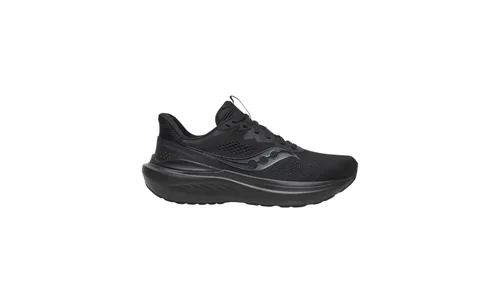
Saucony Echelon 11
Best for: Orthotics and extra foot volume
A roomy shape and removable footbed make this a sensible candidate for people who use custom orthotics or need more internal space than typical athletic shoes provide. It is particularly useful when a shoe’s toe box looks wide, yet the upper still presses across the middle of your foot. Its broad base favors steady walking over fast turnover.
The Echelon is heavier and less lively than a conventional running trainer. Its broad fit is a benefit only if the heel still locks down. A softer, more tapered option might suit someone with a narrow heel and only mild forefoot width needs. Bring the orthotics you actually wear to the fitting. Remove the original footbed if the manufacturer recommends it and confirm that the top of the foot is not compressed when the shoe is fully laced.
Specs and fit: Roomy supportive walking and easy-running shoe. Width: Regular, wide and extra-wide offered; verify gender and size inventory. U.S. launch/list price reference: $150. Check current configuration before ordering, as specifications and availability vary by gender and SKU.
Read the full Saucony Echelon 11 review for more detail.
Brooks Ghost Max 4

Brooks Ghost Max 4
Best for: Rocker-style cushioned walking
The Ghost Max 4 earns its place here for a different reason from the 860: it offers a smooth, rolling transition and substantial cushioning without asking you to choose a pronounced stability system. The tall, broad platform can feel more comfortable when repeated heel contact on pavement is irritating.
A high cushioned platform is not automatically steadier for everybody, especially on uneven ground. Some shoppers prefer a firmer heel or more conventional flex. Avoid choosing solely by foam thickness. Check the sidewalls and heel collar while walking uphill and turning. A wide toe box is of little help if the heel slides or the upper creases sharply at the bunion area.
Specs and fit: Neutral max-cushion walking and running. Width: Wide selections offered, with extra-wide availability varying by gender and retailer. U.S. launch/list price reference: $160. Check current configuration before ordering, as specifications and availability vary by gender and SKU.
Read the full Brooks Ghost Max 4 review for more detail.
Hoka Bondi 9

Hoka Bondi 9
Best for: Maximum cushioning on hard floors
The Bondi 9 offers a high-cushion, rocker-influenced option for long pavement walks and days spent on hard flooring. Its wide and extra-wide versions make it more practical than many soft athletic shoes for people whose forefeet need additional room. It can be especially useful if you want a neutral shoe and prefer a rolling stride.
Despite its cushioned midsole, the Bondi can feel bulky and relatively rigid. The shape of a wide version is not identical to a naturally foot-shaped toe box. Some people find the upper volume or heel fit less forgiving than expected. Try your normal length in the width you need before increasing size. Check whether your small toe and bunion area can move without rubbing once you have walked for ten minutes.
Specs and fit: Neutral max-cushion shoe. Width: Wide and extra-wide options are offered for selected men’s and women’s versions; verify the chosen SKU. U.S. launch/list price reference: $175. Check current configuration before ordering, as specifications and availability vary by gender and SKU.
Read the full Hoka Bondi 9 review for more detail.
Brooks Adrenaline GTS 25

Brooks Adrenaline GTS 25
Best for: A guided, everyday stability feel
The Adrenaline is a familiar option for walkers who prefer consistent support and a stable landing. GuideRails provide a different kind of guidance from a hard post on the inside of the shoe. That can appeal to people who have previously felt comfortable in the Adrenaline family but struggled to find a wider fit.
GuideRails are not required simply because someone has plantar fasciitis. A person who prefers a soft neutral shoe might find the Adrenaline more structured than necessary. Check the width label carefully. Compare it directly with the neutral Ghost Max 4 on the same walking surface. Choose the model that feels balanced and comfortable, not the one with the more technical support description.
Specs and fit: Supportive daily walking and running. Width: Men’s 2E and 4E options and women’s wide variations offered by the brand; stock varies. U.S. launch/list price reference: $155. Check current configuration before ordering, as specifications and availability vary by gender and SKU.
Read the full Brooks Adrenaline GTS 25 review for more detail.
Brooks Addiction Walker 2

Brooks Addiction Walker 2
Best for: Structured walking and everyday wear
Unlike the running-first shoes in this roundup, the Addiction Walker 2 is built as a structured everyday walking shoe. A leather upper, supportive platform and multiple width choices make it worth considering for ordinary commuting or work where athletic styling is not a priority. It offers a very different fit and feel from soft foam trainers.
The leather upper is less breathable and the shoe feels stiffer and heavier than a modern mesh running shoe. It also should not be substituted for safety-toe or work-rated slip-resistant footwear unless the specific model meets your workplace rules. Test it with your usual work socks and watch for pressure from the upper. If your feet swell during the day, measure and fit them at the time they are normally largest.
Specs and fit: Supportive dedicated walking shoe. Width: Several width categories including wide and extra-wide, subject to version and stock. U.S. launch/list price reference: $140. Check current configuration before ordering, as specifications and availability vary by gender and SKU.
Read the full Brooks Addiction Walker 2 review for more detail.
When shoes alone are not enough
Plantar fasciitis is one possible source of heel pain, not a diagnosis that can be made by comparing footwear. A shoe that feels good for one person may feel uncomfortable for another, especially when there is a history of foot injury, diabetes, numbness or persistent swelling. New or worsening pain, significant swelling, or trouble bearing weight deserves professional assessment. Do not assume that thicker cushioning always means better symptom relief.
Shoes work alongside practical measures such as gradually increasing activity, taking suitable breaks and following an individualized treatment plan where needed. A wide shoe is not automatically a therapeutic shoe, and a manufacturer calling a model ‘supportive’ is not proof of medical effectiveness. If an orthotic makes the shoe tight, choose a model with enough depth rather than removing its structure or cutting its upper.
For readers comparing other causes of discomfort, see shoes for walking on concrete, best shoes for bunions and the men’s plantar fasciitis shoe guide.
Frequently asked questions about wide shoes and heel pain
Start with the New Balance 860v15 if you like guidance and a stable heel. Try Saucony Echelon 11 if shoe volume or orthotics are the problem; Brooks Ghost Max 4 and Hoka Bondi 9 are more neutral cushioned options. The best choice is the one that fits your actual foot.
Neither is always better. A wide size gives more room through more of the shoe, while a wide toe box can free up the toes without changing midfoot width. Choose based on the spot that feels tight and keep the heel secure.
Not automatically. Extra length can make your heel slide. First try the correct wide or extra-wide option in your usual length and test it with your regular socks.
No. Stability guidance may help if you already prefer that feel or have specific gait needs. A comfortable neutral shoe can also work. Heel pain alone does not establish that you need pronation control.
Saucony Echelon 11 is a useful candidate because of its roomy design and removable footbed. Other shoes with removable liners may also work, but bring the actual orthotic to a fitting and check depth and heel security.
Yes, wide versions are offered, and some extra-wide options may be available depending on gender, size and color. Check the selected listing rather than assuming every Bondi 9 is wide.
An overly tight shoe may add forefoot pressure and make walking less comfortable; one that is too loose can allow the heel to move. But heel pain can have different causes and should not be diagnosed from shoe fit alone.