Last Updated on October 21, 2026
| Quick Answer: Best Women’s Shoes for Plantar Fasciitis in 2026. The Brooks Adrenaline GTS 25 is our best overall women’s shoe for plantar fasciitis if you want cushioning plus stability. The Hoka Bondi 9 is a better choice if maximum cushioning is your priority, while the Brooks Ghost Max 4 works well for neutral feet and orthotics. Women who need extra width should consider the New Balance 1080v15. For non-running footwear, the Vionic Tide II sandal, Dansko Professional clog and Vionic Uptown Loafer provide supportive alternatives for everyday wear. See our running shoes recommendations as well as lifestyle and recovery shoes. |
Plantar fasciitis can make the first steps in the morning painful and turn a normal day of walking or standing into an endurance test. The right shoes will not cure plantar fasciitis, but they can make walking more comfortable by cushioning your heel, supporting your arch and giving your foot a stable platform.
The best choice depends on more than how soft a shoe feels. Your arch height, foot width, heel fit and walking pattern all matter. Some women benefit from a stability shoe, while others do better in a neutral cushioned model.
Best Running Shoes for Women With Plantar Fasciitis
Running shoes are often a good choice even if you primarily walk. They typically combine heel cushioning, supportive midsoles and durable outsoles in a lightweight package.
| Shoe (linked to full review if available) | Support | Best for | Drop | Widths | Why we like it | Launch price |
|---|---|---|---|---|---|---|
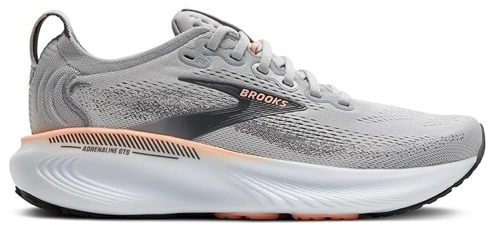
| Brooks Adrenaline GTS 25 | Stability | Best overall | 10 mm | Multiple | GuideRails support, balanced cushioning and a secure heel make it a strong all-around choice | $155 | Check latest price |
| Hoka Bondi 9 | Neutral | Maximum cushioning | 5 mm | Standard, wide | Thick cushioning and a broad platform work well for walking and long days on hard surfaces | $175 | Check latest price |
| Brooks Ghost Max 4 | Neutral | Walking and orthotics | 6 mm | Standard, wide | Maximum cushioning, a broad base and GlideRoll rocker create a stable, smooth ride | $160 | Check latest price |
| Asics Gel-Kayano 33 | Stability | Overpronation | 8 mm | Standard, wide | High cushioning and FLUIDSUPPORT stability help control excessive inward movement | $170 | Check latest price |
| New Balance 1080v15 | Neutral | Wide feet | 6 mm | Narrow to extra-wide | Soft cushioning and an unusually broad range of widths make it easier to get the fit right | $170 | Check latest price |
Best Non-Running Shoes for Women With Plantar Fasciitis
You do not have to wear running shoes everywhere. Supportive sandals, work shoes, loafers and slippers can help you avoid switching from a supportive athletic shoe to something very flat or poorly cushioned.
| Shoe (linked to full review if available) | Style | Best for | Why we like it | Price |
|---|---|---|---|---|
| Vionic Tide II | Sandal | Warm weather | Contoured arch support, shock-absorbing EVA cushioning and a supportive footbed | Check latest price |
| Dansko Professional | Clog | Standing at work | Roomy toe box, supportive midsole, rocker outsole and stable platform | Check latest price |
| KURU ATOM 2 Slip-On | Casual slip-on | All-day wear | Deep heel support, substantial cushioning and a 10 mm heel-to-toe drop | Check latest price |
| Vionic Uptown Loafer | Loafer | Office wear | Contoured arch support and a deep heel cup in a dressier shoe | Check latest price |
| Oofos OOlala | Recovery sandal | Home and recovery | Soft impact-absorbing foam and a contoured footbed provide cushioning after long periods on your feet | Check latest price |
| Vionic Relax II | Slipper | Around the house | Cushioned EVA midsole and adjustable fit provide a supportive alternative to walking barefoot | Check latest price |
Not Sure Which Shoe Is Right for You?
Use our free shoe finder to narrow down your options based on your foot shape, support needs, cushioning preference and how you plan to use your shoes.
How We Chose These Shoes
We looked for shoes that combine cushioning with support rather than simply choosing the softest models available.
Important features included heel cushioning, arch support, a stable platform, secure heel fit and enough width options to accommodate different foot shapes. We also considered whether each model is currently available and whether it serves a clear purpose, such as walking, standing, running, work or wearing around the house.
No single shoe is best for everyone with plantar fasciitis. Your foot shape and the way you move are important parts of the decision.
How to Choose Women’s Shoes for Plantar Fasciitis
The best shoes for plantar fasciitis should feel supportive immediately. Do not assume a painful or uncomfortable shoe simply needs to be “broken in.”
Look for heel cushioning
Plantar fasciitis usually causes pain around the bottom of the heel because the plantar fascia attaches near the heel bone.
Cushioning helps reduce impact as your foot contacts the ground. Models such as the Hoka Bondi 9 and Brooks Ghost Max 4 provide considerably more cushioning than a traditional casual shoe.

More cushioning is not always better, however. Your foot should feel stable rather than as though it is sinking or wobbling inside the shoe.
Make sure your arch feels supported
The plantar fascia helps support the arch of your foot, so a supportive footbed can help distribute pressure across a larger area.
Arch support should feel comfortable rather than aggressive. If an arch bump feels painful when you first put the shoe on, it is probably not the right shape for your foot.
Decide if you need a stability shoe

Having plantar fasciitis does not automatically mean you need a stability shoe.
Stability shoes are primarily designed to control excessive foot movement. If your feet roll too far inward as you walk or run, known as overpronation, shoes such as the Brooks Adrenaline GTS 25 and Asics Gel-Kayano 33 may be helpful.
Women with a more neutral walking pattern may prefer shoes such as the Hoka Bondi 9, Brooks Ghost Max 3 or New Balance 1080v15.
Pay attention to heel-to-toe drop
Heel-to-toe drop is the difference between the height of your heel and the height of your forefoot inside a shoe.
For example, a shoe with a 10 mm drop positions your heel 10 mm higher than your forefoot.
A moderate drop may feel more comfortable for some people with plantar fasciitis because it reduces how far the calf, Achilles tendon and tissues under the foot must stretch with each step.
There is no single ideal drop for everyone. Comfort and your previous footwear habits matter.
More info on heel to toe drop for plantar fasciitis.
Make sure the heel fits securely
A shoe can have excellent cushioning and still be wrong for you if your heel moves around excessively. Look for a snug but comfortable heel fit. Your heel should not repeatedly lift out of the shoe as you walk. This is especially important with loafers, clogs and slip-on shoes.
Get the width right
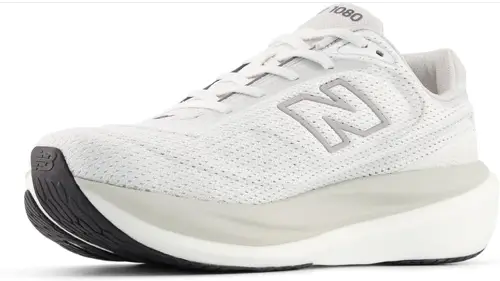
Women’s feet vary considerably in width. Do not automatically move up a full shoe size because a shoe feels tight across the forefoot. Instead, look for a wider version of the shoe. The New Balance 1080v15 is particularly useful here because it is available in widths ranging from narrow to extra-wide.
See also best wide running shoes.
Consider orthotics
Some people with plantar fasciitis use over-the-counter insoles or custom orthotics to provide additional support.
If you use one, look for shoes with enough internal depth and preferably a removable factory insole. This allows you to add your orthotic without making the shoe excessively tight.
The Brooks Ghost Max 4 is particularly worth considering for this purpose because Brooks lists walking and orthotic use among its intended uses. (Check price | Read review.)
What Shoes Should You Avoid With Plantar Fasciitis?
You do not have to eliminate an entire category of footwear, but some shoes are more likely to cause problems when your plantar fascia is already irritated.
In particular, be cautious with:
- Worn-out shoes that have lost their cushioning and support
- Very flat shoes with little cushioning or arch support
- Shoes that allow your heel to slide around
- Shoes that squeeze your toes or forefoot
- Extremely soft shoes that feel unstable underfoot
- Sudden changes to minimalist or zero-drop footwear when you are accustomed to higher-drop shoes
- Walking barefoot on hard floors if doing so increases your pain
Supportive footwear is only one part of managing plantar fasciitis. Persistent or worsening heel pain should be assessed by a health professional rather than managed indefinitely by changing shoes.
Frequently Asked Questions
They can be. Modern running shoes often provide the cushioning, heel support and stable midsoles that people with plantar fasciitis find comfortable. You do not have to be a runner to wear them. Many running shoes work very well for everyday walking and standing.
Not necessarily. Plantar fasciitis and overpronation are different issues. A stability shoe may be useful if your foot also rolls excessively inward, but people with a neutral gait may be more comfortable in a neutral cushioned shoe.
Yes, but look for supportive sandals rather than thin, flat flip-flops. A contoured footbed, arch support and cushioning can make sandals much more comfortable. The Vionic Tide II and Oofos OOlala are two examples.
More Plantar Fasciitis Resources
Want to go deeper? These guides can help you find the right shoe or understand what may be causing your heel pain.
- Use our shoe finder to get a custom recommendation
- Best shoes for plantar fasciitis for men
- Best shoes for plantar fasciitis for women
- Best walking shoes for plantar fasciitis
- Ultimate plantar fasciitis guide