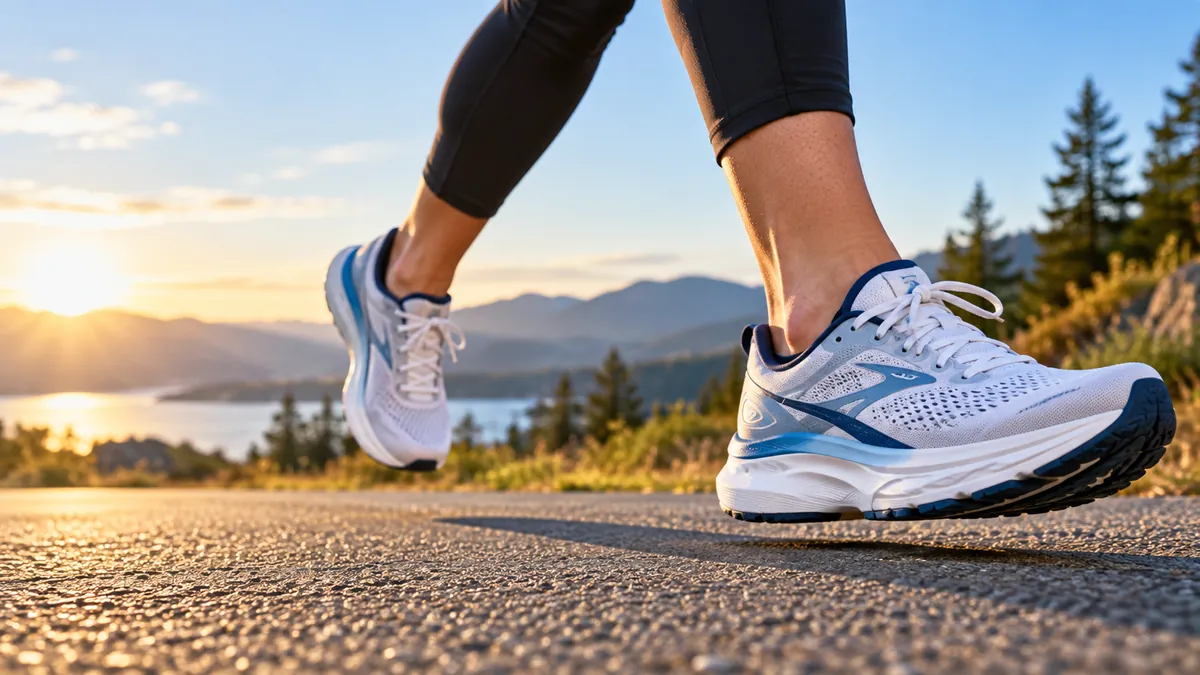
Fast marathon racer, snug specialist fit
Quick Answer: Nike Alphafly 3 Running Shoe Review: The Nike Alphafly 3 is a carbon-plated road racing shoe built for half marathons and marathons, and it is now the previous version after the Alphafly 4 arrived. Its main feature is soft, springy cushioning with a stiff plate that rolls you forward at race pace. It suits road racers with narrow to average feet who want a dedicated race-day shoe. The biggest limitation is a snug fit that comes in standard width only. If you want a shoe for walking, standing at work or sore feet, skip it.
The Nike Alphafly 3 is Nike's previous-generation marathon racer, and Nike markets it for half marathons and marathons. The Alphafly 4 has now replaced it at the top of Nike's racing range. Nike's other racer, the Vaporfly 4, is a lower, flatter shoe that our Nike Vaporfly 4 review finds better suited to 5K to half-marathon races. If you are comparing race shoes across brands, our best racing shoes guide gives the wider view.
This review covers the Alphafly 3, which Nike announced on Nov. 29, 2023, and first put on sale on Jan. 4, 2024. It is now the previous version. The newer Alphafly 4 is now on sale on Nike's U.S. store, and Nike's U.S. store still lists both the Alphafly 3 and the Alphafly 4.
Who will care? Runners racing a half or full marathon on roads. Walkers and anyone shopping for sore feet will find better options below.

Nike Alphafly 3 specs: light, plated and standard width only
| Spec | Nike Alphafly 3 |
|---|---|
| Type | Carbon-plated road racing shoe |
| Best for | Half marathon and marathon racing on roads |
| Midsole | ZoomX foam, one connected piece from heel to forefoot |
| Forefoot cushioning | Two Air Zoom units |
| Plate | Full-length carbon fiber Flyplate |
| Heel-to-toe drop | 8 mm |
| Weight | About 218 g (7.7 oz), men's size 10; about 174 g (6.1 oz), women's size 8 |
| Upper | Atomknit 3.0 with knit tongue and padded heel pods |
| Outsole | Fast Shot rubber |
| Sizes (Nike U.S.) | Men's 6 to 15 (half sizes through 13); women's 5 to 12 |
| Widths | Standard only |
In plain terms, the Alphafly 3 is light for a shoe with this much cushioning, which means less weight to lift with every stride over a full marathon. ZoomX is the foam Nike uses in its racing shoes. The full-length carbon plate is a stiff sheet inside the midsole that stops the shoe from bending much, so it rolls you forward instead.
The 8 mm drop means the heel sits a little higher than the forefoot. That is a middle-of-the-road setup that runners coming from everyday trainers should not find extreme. Learn more about shoe drop. The width listing matters most for readers with sore or swollen feet: Nike sells this shoe in one standard width, so there is no wider version to fall back on.
What you gain and what you give up with the Alphafly 3
Pros
- Light for a long-distance racer, so you carry less weight on your feet through the late miles of a half or full marathon.
- Nike designed the one-piece ZoomX midsole for a smoother heel-to-toe roll than the split-sole Alphafly 2, so the ride should feel more even from landing to push-off.
- The carbon plate and two forefoot Air Zoom units are built for a springy push-off at race pace, which suits runners chasing a goal time.
- A padded knit tongue and padded heel pods are designed to ease lace pressure and cushion the heel over long race distances.
Cons
- Standard width only with a close race fit, so wide or swollen feet will likely feel squeezed.
- At walking pace or a slow jog, the stiff plated build can feel awkward and clunky rather than comfortable.
- It is a race-day shoe with a light outsole, so wearing it for daily miles or errands uses up an expensive shoe quickly.
- It is now the previous version, and the Alphafly 4 adds Nike-claimed upgrades such as updated forefoot Air Zoom units Nike says are softer and quieter, and an updated upper.
What changed from the Alphafly 2: one connected midsole
The biggest change from the Alphafly 2 sits under your foot. Nike says the Alphafly 3's ZoomX midsole is fully connected from heel to forefoot, where the Alphafly 2 used a split midsole. Nike designed that for a smoother heel-to-toe transition, so the shoe should feel less like two separate sections as you roll through each step.
The upper moved to Atomknit 3.0 with an integrated knit tongue, and the outsole switched to a lighter Fast Shot material. Together those changes trim weight, which fits Nike's claim that the Alphafly 3 is the lightest Alphafly it has made. Nike also widened the carbon plate slightly; the stability section below explains what that may mean underfoot.
Who should buy it: road racers with narrow to average feet
The Alphafly 3 makes the most sense for a fairly small group of runners. It suits you best if one or more of these sounds like you:
- You are training for a road half marathon or marathon and want a separate shoe kept for race day and goal-pace workouts.
- Your feet are narrow to average in width, since Nike sells it in a standard width only.
- You already like Nike's ZoomX shoes and want a marathon-focused racer rather than the lower, flatter Vaporfly 4, which our review sees as a 5K to half-marathon shoe.
- You have raced in the Alphafly 3 before and know it fits, or you would rather buy the previous model than pay for the newest one.
Surface and setting matter too. This is a shoe for paved roads and race courses, worn for a few hours at a hard effort. If that is not how you plan to use it, the rest of this review will likely steer you toward something else, and our best Nike running shoes for men and best Nike running shoes for women guides cover Nike's wider range.
Who should probably skip it: walkers, workers and wide feet
Most readers of this site should probably skip the Alphafly 3, and that is no knock on the shoe. It is a specialist racer, and these readers are better served elsewhere:
- Walkers and people on their feet all day on hard floors. The shoe is made for running fast, not for steady comfort at walking pace or standing still.
- Anyone choosing a shoe mainly because of heel pain or plantar fasciitis. A racer is not designed as a support or comfort shoe, and what feels good with heel pain depends on the person.
- People with wide or swollen feet. It comes in standard width only, with no wide version.
- Runners who want stability features, a grounded feel, or one shoe for every run of the week.
If one of those describes you, these are better starting points:
- The Nike Vomero 18, Nike's cushioned daily trainer, if you want everyday cushioning for daily runs and long walks without a racing plate. Read our Nike Vomero 18 review.
- The Asics Gel-Contend 10, if your feet are broad or swell. Our Asics Gel-Contend 10 review lists men's sizes in wide and extra-wide and women's sizes in wide, and finds walking is where it makes the most sense.
- The Asics GT-1000 15, if you want stability features for easy runs and walks. Our Asics GT-1000 15 review finds its planted base and firm heel suit walking and feet that roll inward a little, and it comes in wider fittings on many colors.
Want a different shoe? Try our running shoe guide or use our free shoe finder to get a custom recommendation.
Fit, feel and race-day performance: snug, springy and built for speed
The Alphafly 3 trades room for speed. It wraps the foot closely in a single standard width, and its stiff, springy build pays off at race pace rather than at an easy jog or a walk. Here is what that means for fit, upper comfort, ride, stability and outsole wear.
A snug fit with no wide option
Nike sells the Alphafly 3 in men's sizes 6 to 15 (half sizes through 13) and women's sizes 5 to 12, and neither page lists a wide width. That makes average and narrower feet the natural fit.
The customer review summary on Nike's product page says the shoe runs small and narrow, especially for wider feet, and suggests sizing up a half to a full size. That is customer feedback, not Nike's sizing advice. Keep in mind that a longer shoe does not make a narrow shoe wider: it can leave extra room at the toes while the midfoot still feels tight. Start with Nike's size chart and our Nike shoe sizing guide, use our shoe size converter if you are coming from another brand, and buy where returns are easy so you can check the fit at home.

A close knit upper with padding where laces press
Nike says the Atomknit 3.0 upper improves containment, breathability and midfoot support. Containment means the knit holds your foot in place over the midsole so it does not slide around, which matters on turns and late in a race. The trade-off of a close, race-focused wrap is less spare room for feet that swell over long distances. Nike adds an integrated knit tongue with lofted padding to ease lace pressure across the top of the foot, notched laces, and lofted Flyknit heel pods that pad the heel and lower Achilles area. Those details suggest Nike tried to make a racer more comfortable for a full marathon without adding much weight.
A springy ride that works best at a quick pace
Here is how Nike describes the parts that shape the ride. ZoomX foam runs from heel to forefoot in one piece. Two Air Zoom units sit under the forefoot, which Nike says cushion impact and return energy. A full-length carbon fiber Flyplate stiffens the shoe. Put together, that setup is designed to feel soft as you land and springy as you push off, with the stiff plate encouraging your foot to roll forward instead of bending at the toes.
Our judgment from that design: this ride is built for running at a quick, steady effort, such as goal marathon pace. At slower speeds, a stiff plated shoe can feel clunky because you are not moving fast enough to roll through it smoothly. Our guide to carbon-plated running shoes explains how these shoes differ from everyday trainers. None of this changes how your foot moves or corrects your stride; it changes how the shoe feels underfoot.
Stable in a straight line, less so for side-to-side moves
Nike says the Flyplate is slightly wider than on the Alphafly 2, for propulsion and stability. A wider plate gives a broader base, which may help the shoe feel more settled when you run in a straight line. Even so, Nike sells it as a road racer, not a stability shoe, so do not expect the firm supports or guide features of one. Judging from the design, on sharp turns, uneven ground or side-to-side moves, a soft, cushioned racer like this is likely to feel less planted than a lower daily trainer.
A light race outsole you will want to save for race day
The outsole is Nike's Fast Shot material, which Nike says gives multi-directional traction while saving weight. Saving weight generally means less rubber, so this outsole is built for race day on paved roads rather than heavy daily use. How long any running shoe lasts varies with your body weight, stride, the surfaces you run on and how often you wear it. That is why it makes sense to keep a shoe like this for races and key workouts and do everyday miles in a tougher trainer.

What else it is good for, and what it is not
Beyond the marathon, the Alphafly 3 suits road races from the half marathon up and faster road workouts at goal pace. It is a poor match for trails, where the light outsole and soft platform are not built for rocks, roots or mud. It is also a poor match for gym classes or court sports, where you need a low, steady base for side-to-side moves, and for work shifts, where a snug racing fit and stiff plate add nothing you need. It is a specialist shoe, and it works best when it stays one.
Men's version | Women's version
Is the Nike Alphafly 3 good for walking? Not really
The Alphafly 3 can carry you through a walk, but almost everything about it is aimed at running fast. On sidewalks and treadmills at walking speed, the stiff plate gives the clunky feel described in the ride section above rather than a smooth roll. For errands, dog walks and travel days, the snug race fit leaves little room for feet that swell, and the light race outsole is better kept for race day.
Standing on hard floors is the poorest match. A racer is built to move you forward, not to keep you comfortable through an eight-hour shift, and there is no wide option for feet that swell over a long day. If walking, standing or sore feet are why you are shopping, start with our best walking shoes guide or our best shoes for foot pain picks, which focus on everyday comfort instead of race speed. For long shifts, our guide to comfortable shoes for walking and standing long periods helps, and if most shoes squeeze your feet, our guide to whether you need wide shoes explains how true wide widths differ from a roomy toe box.
Alphafly 3 vs. Alphafly 4: new upgrades or a fit you already know
| Feature | Nike Alphafly 3 | Nike Alphafly 4 |
|---|---|---|
| On sale from | January 2024 (first colorway) | Limited release September 2026; wide U.S. release October 2026 |
| Midsole foam | ZoomX, one connected piece | ZoomX LT plus ZoomX, with extra cushioning under the curved forefoot |
| Forefoot Air | Two Air Zoom units | Two forefoot Air Zoom units, updated (Nike says quieter and softer) |
| Plate | Full-length carbon fiber Flyplate | Wide carbon fiber Flyplate |
| Upper | Atomknit 3.0 | Updated Atomknit with open-hole mesh zones |
| Drop | 8 mm | 8 mm |
| Women's weight | About 174 g (6.1 oz), women's size 8 | About 188 g (6.6 oz), women's size 10 |
Nike lists those weights at different sample sizes, so they are not a direct match. Choose the Alphafly 4 when you want Nike's newest version and its claimed upgrades: updated forefoot Air Zoom units Nike says are softer and quieter, a second, lighter ZoomX foam and a more open upper for airflow. Nike sums up the update as "more energy with less weight", which should mean a livelier feel for the same effort, though that is Nike's claim.
Choose the Alphafly 3 when it already fits you well, you have raced in it before, or you find it for clearly less than the new model. The basic recipe of ZoomX foam, forefoot Air Zoom cushioning and a carbon plate is the same idea in both, so the older shoe is still a full racing shoe, not a cut-down one.
Nike Alphafly 3 alternatives for different race-day needs
If you like the idea of the Alphafly 3 but want something a little different, these racers are worth a look. The Nike Alphafly 4 is the obvious first stop if you want the same long-distance purpose with Nike's newest foam, Air units and upper. The comparison table above covers exactly what changed.
The Nike Vaporfly 4 is the pick if your races are shorter or you want to feel closer to the road. Our Nike Vaporfly 4 review finds it suits 5K to half-marathon racers who want a flatter, lower ride than the Alphafly gives. Like the Alphafly 3, it is a racer first and not a walking shoe.
The Adidas Adizero Adios Pro 5 takes a different approach to the same half and full marathon job. Instead of a carbon plate running through the middle of the sole, Adidas wraps a carbon-infused rim around the outside edge, so more foam sits directly under your foot. Our Adidas Adizero Adios Pro 5 review finds that should make landings feel softer late in a race, and it adds a Continental rubber patch at the toe for grip where you push off. It also comes in standard width only, so it does not solve a wide-foot problem.
Price and value: worth it only for long road races
Value with a racer like this comes down to how often you wear it and for what. The money goes furthest for runners who keep the Alphafly 3 for a few goal half marathons or marathons and the race-pace workouts that lead up to them. Used that way, you are paying for a specialist shoe on the days that matter most, while a cheaper trainer handles the rest of the week.
It is poor value as a daily-mileage shoe, for the reasons in the outsole section above: an everyday trainer will feel better at slow speeds and handle more use. As the previous version, the Alphafly 3 is most worth a look for runners who already know the fit works for them. Prices and size stock change often, so check the latest price before you buy.
Check latest price: Men's version | Women's version
Final verdict on the Nike Alphafly 3
- Best for: Road half marathon and marathon racers with narrow to average feet who want a springy, cushioned race-day shoe.
- Avoid if: You want an everyday walking, work or training shoe, or need a wide fit.
- Fit: Snug and standard width only.
- Verdict: A specialist marathon racer that is now the previous version. It makes sense if it fits you and costs less than the Alphafly 4.
Men's version | Women's version
Frequently asked questions about the Nike Alphafly 3
Is the Nike Alphafly 3 good for plantar fasciitis or heel pain?
It is not designed for that. The Alphafly 3 is a racing shoe, not a support or comfort shoe. The NHS suggests shoes with cushioned heels and good arch support for plantar fasciitis, and a lightweight racer is not designed around that. Some people with heel pain find a cushioned, stable everyday shoe more comfortable, but what helps depends on the person. The NHS advises seeing a doctor if foot pain does not improve within two weeks, is severe, keeps getting worse or comes with tingling or loss of feeling, or you have diabetes and foot pain; a podiatrist or doctor is the right place to start. Our best shoes for foot pain guide covers everyday options.
Does the Nike Alphafly 3 squeak or wear out quickly?
Nike's own customer review summary, which Nike says is AI-generated from buyer reviews, mentions squeaking or clicking and some wear after limited mileage. That is buyer feedback, not Nike's guidance, and lifespan varies with your body weight, stride, surfaces and use. Replace it when the cushioning feels flat, grip drops off, the outsole wears unevenly, or the shoe no longer feels stable or comfortable.
Is the Alphafly 3 good for 5K or 10K races?
You can race shorter distances in it, but Nike markets it for half marathons and marathons. For shorter races, a lower, lighter racer such as the Vaporfly 4 is the more natural fit.
Can I wear the Alphafly 3 for my first marathon?
Yes, if it fits you well. Nike pitches the Alphafly 3 as marathon speed for all runners, not only elites. Wear it on a few training runs before race day so you know how it fits and feels at your goal pace, and keep your usual trainers for everything else.
Can I use the Alphafly 3 for daily easy runs?
You can, but it is not the best use of it, for the ride and outsole reasons covered above. Pair it with an everyday trainer from our best neutral running shoes guide.
What is the difference between the men's and women's Alphafly 3?
Nike sells them as separate versions on its U.S. store. The men's comes in sizes 6 to 15 (half sizes through 13) and the women's in sizes 5 to 12, both in standard width. Nike lists each weight at a different sample size, so the lighter women's figure partly reflects a smaller shoe.
How we researched this review
How we researched this review
This review is based on Nike's U.S. product pages for the men's and women's Alphafly 3, Nike's newsroom release for the shoe and Nike's U.S. product pages for the newer Alphafly 4. We have not worn or run in the Alphafly 3 ourselves; fit notes come from Nike's published details and from the customer review summary shown on Nike's own store, and we say which is which.
Medical disclaimer
This article is general information about footwear, not a diagnosis or a substitute for care from a doctor, podiatrist or other qualified professional. If you have foot pain that is severe, lasting or getting worse, get it checked.