Last Updated on September 22, 2026
| Quick Answer: Best Shoes for Foot Pain in 2026. There is no single best shoe for every kind of foot pain because heel pain, bunions, arthritis, neuropathy, metatarsalgia and flat feet have different causes. Start with a shoe that fits properly, leaves enough room at the toes, matches your support needs and feels comfortable during the activity you actually do. Our strongest current options are the Brooks Ghost Max 4, New Balance Fresh Foam X More v6, Asics Gel-Kayano 33, Brooks Glycerin GTS 23, Orthofeet Coral Stretch Knit, Propet Stability Walker and Dr. Scholl’s Time Off. |
“Foot pain” is a symptom, not a diagnosis. Pain can come from the heel, arch, ball of the foot, toes, joints, tendons, nerves or skin. That matters because a shoe that helps one problem can aggravate another.
Cleveland Clinic notes that foot pain can result from injury, overuse, underlying health conditions and shoes that do not fit properly. It also recommends identifying the underlying cause before choosing treatment. We use the same approach here: these shoes are comfort and support options, not treatments for every cause of pain.
Best Shoes for Foot Pain at a Glance
This list includes neutral cushioning, stability, extra-depth orthopedic footwear and casual shoes because different kinds of foot pain call for different fits.
Shoe | Best for | Why it stands out | Price |
|---|---|---|---|
Best overall cushioned option | Broad base, deep cushioning, smooth rocker | ||
Maximum cushioning and wide feet | Soft Fresh Foam X, broad platform, four widths | ||
Stability and overpronation | FLUIDSUPPORT, PureGEL heel cushioning, broad platform | ||
Plush stability | DNA TUNED cushioning plus GuideRails | ||
Bunions, hammertoes and sensitive feet | Stretch upper, extra depth, removable insole | ||
Orthotics and extended widths | Broad base, five widths, removable insole | ||
Casual everyday wear | Moderate arch support and removable insole |
Best Shoes for Foot Pain in 2026
Brooks Ghost Max 4
Best for: Walkers who want a neutral, deeply cushioned shoe with a broad base.

The Ghost Max 4 combines a high stack of DNA LOFT v3 cushioning with a broad platform and GlideRoll rocker. It works well when hard surfaces make your feet feel beaten up but you do not need a corrective stability system.
Brooks launched it at about $164.95. Read our Brooks Ghost Max 4 review.
New Balance Fresh Foam X More v6
Best for: Maximum cushioning and people who need more width choices.

The More v6 has one of the softest rides in this group and comes in narrow, standard, wide and extra-wide versions. That matters because incorrect width is a common source of pressure and rubbing.
Its 4mm listed drop and very thick forefoot cushioning make it different from a traditional walking shoe. Launch price was $155. Read our New Balance Fresh Foam X More v6 review.
Asics Gel-Kayano 33
Best for: People who prefer added stability or have significant overpronation.
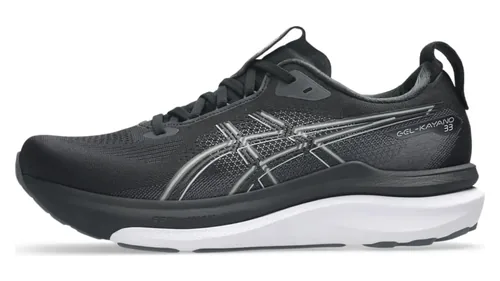
The Gel-Kayano 33 introduces Asics’ FLUIDSUPPORT system, replacing the 4D Guidance System used in the Kayano 32. It combines a broad base, raised sidewalls and two foam densities to create a controlled ride without a traditional medial post.
PureGEL remains under the heel, the drop is 8mm and the US launch price was $170. Read our Asics Gel-Kayano 33 review.
Brooks Glycerin GTS 23
Best for: People who want plush cushioning with structured support.

The Glycerin GTS 23 combines DNA TUNED cushioning with Brooks’ GuideRails support system. It is softer and more premium-feeling than the Adrenaline and can work well for long days on hard floors.
Its launch price was $180. Read our Brooks Glycerin GTS 23 review.
Orthofeet Coral Stretch Knit
Best for: Bunions, hammertoes, swelling and feet that hurt inside ordinary uppers.
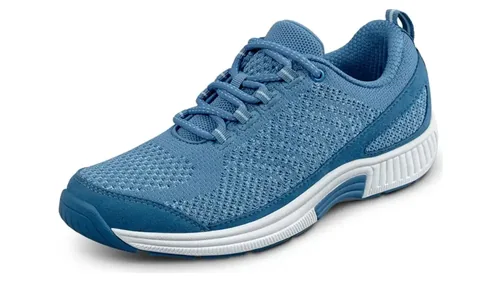
The Coral focuses on accommodation rather than athletic performance. Its four-way stretch upper and seam-free lining reduce pressure from above and from the sides, while the extra-depth interior leaves room for orthotics.
Read our Orthofeet Coral Stretch Knit review.
Propet Stability Walker
Best for: Orthotics, extended widths and people who want a traditional orthopedic walking shoe.
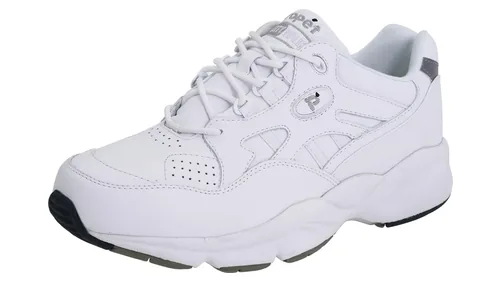
The Propet Stability Walker is built around fit. It comes in five widths, uses a broad unitsole platform and has a removable insole, making it easier to accommodate difficult foot shapes and prescribed inserts.
List prices commonly run around $103 to $125. Read our Propet Stability Walker review.
Dr. Scholl’s Time Off
Best for: Casual wear when you want more comfort than a flat fashion sneaker.
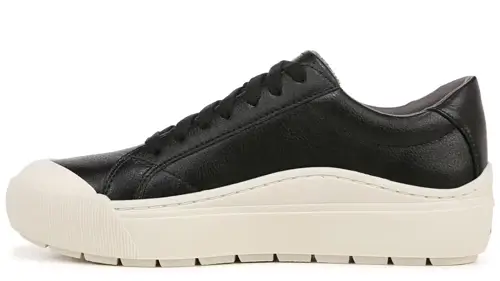
The Time Off is a casual lifestyle sneaker with anatomical cushioning, moderate arch support and a removable insole. It is not a technical stability shoe, but it is useful for errands, travel and everyday walking.
Typical pricing is around $75. Read our Dr. Scholl’s Time Off review.
Match the Shoe to the Type of Foot Pain
Where your foot hurts matters. Heel pain often points toward a different set of problems than pain at the big-toe joint or burning nerve pain. A wide, stretch upper may be exactly right for a bunion but irrelevant for plantar fasciitis. A stability shoe may help someone who likes guidance but feel intrusive to a neutral walker.
Use our condition guides when the cause is known: plantar fasciitis, bunions, metatarsalgia, neuropathy, arthritis and flat feet.
What to Look for in Shoes for Foot Pain
Fit comes first. Your toes should have room to move, your heel should not slide excessively and no part of the upper should press on a tender joint or swollen area. Cleveland Clinic specifically recommends properly fitting shoes and notes that wide toe boxes and appropriate arch support can help reduce the risk of some forms of foot pain.
Cushioning should feel comfortable, not simply soft. Some people prefer deep foam; others feel more stable in a firmer shoe. The same principle applies to arch support and stability: more is not always better.
If you use an orthotic, choose a removable insole and enough internal volume to fit the insert without crowding the foot. Our free Shoe Finder can narrow options by width, cushioning and support.
When Foot Pain Needs Medical Attention
Do not keep changing shoes indefinitely if pain is unexplained or persistent. Mayo Clinic advises prompt medical care for serious pain or swelling after an injury, open wounds, signs of infection or inability to bear weight. Burning pain, numbness or tingling also deserves medical attention, especially when it is widespread.
Cleveland Clinic recommends scheduling an appointment if foot pain lasts more than about two weeks without improvement, follows an injury, becomes sudden or severe, or occurs alongside conditions that affect circulation.
Frequently Asked Questions About Foot Pain and Shoes
The right shoe can improve comfort, but it is not a substitute for identifying why your foot hurts.
Yes. Shoes that are too tight, too narrow, worn out or poorly matched to your activity can contribute to foot pain. They may also aggravate an existing condition.
No. Extra cushioning can feel good on hard surfaces, but very soft shoes can feel unstable to some people. Choose the amount of cushioning that feels comfortable and controlled.
Not automatically. Arch support can help when it matches your foot and condition, but too much or poorly positioned support can be uncomfortable. The cause of the pain matters more than the label on the shoe.
A secure fit, enough cushioning for the surface, a stable base and the correct width matter most. For long shifts, compare cushioned neutral shoes with stability models and choose whichever feels better after extended standing.
They can help some conditions when prescribed or selected appropriately. Use a shoe with a removable insole and enough depth so the orthotic does not make the fit too tight.
Clues include pain that starts or worsens in a particular pair, pressure marks, numbness, rubbing, blisters or pain that improves when you switch shoes. Persistent pain still deserves evaluation because the shoe may not be the underlying cause.
Seek prompt care for severe pain or swelling after an injury, an open wound, signs of infection or inability to bear weight. Make an appointment for persistent pain, burning, numbness or tingling, or pain that keeps getting worse.