Steady rearfoot support and easy-day comfort with a low-energy ride
Quick Answer: On Cloudrunner 3 Review: The On Cloudrunner 3 is a mild stability daily trainer for runners and walkers who want steady rearfoot support without a rigid, corrective feel. Helion foam and a redesigned heel clip keep the ride controlled, the broad platform suits long days on your feet and the mesh upper is comfortable out of the box. The tradeoff is a firm, flat ride with limited energy return, so faster running feels like work. It earns its keep as an easy-run and all-day comfort shoe rather than a speed shoe. Check latest price.
Gender-specific buy links: Men’s version | Women’s version
The On Cloudrunner 3 is On’s rearfoot-focused support shoe, sitting inside a road running lineup that also includes the neutral, max-cushioned Cloudmonster 3 and the double-stacked Cloudstratus 3. Where those two are built for runners who do not need extra guidance, the Cloudrunner 3 is aimed at people who overpronate mildly, who have gotten tired legs or knees after long runs in a fully neutral shoe, or who simply like the reassurance of a wider, more planted base under the heel.
It is not a corrective shoe and it makes no claim to fix anyone’s gait. Instead it nudges the foot toward a steadier landing through its geometry, the way a slightly wider chair leg keeps you from rocking side to side. That makes it a sensible pick for the site’s core reader: someone in their 40s or 50s who runs a few times a week, walks the dog daily, stands for long stretches at work and wants one pair of shoes that handles all of it without feeling clinical.
Specs
Here are the specifications for the On Cloudrunner 3:
| Category | Road running, mild-to-moderate stability daily trainer |
| Midsole foam | Helion foam, a firmer, durability-focused compound On uses across its trainer line |
| Stack height | About 37mm heel, 29mm forefoot (manufacturer figures; independent measurements vary slightly by source) |
| Heel-to-toe drop | 8mm, meaning the heel sits 8 millimeters higher than the forefoot, a moderate slope most runners find familiar |
| Weight (men’s) | About 10.4 oz / 295g in a men’s size 9 to 9.5, per On’s listed spec (independent reviewers have measured slightly higher, closer to 11 oz, depending on size tested) |
| Weight (women’s) | About 8.8 oz / 249g in a women’s size 7 to 8 |
| Upper | Engineered mesh with a more structured, gusseted tongue than the previous model |
| Outsole | Rubber with full coverage across the forefoot and heel, plus a TPU heel clip for added rearfoot control |
| Widths | Standard and wide, in both men’s and women’s |
| Best for | Easy to moderate runs, walking, standing, mild overpronation support |
| Price | Launched at about $160 in February 2026. Check latest price |
Pros
- Broad, stable heel platform makes the shoe feel planted on landing, which is reassuring on tired legs late in a run or a long day of standing.
- Full rubber outsole coverage, an upgrade from the previous model’s partial coverage, should hold up better over repeated wear on pavement.
- The structured mesh upper and gusseted tongue lock the midfoot down without pressure points, so the shoe feels secure straight out of the box.
- Rearfoot support comes from geometry and a heel clip rather than a stiff medial post, so the ride still feels like a running shoe instead of a brace.
- Available in standard and wide widths for both men and women, which widens who it actually fits.
Cons
- The Helion foam is tuned firm for durability, and independent reviewers generally report it returns little energy, so the ride can feel flat rather than springy.
- It runs heavier than its stack height suggests, which buyers coming from a lighter daily trainer will notice on longer runs.
- Faster paces expose the firm midsole, so runners who regularly do tempo runs or speed sessions will likely find it sluggish.
- The added structure in the upper and outsole make it a step up in price from more basic neutral trainers in the same category.
What is new vs. the Cloudrunner 2?
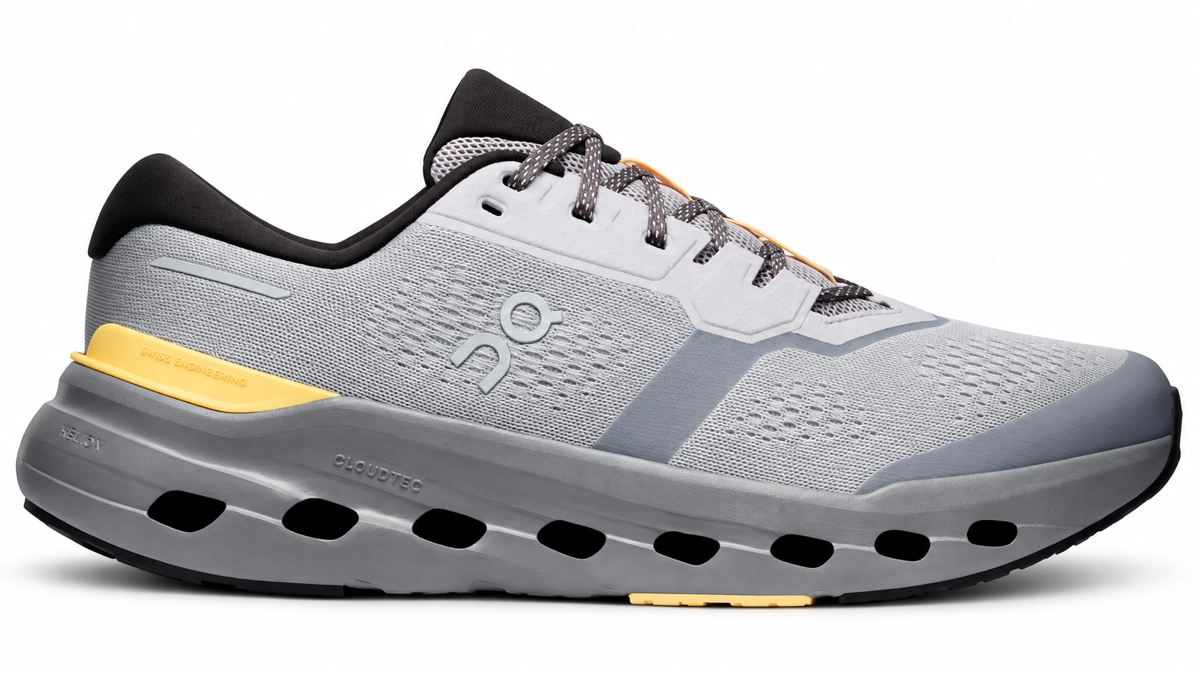
The On Cloudrunner 3 changes more than its name suggests. The most noticeable shift is drop, which goes from 10mm on the Cloudrunner 2 down to 8mm here, putting the heel and forefoot closer together for a slightly flatter, more neutral-feeling stance. On also reshaped the Cloud pods, the individual hollow blocks that make up the outsole and give the midsole its give, into a smaller, more angular pattern, and steepened the heel rocker, the curved shape built into the sole that helps roll the foot forward through each stride. Independent reviewers describe the heel-to-toe transition as smoother as a result, even though the ride itself stays firm.
The upper is slimmer and more structured than the Cloudrunner 2’s, with a flatter tongue and smaller eyelet platforms that hold the laces closer to the foot, a change from a fit some reviewers of the previous model called loose through the midfoot. On also filled in the outsole so rubber now covers the sole edge to edge instead of leaving foam exposed in spots, which should help durability. The tradeoff is weight: the Cloudrunner 3 is heavier than its predecessor, and reviewers who ran in both versions say it is enough to notice on longer efforts.
Who should buy the On Cloudrunner 3?
The On Cloudrunner 3 suits runners and walkers who want a little extra reassurance under the heel without a heavily built stability shoe. If you mildly overpronate, or your ankles or knees get tired late in a run in a fully neutral shoe, the wider rearfoot platform and heel clip give you something steadier to land on without locking the foot down. It is also a strong fit for anyone who splits time between running and walking: independent reviewers consistently single it out as comfortable for standing and walking all day, a sensible one-shoe answer for someone who runs a few mornings a week and is then on their feet for the rest of it.
It also suits buyers who value durability over a lively feel underfoot. The firmer Helion foam and the now-complete rubber outsole point toward a shoe built to survive daily use rather than one chasing a bouncy ride, so if you replace shoes based on worn tread rather than how fast they feel, this is a reasonable bet. Wide-width availability in both men’s and women’s makes it worth a look for anyone who has struggled to find a supportive shoe with enough forefoot room.
Not sure this is the right shoe? Use our free Shoe Finder to narrow your choices by fit, cushioning, support and how you plan to use the shoe.
Who should probably skip it?
If you have a neutral gait and do not need extra guidance under the heel, the Cloudrunner 3 is likely more shoe than you need, and you would probably enjoy a softer, more energetic ride. The same goes for anyone training for a 5K or working speed sessions into a weekly routine: independent reviewers describe the ride as firm with limited energy return, better suited to easy efforts than faster running. If lively cushioning is what you are after, one of these is a better match:
- Saucony Ride 18: a neutral daily trainer with a softer, more cushioned feel for runners who want comfort without any guidance features (check price | read review).
- Hoka Clifton Pro: a lighter, more energetic neutral trainer for runners who want a livelier toe-off on easy and faster days alike (check price | read review).
How does the On Cloudrunner 3 fit?
The Cloudrunner 3 fits true to size for most people, with a secure, structured feel through the midfoot that is snugger than the outgoing Cloudrunner 2. The toe box has enough room to wiggle your toes without feeling sloppy, and the wide-width option genuinely widens the forefoot rather than just adding volume everywhere.
Fit and Sizing
Order your normal running shoe size. The redesigned upper holds the midfoot more securely than the previous generation, thanks to a flatter tongue and eyelets positioned closer to the foot, so laces sit flat instead of digging in. Standard and wide options in both genders mean most foot shapes can find a version that fits without sizing up just to gain width.
Upper and Step-In Comfort
The engineered mesh upper is breathable and comfortable from the first wear, without the break-in period some structured stability shoes need. The gusseted, flatter tongue stays centered instead of sliding, and the higher midsole sidewalls that wrap the heel add a cupped, held-in feeling around the back of the foot that most reviewers describe as reassuring rather than restrictive.
How does the On Cloudrunner 3 perform?
The Cloudrunner 3 is built around control rather than speed. Its firm foam and wide rearfoot base prioritize a steady landing over a springy toe-off, which shapes how it behaves whether you are running easy miles or logging steps around the house.
Cushioning and Ride
Helion foam, On’s name for the midsole material here, is tuned firm rather than soft, which means it prioritizes durability and a stable platform over a plush, sink-in feel. Independent reviewers generally report the cushioning as adequate for absorbing impact on easy runs and walks, but noticeably less lively than foams built for energy return, so the shoe feels planted underfoot rather than bouncy.
Ride and Running Performance
A steepened heel rocker, the curved buildup in the sole that helps tip the foot forward through the stride, gives the Cloudrunner 3 a smoother heel-to-toe transition than its predecessor even though the midsole itself stays firm. That combination makes it well suited to easy and recovery-paced running, where a controlled roll matters more than a springy push. Independent reviewers describe the ride as sluggish once the pace picks up, with limited energy return through the forefoot, so it is not the shoe to reach for on tempo days or a 5K.
Stability and Support
On classifies the Cloudrunner 3 as a mild-to-moderate stability shoe, and that support comes from geometry rather than a firm wedge under the arch, which is what older “motion control” designs used. A TPU heel clip, higher midsole sidewalls, a broadened heel platform and a posterior bevel at the back of the sole work together to slow how quickly the foot can roll inward after landing. That is a real, mechanical effect, but it is guidance, not correction: the shoe does not fix overpronation or change how your foot is built, it simply gives a mildly overpronating foot a steadier surface to land on.
Outsole, Grip, Durability
The rubber outsole now covers the sole edge to edge, closing gaps that left foam exposed on the Cloudrunner 2, which should mean more even wear over time. Grip on dry pavement and light wet conditions has tested well in independent reviews. As with most road trainers, expect somewhere in the broad range of 300 to 500 miles of useful cushioning life, though that depends heavily on weight, stride and surface, and is only a general guideline rather than a guarantee.
Is the On Cloudrunner 3 good for walking?
Yes, and walking may actually be one of the Cloudrunner 3’s strongest uses. The wide heel, secure upper and firm-but-cushioned platform make it a good match for sidewalks, treadmills, travel and long days on your feet. If you spend a lot of time standing, compare it with our best shoes for standing all day. If you mainly want a shoe for daily walks, see our best walking shoes guide for more options.
On Cloudrunner 3 vs. Cloudrunner 2
Spec | Cloudrunner 3 | Cloudrunner 2 |
Drop | 8mm | 10mm |
Stack height (heel/forefoot) | About 37mm / 29mm | About 39mm / 29mm |
Weight (men’s) | About 10.4 oz / 295g | About 9.7 oz / 277g |
Weight (women’s) | About 8.8 oz / 249g | About 8.5 oz / 240g |
Outsole coverage | Full rubber coverage | Partial rubber coverage |
Upper | Slimmer, more structured, flatter tongue | Wider fitting, roomier through the midfoot |
Launch price | About $160 (February 2026) | About $150 (2024) |
Buy the new model when: you want a more secure, locked-down fit through the midfoot, a shoe that will hold up longer thanks to the full outsole coverage, or a slightly flatter, lower-drop feel underfoot.
Buy the previous model when: you already own and like the Cloudrunner 2’s roomier fit, prefer a lighter shoe on your feet, or can find it discounted now that it has been superseded, since the two shoes share the same basic support approach.
On Cloudrunner 3 Alternatives
If you like On but want a more neutral, livelier ride, look at the On Cloudmonster 3 (check price). It has more energy underfoot and makes more sense for neutral runners who do not need the Cloudrunner’s extra rearfoot guidance.
If you want stability in a lighter-feeling package, the Hoka Arahi 9 is a useful alternative (check price). It gives you support without feeling as heavy or planted as the Cloudrunner 3.
If you want a softer, more cushioned stability shoe, try the New Balance Fresh Foam X 860v15 (check price). It has a more forgiving landing while still offering guided support. For a broader category comparison, see our best stability running shoes.
The Asics GT-2000 15 is another good option if you want support that feels less intrusive and more like a regular daily trainer (check price). It is especially worth considering if the Cloudrunner 3 feels too firm or too substantial.
Price and Value
The On Cloudrunner 3 launched at about $160 in February 2026, roughly $10 more than the Cloudrunner 2’s launch price. That puts it toward the upper end of mainstream stability trainers, in line with what most major brands charge for a similarly featured support shoe. Given the full rubber outsole coverage, the durability-focused foam and the wide-width options, the price buys a shoe built to hold up over months of regular running and walking rather than one chasing a premium, race-day feel. Buyers who mainly want an energetic ride for speed work will get less for their money here than someone using it as a steady daily and all-day comfort shoe.
Final Verdict
Best for: runners and walkers who mildly overpronate, or who simply want a steadier, more planted feeling underfoot for easy runs, long days standing and everyday wear.
Avoid if: you have a fully neutral gait, want an energetic or springy ride, or plan to use the shoe mainly for faster training and racing.
Fit: true to size, secure through the midfoot, with genuine wide-width options in men’s and women’s.
Verdict: the On Cloudrunner 3 is a dependable, mild-support daily trainer that does its best work at easy paces and on your feet all day, not on a track. It is a sensible upgrade for Cloudrunner 2 owners who want a more secure fit and a longer-wearing outsole, and a solid option for anyone who wants a little extra guidance without a heavily built stability shoe. Check the latest price.
Frequently Asked Questions for On Cloudrunner 3
Yes, most buyers should order their normal running shoe size. The redesigned upper fits more snugly through the midfoot than the Cloudrunner 2, and both standard and wide widths are available in men’s and women’s if you need more room.
It is a mild-to-moderate stability shoe. On builds in a TPU heel clip, higher midsole sidewalls and a broader heel platform to slow inward rolling after landing, rather than using a firm wedge under the arch. The support is meant to guide a mildly overpronating foot, not correct or fix anyone’s gait.
Yes. Independent reviewers consistently describe it as an excellent walking and standing shoe, thanks to its wide, stable heel base and secure upper. Its firmer, durability-tuned foam suits slower, repetitive loading well, which is one reason it performs better as an all-day shoe than as a speed shoe.
The drop dropped from 10mm to 8mm, the heel rocker got steeper for a smoother transition, the upper became slimmer and more structured and the outsole gained full rubber coverage instead of partial coverage. The tradeoff is a small increase in weight over the previous model.
Yes, On offers the Cloudrunner 3 in both standard and wide widths for men and women, which is worth checking if you have struggled to find a supportive running shoe with enough room across the forefoot. For size availability, check On Cloudrunner 3 sizes on Amazon.
Not really. Independent reviewers describe the ride as firm with limited energy return once the pace picks up, so it suits easy and moderate-paced running far better than tempo runs or race efforts. Runners who train for speed regularly will likely want a lighter, more responsive shoe for those sessions.
There is no official mileage figure, but road running shoes in this category generally last somewhere between 300 and 500 miles before cushioning noticeably breaks down, depending on your weight, stride and running surface. The Cloudrunner 3’s full rubber outsole coverage, an upgrade from the previous model’s partial coverage, should help it wear more evenly over that life.
See where Cloudrunner 3 fits in the broader On shoes lineup.