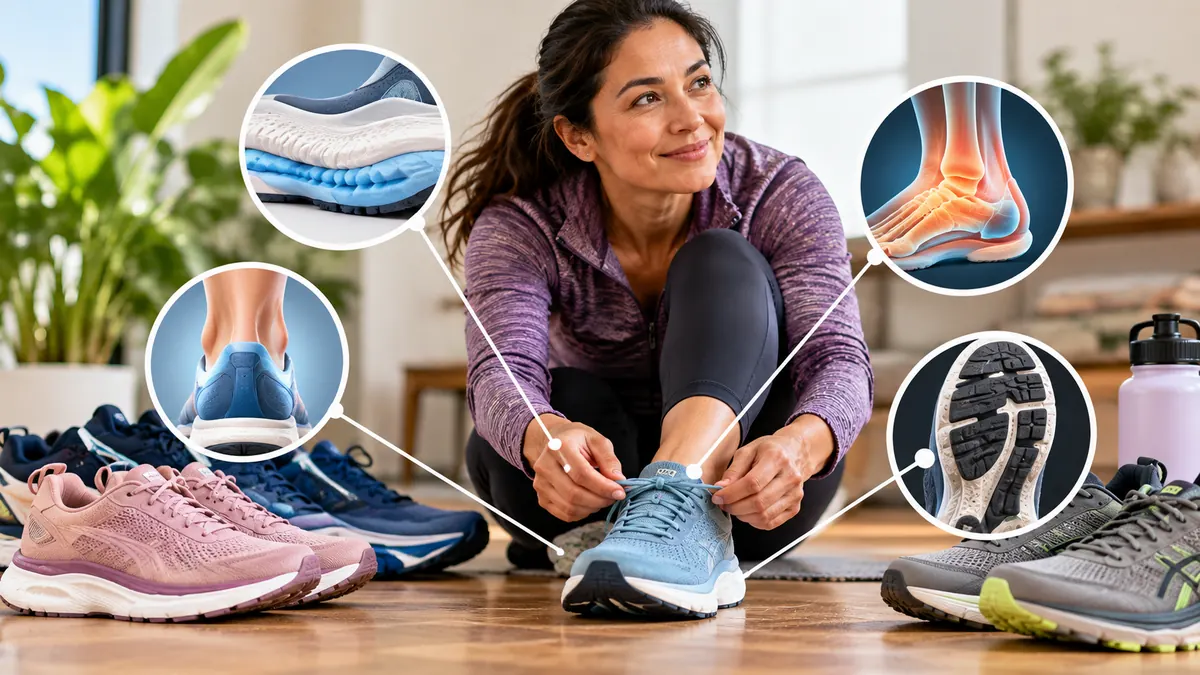
| Quick Answer: Look for a secure heel, enough toe room, cushioning that feels comfortable but not unstable, a platform that matches your support needs, and an outsole suited to your walking surface. The shoe should bend where your foot bends, feel comfortable at your normal pace, and leave enough room for swelling later in the day. Removable insoles are useful if you wear orthotics. Fit should come before brand, softness, or appearance. |
For everyday comfort and foot health, the best shoe is usually the one that fits your foot shape, feels stable, and matches how you actually use it. Cushioning matters, but fit and support matter just as much. If you have not settled on the footwear category yet, start with our guide to choosing between running shoes, walking shoes, work shoes and boots.
Ready to turn these features into a shortlist? Use our free Shoe Finder to match activity, fit, support and cushioning preferences with current models.
Start With Fit Before Cushioning
A shoe can have excellent foam and still be uncomfortable if the heel slips, the toe box squeezes your forefoot, or the shoe is too short. Your heel should feel secure, your toes should have room to move, and the widest part of your foot should line up with the widest part of the shoe.
If you are unsure whether you need more width or simply a roomier toe box, start with our wide-shoe fit guide.
Choose Cushioning That Feels Stable
More cushioning is not automatically better. Very soft foam can feel comfortable at first but may feel unstable during long walks or long periods of standing. For everyday use, many people do best with cushioning that softens impact while keeping the foot centered and controlled.
Match Support to Your Gait
If you feel stable in neutral shoes, you may not need extra support. If you overpronate or feel less controlled in neutral models, a stability shoe may be more comfortable. Motion-control shoes sit at the most structured end of the spectrum.
See our neutral vs stability vs motion-control guide if you are unsure which category fits you.
Look for Enough Toe Room
Your toes should not be squeezed together or pressed into the end of the shoe. A wider toe box can reduce pressure for people with bunions, wide forefeet, swelling, or simply a broader natural foot shape.
If toe room is your main concern, compare our best wide toe box shoes.
Check Heel Hold and Upper Comfort
The heel should stay secure without rubbing or pinching. The upper should hold the foot without creating pressure points across the toes or top of the foot. This becomes especially important during longer walks, when feet may swell.
If you struggle with blisters, heel slip, or toe pressure, see our fit-problem guide.
Pay Attention to Flexibility and Rocker Shape
A shoe should move naturally with your stride. Some people prefer a flexible forefoot, while others are more comfortable in a stiffer rocker-style shoe that helps the foot roll forward. Neither is automatically better. The right choice is the one that feels smooth rather than forcing your foot to move unnaturally. If that rolling shape appeals to you, compare our best rocker bottom shoes for walking and foot comfort.
Match the Outsole to the Surface
Road and everyday shoes usually prioritize smooth transitions and moderate traction. Work shoes may need certified slip resistance. Trail and outdoor shoes need deeper lugs and tougher rubber. Choosing the right outsole matters for safety as well as comfort.
Removable Insoles Can Matter
If you use custom orthotics or over-the-counter insoles, removable factory insoles make fitting them much easier. Also check that the shoe has enough internal depth so the orthotic does not make the shoe feel cramped.
Our orthopedic-friendly shoe guide is a good next step if removable insoles, extra depth, or orthotic compatibility are priorities.
Use a Simple Everyday Comfort Checklist
- Heel stays secure without rubbing.
- Toes have room to move.
- Cushioning feels comfortable but stable.
- Support matches your gait.
- The shoe bends or rocks naturally with your stride.
- The outsole matches the surface you use most.
- The shoe still feels comfortable after 30 to 60 minutes.
- Removable insoles are available if you need orthotics.
Where to Go Next
For broad everyday options, start with the Best Walking Shoes hub. If you are not sure what fit, support, or cushioning level suits you, use the free Shoe Fit & Gait Calculator.
You can also browse the Common Shoe Questions hub for related answers about fit, support, foot pain, work shoes, boots, sizing, and buying decisions.
Breathability and Upper Materials Matter for Everyday Wear
Mesh uppers usually breathe better and flex more easily, while leather and synthetic work-style uppers can offer more structure and weather resistance. The right choice depends on where you wear the shoe. A breathable upper can improve comfort in warm conditions, but a more protective upper may be better for work, rain, or colder weather.
Whatever the material, avoid seams or overlays that create pressure at the toes, bunions, or top of the foot. If bending down, tying laces, or getting shoes on is difficult, ease of entry becomes another comfort feature; our Best Easy-Entry Walking Shoes roundup compares hands-free and easier-on options.