Last Updated on October 1, 2026
Quick Answer: Current Asics running shoes. This guide covers 37 Asics U.S. road and trail model families listed as current on Sept. 27, 2026. Use the comparison to choose by support, cushioning, pace and surface. For an everyday neutral trainer, start with Novablast 6; for softer easy miles, try Gel-Nimbus 28. Gel-Kayano 33 adds stability, while Trabuco 14 is built for technical trails. These are starting points, not one-size-fits-all winners. The full table also gives launch prices and current shopping links for each model. Find your starting point or compare every model.
If you want a shorter recommendation by use case instead of the full catalog, see our best Asics shoes for runners and walkers.
Start here: Pick the Asics shoe that matches your run
A 37-model catalog is useful when you know what you want to compare. If you are deciding from scratch, start with what happens on most of your runs. For ordinary road mileage with a lively feel, compare Novablast 6. If you want a softer ride for easier or longer outings, look at Gel-Nimbus 28. For a more traditional neutral trainer, Gel-Cumulus 28 is the next stop. These are different underfoot even though each is a neutral road shoe.
If you prefer guidance and a broad cushioned platform, go to Gel-Kayano 33; for a less bulky stability shoe, compare GT-2000 15. On technical trails, begin with Trabuco 14. For fast road races, the Metaspeed Sky Tokyo is much more specialized and should not be your default daily shoe. Each link takes you to a short capsule with its trade-offs and shopping link. If you want a smaller shortlist rather than every model, use our best Asics shoes by use case.
About Asics
Asics traces its roots to Kobe, Japan, where Kihachiro Onitsuka founded Onitsuka Co. in 1949 with the idea that sport could improve both physical and mental well-being. In 1977, Onitsuka Co., GTO Co. and JELENK Co. merged to form Asics. The name comes from the Latin phrase Anima Sana In Corpore Sano, commonly translated as “a sound mind in a sound body.” Running became one of the company’s defining categories, and Asics continues to develop footwear through its Institute of Sport Science. That history explains the unusually broad modern lineup: Asics does not make one neutral trainer and one stability shoe. It builds separate families for cushioning, energy return, guidance, racing, trail speed, winter traction and entry-level running.
This guide covers the current Asics U.S. road and trail running model families available as of Sept. 27, 2026. We treat width, color, Platinum, Lite-Show, GTX and TR versions as variants of their parent shoe rather than separate models. Shoes listed by Asics only as “Coming Soon,” including GEL-SLOWCUSH and NIMBUS MIRAI 2 at the time of this update, are not included until they become current retail models.
How Asics organizes its running shoes
The simplest way to understand Asics is to start with support and purpose. Neutral shoes are designed for runners who do not want a dedicated stability system; that group includes most Asics cushioning, BLAST-series, speed and trail models. Stability shoes add geometry or adaptive guidance to help control excess motion. The Gel-Kayano 33 uses FLUIDSUPPORT, while the GT-2000 15 and GT-1000 15 use the 3D GUIDANCE SYSTEM. Asics also separates cushioning from energy return: GEL-NIMBUS emphasizes softness, NOVABLAST emphasizes bounce, and SUPERBLAST or Megablast push into premium high-energy training. If the foam names are confusing, our Asics FF Blast foam guide explains FF Blast Plus, FF Blast Max, FF Turbo and FF Leap in plain English. Race models then add lighter foams and plates, while trail models change the outsole, upper and protection for off-road terrain. A higher price does not automatically mean a better shoe for you; it usually means a more specialized material package.
Jump to: Neutral road shoes · Stability shoes · Speed & racing · Trail shoes · Asics technology · FAQ
All current Asics running shoes at a glance
| Model | Type | Support | Best for | Surface | Launch price / latest price |
|---|---|---|---|---|---|
| Megablast | Road — neutral | Neutral | Premium bouncy training at varied paces | Road | $225 | Check latest price |
| Superblast 3 | Road — neutral | Neutral | Long runs and high-mileage versatility | Road | $210 | Check latest price |
| Sonicblast 2 | Road — neutral | Neutral | Tempo runs and energetic daily training | Road | $190 | Check latest price |
| Novablast 6 | Road — neutral | Neutral | Everyday training with bounce | Road | $155 | Check latest price |
| GlideRide Max 2 | Road — neutral | Neutral | Long, steady runs with a smooth rocker | Road | $170 | Check latest price |
| Gel-Nimbus 28 | Road — neutral | Neutral | Maximum cushioning and easy long runs | Road | $170 | Check latest price |
| Gel-Cumulus 28 | Road — neutral | Neutral | Smooth, traditional daily training | Road | $145 | Check latest price |
| Dynablast 6 | Road — neutral | Neutral | Daily running, fitness and energetic training | Road | $120 | Check latest price |
| Bloomstride | Road — neutral | Neutral | Women who want a female-specific cushioned trainer | Road | $150 | Check latest price |
| Gel-Pulse 17 | Road — neutral | Neutral | Runs, gym sessions and general fitness | Road | $105 | Check latest price |
| Gel-Excite 11 | Road — neutral | Neutral | Budget daily running and fitness | Road | $100 | Check latest price |
| Gel-Contend 10 | Road — neutral | Neutral | Walking, easy runs and everyday value | Road | $80 | Check latest price |
| Versablast 4 | Road — neutral | Neutral | Mixed workouts and short runs | Road | $80 | Check latest price |
| Jolt 5 | Road — neutral | Neutral | Entry-level running and walking | Road | $65 | Check latest price |
| Patriot 14 | Road — neutral | Neutral | Easy runs on a tight budget | Road | $65 | Check latest price |
| GT-4000 4 | Road — stability | Stability | Higher-support daily running and walking | Road | $140 | Check latest price |
| Gel-Kayano 33 | Road — stability | Stability | Maximum cushioning with adaptive support | Road | $170 | Check latest price |
| GT-2000 15 | Road — stability | Stability | Daily stability without Kayano bulk | Road | $150 | Check latest price |
| GT-1000 15 | Road — stability | Stability | Affordable everyday stability | Road | $115 | Check latest price |
| Metaspeed Ray | Road — racing | Neutral | Elite forefoot runners and maximum race-day speed | Road | $300 | Check latest price |
| Metaspeed Sky Tokyo | Road — racing | Neutral | Stride-style road racing | Road | $270 | Check latest price |
| Metaspeed Edge Tokyo | Road — racing | Neutral | Cadence-style road racing | Road | $270 | Check latest price |
| Magic Speed 5 | Road — speed | Neutral | Intervals, tempo runs and plated training | Road | $180 | Check latest price |
| Yogiri Speed | Road — speed | Neutral | Carbon-plated tempo runs and racing | Road | $225 | Check latest price |
| S4+ Yogiri | Road — speed | Neutral | Marathon-focused runners who want a more stable carbon shoe | Road | $200 | Check latest price |
| Hyper Speed 6 | Road — speed | Neutral | Lightweight speedwork without a plate | Road | $110 | Check latest price |
| Noosa Tri 16 | Road — speed | Neutral / guided | Triathlon, fast training and sockless transitions | Road | $145 | Check latest price |
| Metafuji Trail 2 | Trail — racing | Neutral | Fast trail racing and ultra-distance efforts | Trail | $280 | Check latest price |
| Blazeblast | Trail — neutral | Neutral | Bouncy running on smooth and runnable trails | Trail | $155 | Check latest price |
| Trabuco Max 5 | Trail — neutral | Neutral | Long trail runs with maximum cushioning | Trail | $170 | Check latest price |
| Trabuco 14 | Trail — neutral | Neutral | Technical trail running and secure footing | Trail | $145 | Check latest price |
| Fujispeed 4 | Trail — speed | Neutral | Fast trail workouts and racing | Trail | $160 | Check latest price |
| Fuji Lite 7 | Trail — neutral | Neutral | Light technical trail running | Trail | $140 | Check latest price |
| Gel-Trabuco MT GTX | Trail — weather | Neutral | Wet technical trails and added ankle coverage | Trail | $200 | Check latest price |
| Fujisetsu Max GTX | Trail — winter | Neutral | Snow and icy winter trail running | Trail / ice | $230 | Check latest price |
| Gel-Sonoma 8 | Trail — value | Neutral | Affordable everyday trail running | Trail | $90 | Check latest price |
| Gel-Venture 11 | Trail — value | Neutral | Easy trails, walking and everyday outdoor use | Road / easy trail | $90 | Check latest price |
Note: Model names in the table jump directly to the capsule review below. Prices shown are U.S. launch prices. Current prices and availability can differ from launch prices; use the shopping links to compare current listings.
Current Asics neutral road shoes
Asics’ neutral road lineup spans everything from $65 entry-level shoes to $225 premium high-energy trainers. The key question is not which one is best in the abstract, but what type of ride you want. GEL-NIMBUS and GEL-CUMULUS emphasize smoother cushioning. NOVABLAST, SONICBLAST, SUPERBLAST and Megablast push farther toward bounce and speed. Bloomstride is built specifically around women’s biomechanics, while GEL-PULSE, GEL-EXCITE, GEL-CONTEND, VERSABLAST, JOLT and PATRIOT cover lower-cost and mixed-use needs. None of these is a traditional stability shoe, although some have broad platforms or inherently stable geometry.
Megablast
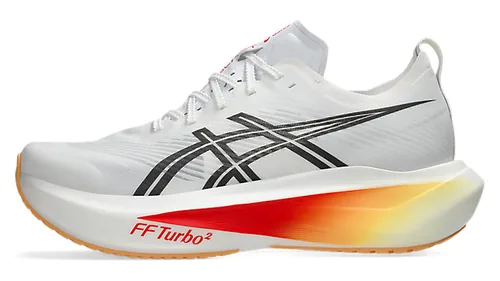
Best for: Premium bouncy training at varied paces
Support: Neutral
Surface: Road
Launch price: $225
Key technology: FF TURBO², AsicsGRIP
Megablast is the premium high-energy trainer in the current Asics road line. It uses full-length FF TURBO² cushioning to create a light, springy ride that can move from steady mileage into faster work without a plate. AsicsGRIP rubber adds traction underfoot. It makes the most sense for neutral runners who want a highly responsive shoe and are willing to pay for Asics’ more advanced foam. If your priority is softer comfort rather than bounce, the Gel-Nimbus 28 is the better fit; if you want similar premium versatility at a lower price, compare the Superblast 3.
Superblast 3
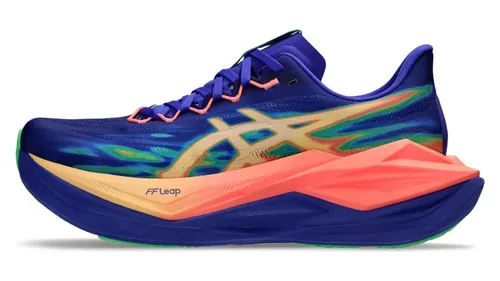
Best for: Long runs and high-mileage versatility
Support: Neutral
Surface: Road
Launch price: $210
Key technology: FF LEAP, FF Blast Plus
Superblast 3 is a high-stack, non-plated trainer built for runners who want one premium shoe to cover long runs, everyday mileage and some quicker sessions. FF LEAP cushioning gives it a lighter, more energetic feel than a traditional max-cushion shoe, while the broad platform keeps it usable when the pace slows. It is a strong choice for experienced neutral runners who log substantial mileage and do not want a carbon plate in every fast shoe. The price is high, so casual runners may get better value from the Novablast 6.
Read our full Superblast 3 review | Check latest price on Amazon
Sonicblast 2
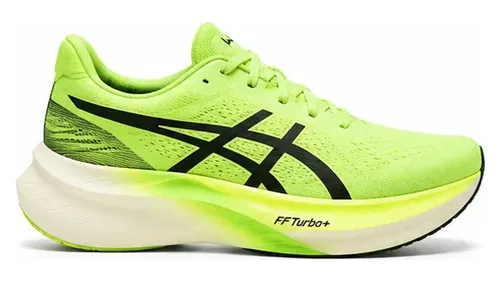
Best for: Tempo runs and energetic daily training
Support: Neutral
Surface: Road
Launch price: $190
Key technology: FF Blast Max, FF TURBO SQUARED, ASTROPLATE
Sonicblast 2 sits between a daily trainer and a true plated racer. Its two-layer midsole combines FF Blast Max with FF TURBO SQUARED cushioning, while the forked ASTROPLATE helps create a quicker transition and more forward momentum. That makes it best for neutral runners who regularly do tempo sessions but still want enough cushioning for normal training. It is less specialized than the Magic Speed 5 and more speed-oriented than the Novablast 6. If you want a single Asics shoe for easy miles only, this is more technology than you need.
Read our full Sonicblast 2 review | Check latest price on Amazon
Novablast 6
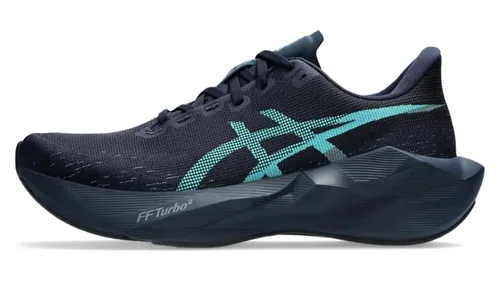
Best for: Everyday training with bounce
Support: Neutral
Surface: Road
Launch price: $155
Key technology: FF Blast Max, FF TURBO SQUARED pod, AsicsGRIP
Novablast 6 is the energetic everyday trainer in the Asics range and one of the easiest models to recommend to neutral runners who want a lively ride. FF Blast Max provides the main cushioning, while a FF TURBO SQUARED forefoot pod adds extra spring at toe-off. The forefoot also uses AsicsGRIP rubber for traction. It can handle easy runs, steady mileage and moderate pickups without feeling like a race shoe. Runners who prefer a softer, calmer platform should look at the Gel-Nimbus 28; runners who need stability should move to the GT-2000 15 or Gel-Kayano 33.
Read our full Novablast 6 review | Check latest price on Amazon
Gel-Nimbus 28
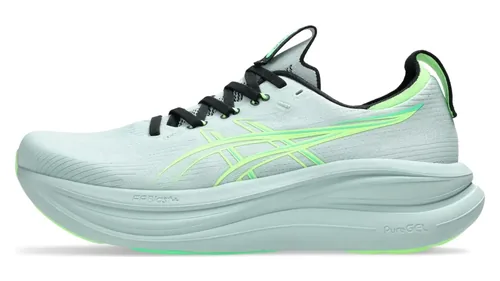
Best for: Maximum cushioning and easy long runs
Support: Neutral
Surface: Road
Launch price: $170
Key technology: FF Blast Plus, PureGEL
Gel-Nimbus 28 is Asics’ comfort-first neutral road shoe. It pairs FF Blast Plus cushioning with PureGEL technology to create a soft, protective platform for easy runs, recovery mileage and long days on your feet. It is a better fit for runners who value cushioning over speed and do not need the structured support of a stability shoe. The 28 is also lighter than the previous version, which helps keep the max-cushion design from feeling overly bulky. Choose the Novablast 6 instead if you want more bounce and faster turnover.
Also compare: the Asics GlideRide Max 2 if you want maximum cushioning with a more pronounced rocker for easy running, long miles and walking.
Read our full Gel-Nimbus 28 review | Check latest price on Amazon
Gel-Cumulus 28
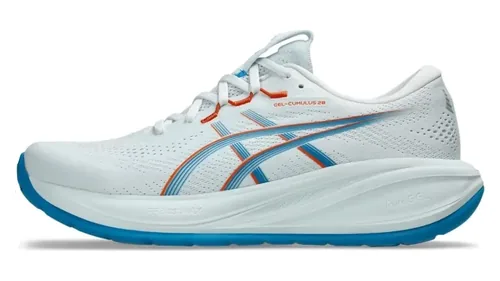
Best for: Smooth, traditional daily training
Support: Neutral
Surface: Road
Launch price: $145
Key technology: FF Blast Max, FLUIDRIDE
Gel-Cumulus 28 is the straightforward neutral daily trainer in the Asics lineup. It is lighter and simpler than the Gel-Nimbus 28 and less aggressively bouncy than the Novablast 6. FF Blast Max cushioning provides softness and response, while the FLUIDRIDE outsole is designed to smooth the transition through each stride. This is the model for runners who want a dependable road shoe without a plate, extreme stack or strongly rockered feel. It also lands in a useful middle price range, making it one of the more practical Asics choices for regular training.
Read our full Gel-Cumulus 28 review | Check latest price on Amazon
GlideRide Max 2
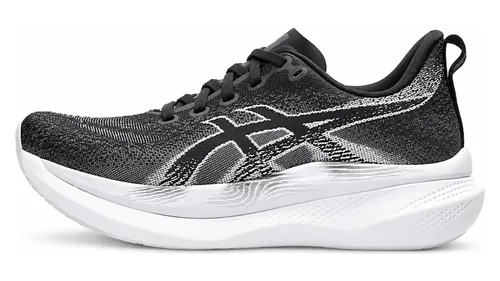
Best for: Long, steady runs with a smooth rocker
Support: Neutral
Surface: Road
Launch price: $170
Key technology: FF Blast Max, rockered EVA plate
GlideRide Max 2 is built for runners who want cushioning without a soft, sinking feel. Its FF Blast Max top layer works with a firm, rockered EVA plate to help the foot roll forward through toe-off. That makes it especially useful for long, steady runs and runners who like a guided rolling sensation rather than a springy ride. It is less versatile for speedwork than Novablast 6, but it can be easier to settle into for long cruising miles.
Read our full GlideRide Max 2 review | Check latest price on Amazon
Dynablast 6
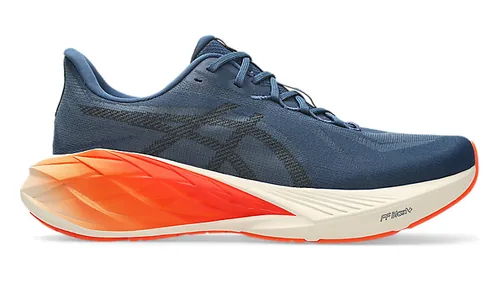
Best for: Daily running, fitness and energetic training
Support: Neutral
Surface: Road
Launch price: $120
Key technology: FF Blast Plus, central midsole pod
Dynablast 6 sits between Asics’ entry-level trainers and the more performance-focused Blast shoes. FF Blast Plus cushioning and a centrally placed pod give it a more energetic toe-off than a basic fitness shoe, while the price stays below Novablast 6. It makes sense for runners and gym users who want one neutral shoe for short-to-moderate runs and general training. Choose Novablast if you want more bounce and mileage versatility; choose Gel-Cumulus if you prefer a smoother, more traditional daily-trainer feel.
Read our full Dynablast 6 review | Check latest price on Amazon
Bloomstride
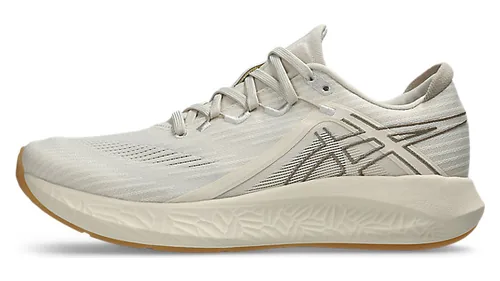
Best for: Women who want a female-specific cushioned trainer
Support: Neutral
Surface: Road
Launch price: $150
Key technology: FF LUXE, Ahar Lo
Bloomstride is a women-specific running shoe built from female biomechanics research rather than simply adapting a men’s last. Asics gives it a roomier toe box, a snugger midfoot and a 6 mm drop. FF LUXE cushioning is designed to feel plush on landing while remaining responsive, and Ahar Lo rubber is used in high-wear areas. It suits women who want a neutral road shoe for jogging, gym work and everyday movement with a fit developed specifically around female foot shape. Runners who want more speed-oriented energy should compare the Novablast 6.
Gel-Pulse 17
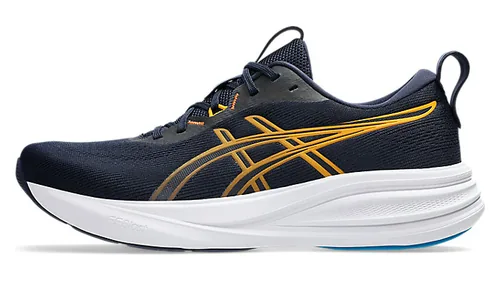
Best for: Runs, gym sessions and general fitness
Support: Neutral
Surface: Road
Launch price: $105
Key technology: FF BLAST, GEL
Gel-Pulse 17 is a mid-priced neutral trainer that bridges running and gym use. Asics added more foam than the previous version and combines FF BLAST cushioning with GEL technology for a softer underfoot feel. It is not trying to compete with the brand’s premium bounce shoes or race models. Instead, it fits runners who want a comfortable road shoe for moderate mileage plus general fitness. It is a useful step up from the GEL-EXCITE and GEL-CONTEND families while remaining substantially less expensive than the Gel-Nimbus 28 or Novablast 6.
Gel-Excite 11
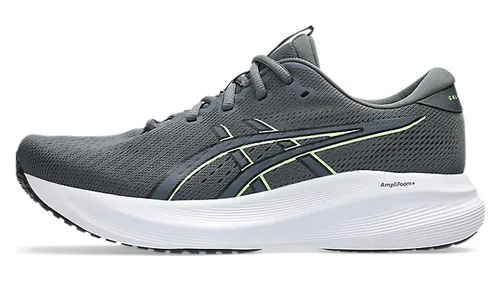
Best for: Budget daily running and fitness
Support: Neutral
Surface: Road
Launch price: $100
Key technology: AMPLIFOAM PLUS
Gel-Excite 11 is a budget-friendly neutral trainer for runners who mix short road runs with walking, gym sessions and general fitness. AMPLIFOAM PLUS cushioning and a higher stack than the previous version give it more underfoot comfort than a basic entry shoe. It is heavier and less energetic than the BLAST-series models, but that is not its job. Choose it when price, durability and versatility matter more than race-day speed. Beginners who are still building a running habit may find it easier to justify than spending $150 or more on a premium trainer.
Gel-Contend 10
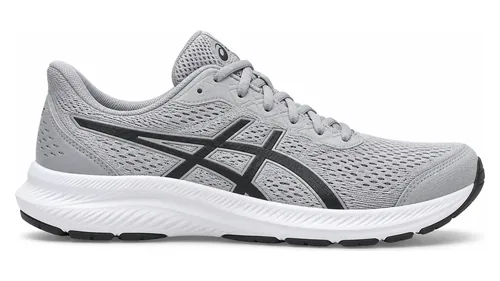
Best for: Walking, easy runs and everyday value
Support: Neutral
Surface: Road
Launch price: $80
Key technology: GEL, AMPLIFOAM PLUS
Gel-Contend 10 is one of the most affordable current Asics models. It combines GEL technology with AMPLIFOAM PLUS cushioning and adds extra foam compared with the previous version. The result is a neutral shoe aimed more at comfort, daily activity, walking and shorter runs than performance training. It is a sensible choice for beginners and budget shoppers who want an Asics running-shoe platform without paying for premium foams. Higher-mileage runners should look at the Gel-Cumulus 28 or Novablast 6 for a lighter, more responsive experience.
Read our full Gel-Contend 10 review | Check latest price on Amazon
Versablast 4

Best for: Mixed workouts and short runs
Support: Neutral
Surface: Road
Launch price: $80
Key technology: Responsive training foam
Versablast 4 is a lightweight-feeling neutral trainer designed for mixed workouts rather than specialized distance running. Its responsive midsole is tuned for rebound, and the shoe works well for people who move between short runs, gym sessions and general training. It is less cushioned and less refined than the Novablast 6, but its lower price makes it a useful option for occasional runners or people who want one athletic shoe for several activities. Dedicated distance runners will usually be better served by the Gel-Cumulus 28 or another road-focused model.
Jolt 5
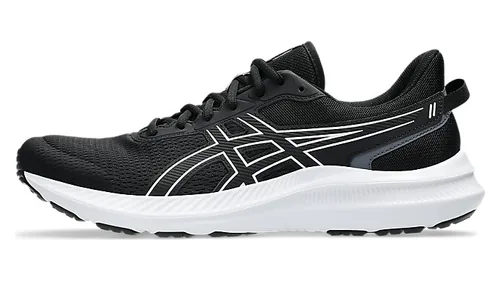
Best for: Entry-level running and walking
Support: Neutral
Surface: Road
Launch price: $65
Key technology: EVA midsole, OrthoLite sockliner
Jolt 5 is the stripped-down entry point to the current Asics running range. It uses a traditional EVA midsole, a durable solid-rubber outsole and an OrthoLite sockliner rather than the brand’s newer performance foams. That keeps the price low and makes the shoe appropriate for walking, beginner run-walk plans and casual fitness. It is not the model to choose for high mileage or fast sessions, but it offers a straightforward neutral fit and durable construction for someone who simply needs an affordable athletic shoe.
Patriot 14
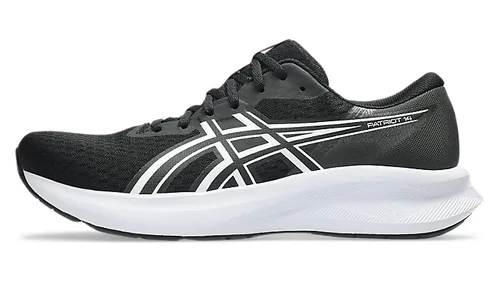
Best for: Easy runs on a tight budget
Support: Neutral
Surface: Road
Launch price: $65
Key technology: Lightweight foam, molded rubber outsole
Patriot 14 is another low-cost neutral option, aimed specifically at easy running. Asics added more forefoot foam than the previous version and uses a breathable mesh upper with flex grooves in the outsole to keep the ride simple and comfortable. It is best for occasional runners, students and beginners who do not need premium cushioning or stability technology. The Jolt 5 leans more toward run-walk use, while the Patriot 14 has a slightly more running-focused identity. Either is a value shoe rather than a high-mileage trainer.
Current Asics stability running shoes
Asics currently has three main road stability families. Gel-Kayano 33 is the premium, maximum-cushion option and now uses FLUIDSUPPORT instead of the previous 4D GUIDANCE SYSTEM. GT-2000 15 is the middle choice, with a lighter daily-trainer feel and 3D GUIDANCE SYSTEM support. GT-1000 15 uses the same broad guidance concept at a lower price. These shoes are aimed at runners who prefer added structure or who overpronate, but a stability label should not replace fit and comfort. Many runners with mild pronation are comfortable in neutral shoes, while others strongly prefer the guided feel of these models.
GT-4000 4
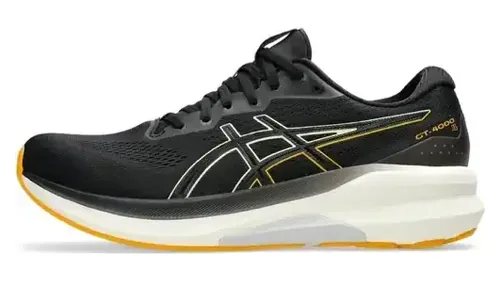
Best for: Higher-support daily running and walking
Support: Stability
Surface: Road
Launch price: $140
Key technology: LITETRUSS, FF Blast, PureGEL
GT-4000 4 is one of the most structured stability shoes in the Asics road lineup. LITETRUSS geometry adds support, while FF Blast cushioning and PureGEL soften the ride compared with older motion-control designs. It is a useful option for runners and walkers who want more guidance than the GT-1000 or GT-2000 provides without moving to the more premium Gel-Kayano. If you are deciding among the three GT models, our comparison explains how their support levels differ.
Compare the GT-1000, GT-2000 and GT-4000 | Check latest price on Amazon
Gel-Kayano 33
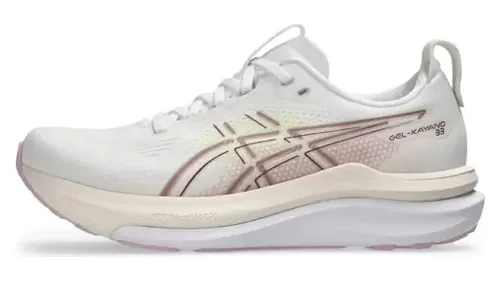
Best for: Maximum cushioning with adaptive support
Support: Stability
Surface: Road
Launch price: $170
Key technology: FLUIDSUPPORT, FF Blast Max, FF Blast Plus
Gel-Kayano 33 is Asics’ premium stability road shoe. Its FLUIDSUPPORT system replaces the previous 4D GUIDANCE SYSTEM and combines geometry with two layers of cushioning to provide support when the stride needs it. FF Blast Max sits above FF Blast Plus to balance softness, energy return and control. The Kayano suits runners who want a highly cushioned platform with more guidance than a neutral shoe, including many runners with flat feet or overpronation. If you want a lighter, less substantial stability shoe, the GT-2000 15 is the better comparison.
Read our full Gel-Kayano 33 review | Check latest price on Amazon
GT-2000 15
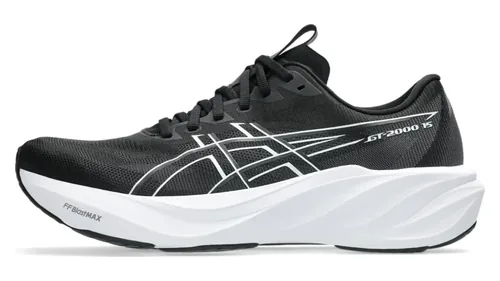
Best for: Daily stability without Kayano bulk
Support: Stability
Surface: Road
Launch price: $150
Key technology: 3D GUIDANCE SYSTEM, FF Blast Max
GT-2000 15 is the middle ground in Asics’ stability lineup. It uses the 3D GUIDANCE SYSTEM with a softer FF Blast Max midsole, giving runners support without the heavier, max-cushion feel of the Gel-Kayano 33. It is a strong everyday choice for runners who like guidance but still want a fairly normal daily-trainer feel. The GT-1000 15 is the lower-cost stability option, while the Kayano adds more cushioning and premium materials. The GT-2000 also comes in trail and waterproof variants, though those are variants of the same core model rather than separate families.
Read our full GT-2000 15 review | Check latest price on Amazon
GT-1000 15
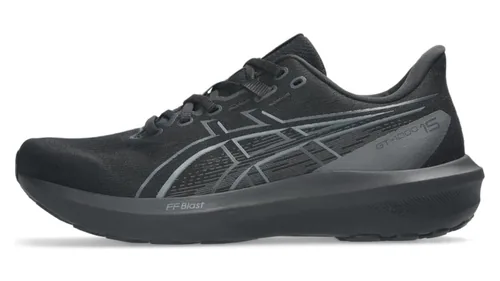
Best for: Affordable everyday stability
Support: Stability
Surface: Road
Launch price: $115
Key technology: 3D GUIDANCE SYSTEM, FF BLAST
GT-1000 15 is the value-focused stability model in the Asics road line. It uses FF BLAST cushioning and the 3D GUIDANCE SYSTEM to create a stable, balanced ride without the price of the GT-2000 or GEL-KAYANO. It is well suited to newer runners, walkers and moderate-mileage runners who know they prefer a stability shoe. The ride is less plush and less energetic than the more expensive options, but the lower price and multiple width choices make it one of the most accessible current Asics stability shoes.
Read our full GT-1000 15 review | Check latest price on Amazon
Current Asics speed and racing shoes
Asics separates speed shoes by both price and how specialized they are. Hyper Speed 6 is the simple, unplated option. Noosa Tri 16 is built around triathlon and fast training. Magic Speed 5, Yogiri Speed and S4+ Yogiri add plates and more advanced foams for workouts and racing. The Metaspeed line is the top race family: SKY TOKYO is tuned for stride-style runners, EDGE TOKYO for cadence-style runners and RAY for elite runners, especially forefoot strikers. This is the part of the range where matching the shoe to your mechanics and purpose matters most.
Metaspeed Ray
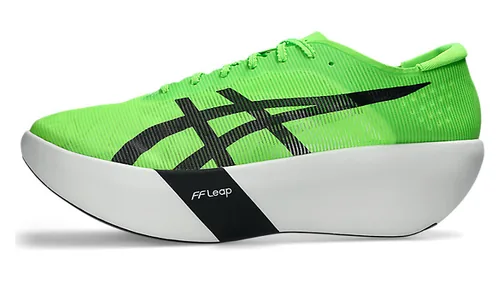
Best for: Elite forefoot runners and maximum race-day speed
Support: Neutral
Surface: Road
Launch price: $300
Key technology: FF LEAP, minimal carbon plate, MATRYX upper, AsicsGRIP
Metaspeed Ray is Asics’ most specialized road racer. It is aimed at elite runners, especially forefoot strikers, and uses extremely light FF LEAP foam with a minimal carbon plate to maximize energy return while keeping weight down. A MATRYX upper secures the foot at race pace and AsicsGRIP improves traction. This is not a practical daily trainer or even a necessary race shoe for most runners. It makes sense for experienced racers chasing marginal gains who already know that a light, aggressive forefoot-oriented platform suits their mechanics.
Metaspeed Sky Tokyo
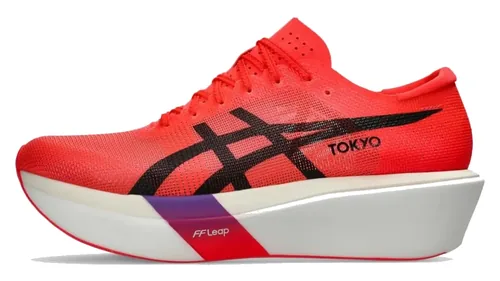
Best for: Stride-style road racing
Support: Neutral
Surface: Road
Launch price: $270
Key technology: FF LEAP, FF TURBO PLUS, carbon plate
Metaspeed Sky Tokyo is Asics’ flagship race shoe for stride-style runners—runners who tend to get faster by lengthening their stride. FF LEAP and FF TURBO PLUS foams are combined with a carbon plate positioned to support that running pattern. It is a dedicated race shoe for runners who want an aggressive, lightweight platform for road events. If your speed comes more from increasing cadence than stride length, Asics directs you toward the Metaspeed Edge Tokyo instead. For training rather than racing, the Magic Speed 5 is the more practical plated option.
Read our full Metaspeed Sky Tokyo review | Check latest price on Amazon
Metaspeed Edge Tokyo
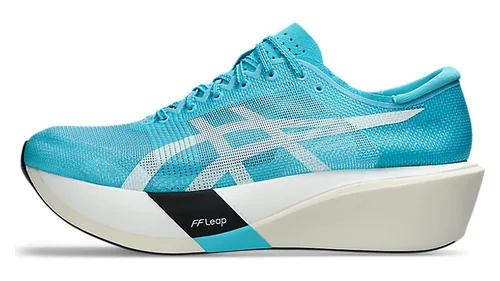
Best for: Cadence-style road racing
Support: Neutral
Surface: Road
Launch price: $270
Key technology: FF LEAP, FF TURBO PLUS, carbon plate
Metaspeed Edge Tokyo shares the premium foam package of the SKY TOKYO but changes the plate geometry for cadence-style runners who gain speed by increasing step frequency. FF LEAP sits above FF TURBO PLUS, with the carbon plate helping preserve efficiency late in a race. This distinction is important: Asics does not treat SKY and EDGE as cosmetic versions of the same racer. They are tuned for different mechanics. Choose the EDGE only if a quicker cadence describes how you run faster; otherwise compare the SKY TOKYO or a less specialized race shoe.
Magic Speed 5
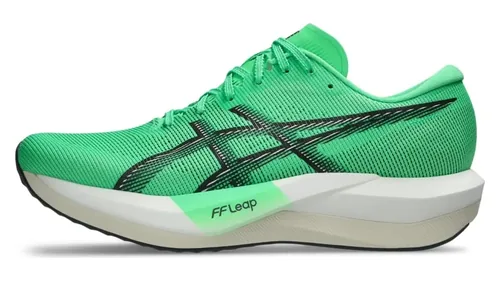
Best for: Intervals, tempo runs and plated training
Support: Neutral
Surface: Road
Launch price: $180
Key technology: FF LEAP, FF Blast Plus, carbon plate
Magic Speed 5 is the plated workout shoe in the current Asics lineup. It combines FF LEAP and FF Blast Plus cushioning with a reconfigured carbon plate and a lower stack than the previous version. The result is a faster, more controlled shoe for intervals, tempo work and some racing. It is approximately 50 grams lighter than the Magic Speed 4, which reinforces its sharper purpose. Runners who mainly do easy mileage should choose a normal trainer; runners who want a full race-day super shoe should move to the Metaspeed family.
Read our full Magic Speed 5 review | Check latest price on Amazon
Yogiri Speed
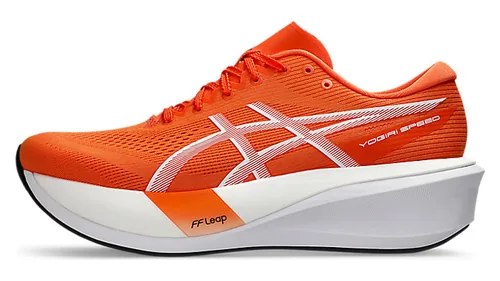
Best for: Carbon-plated tempo runs and racing
Support: Neutral
Surface: Road
Launch price: $225
Key technology: FF LEAP, full-length carbon plate, AsicsGRIP
Yogiri Speed is a newer carbon-plated performance shoe positioned between training and racing. It uses FF LEAP cushioning, a sculpted full-length carbon plate and AsicsGRIP rubber, with a 5 mm drop in current versions. The platform is designed to provide propulsion while keeping the ride relatively stable. That makes it an option for runners who want a fast carbon shoe without moving directly into the Metaspeed line. Availability is newer and more limited than the core Asics families, so sizing and color choice may be narrower than for the NOVABLAST, KAYANO or NIMBUS.
S4+ Yogiri
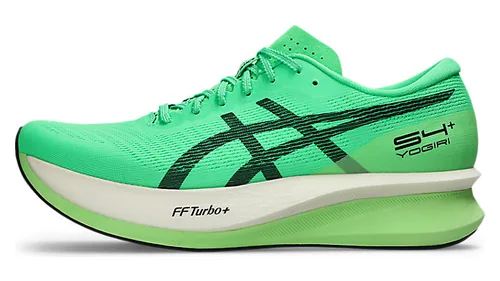
Best for: Marathon-focused runners who want a more stable carbon shoe
Support: Neutral
Surface: Road
Launch price: $200
Key technology: FF TURBO, full-length carbon plate, AsicsGRIP
S4+ Yogiri is a carbon-plated road shoe designed around racing goals while giving runners a more stable feel than an ultra-minimal super shoe. A sculpted full-length carbon plate works with FF TURBO cushioning to create a smoother, more propulsive toe-off, and AsicsGRIP rubber adds traction. It is a useful middle ground for runners who want a structured plated shoe for tempo work and longer races. The Metaspeed models are lighter and more aggressive, while Magic Speed 5 is the more training-oriented alternative.
Hyper Speed 6
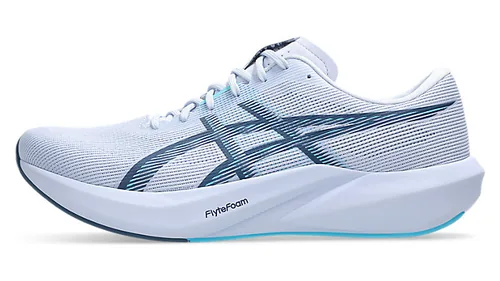
Best for: Lightweight speedwork without a plate
Support: Neutral
Surface: Road
Launch price: $110
Key technology: AsicsGRIP forefoot, lightweight mesh
Hyper Speed 6 is the simple, lightweight speed shoe in the Asics lineup. Unlike MAGIC SPEED or Metaspeed, it does not rely on a carbon plate. Asics increased the stack slightly and lowered the drop to 6 mm, while adding AsicsGRIP rubber in the forefoot for traction and a snappier toe-off. It is a strong choice for runners who want an inexpensive shoe for intervals, track sessions and shorter races without the stiffness or price of plated footwear. It also makes a useful second shoe for a runner who already owns a cushioned daily trainer.
Read our full Hyper Speed 6 review | Check latest price on Amazon
Noosa Tri 16
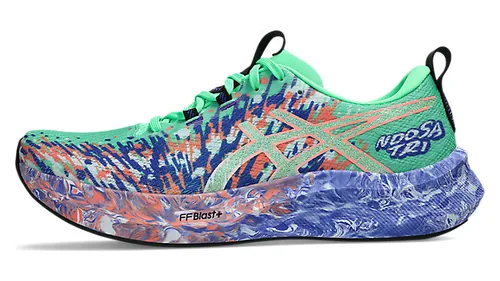
Best for: Triathlon, fast training and sockless transitions
Support: Neutral / guided
Surface: Road
Launch price: $145
Key technology: FF Blast Plus, 3D GUIDANCE SYSTEM, AsicsGRIP
Noosa Tri 16 is Asics’ triathlon-focused road shoe. It uses FF Blast Plus cushioning, a breathable upper that works well for sockless wear, AsicsGRIP rubber and a 5 mm drop. Asics also uses its 3D GUIDANCE SYSTEM to add a degree of adaptive stability without turning the shoe into a traditional stability trainer. The Noosa suits triathletes and runners who want a light, quick shoe that is easier to live with than a carbon racer. Its bright styling is distinctive, but the real difference is the fast transition-friendly construction.
Current Asics trail running shoes
The trail lineup is just as segmented as the road range. Metafuji Trail 2 and Fujispeed 4 are the performance choices, with plates and race-oriented geometry. Blazeblast brings the bouncy BLAST-series concept to runnable trails. Trabuco Max 5 prioritizes cushioning for longer efforts, while Trabuco 14 and Fuji Lite 7 give more control on technical terrain. Gel-Trabuco MT GTX and Fujisetsu Max GTX are weather-specific tools for wet or icy conditions. Gel-Sonoma 8 and Gel-Venture 11 cover the value end for casual trail running, hiking and mixed outdoor use.
Metafuji Trail 2
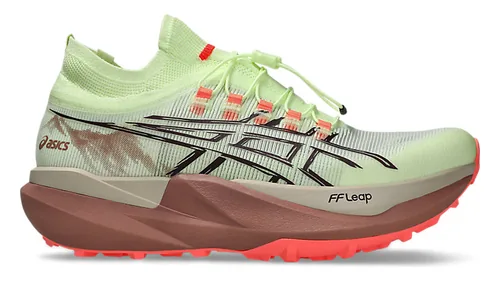
Best for: Fast trail racing and ultra-distance efforts
Support: Neutral
Surface: Trail
Launch price: $280
Key technology: FF LEAP, FF Blast Plus, X-shaped carbon plate, AsicsGRIP
Metafuji Trail 2 is Asics’ top-end trail racer. The second generation uses a trail-specific X-shaped carbon plate between FF LEAP and FF Blast Plus cushioning, with AsicsGRIP rubber and 3.5 mm lugs for traction. It is built for experienced trail racers who want propulsion on climbs while retaining control on descents and technical ground. The price and carbon construction make it far too specialized for casual hiking or easy trail jogging. For a more forgiving long-distance trail shoe, the Trabuco Max 5 is the better place to start.
Blazeblast
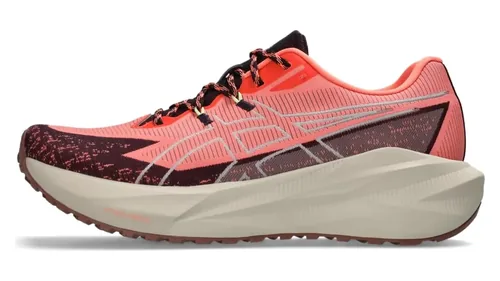
Best for: Bouncy running on smooth and runnable trails
Support: Neutral
Surface: Trail
Launch price: $155
Key technology: FF Blast Max, trampoline pod, AsicsGRIP
Blazeblast takes the energetic feel of Asics’ road BLAST shoes onto unpaved terrain. FF Blast Max cushioning and a forefoot trampoline pod create a lively ride, while AsicsGRIP rubber is tuned for trail traction. It is best on runnable dirt, gravel and smoother trail rather than highly technical mountain terrain. Runners who like the NOVABLAST concept but want more outsole grip will understand the appeal immediately. For steeper, rougher or more protective trail use, the Trabuco 14 or Gel-Trabuco MT GTX is a better match.
Trabuco Max 5
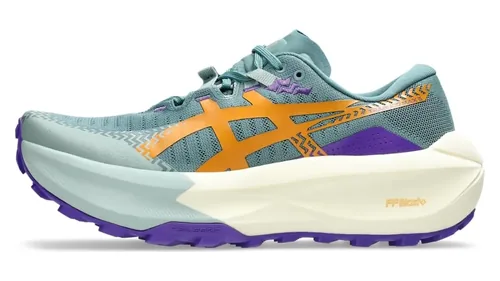
Best for: Long trail runs with maximum cushioning
Support: Neutral
Surface: Trail
Launch price: $170
Key technology: FF Blast Plus, AsicsGRIP
Trabuco Max 5 is the cushioned long-distance trail model in the current Asics range. FF Blast Plus provides a protective, responsive midsole and AsicsGRIP handles off-road traction. The current version is lighter than its predecessor and uses a water-repellent mesh upper. It works best for long runs on smoother and moderately technical trails where comfort matters more than low-to-the-ground precision. Runners who prefer more ground feel should look at the Fuji Lite 7, while trail racers wanting a plate should compare the Fujispeed 4 or Metafuji Trail 2.
Read our full Trabuco Max 5 review | Check latest price on Amazon
Trabuco 14
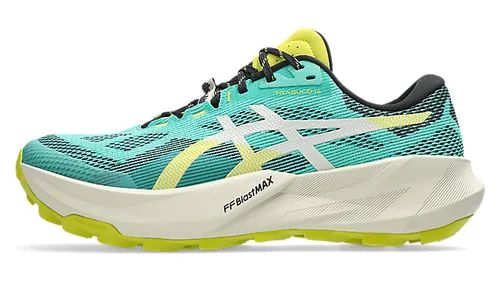
Best for: Technical trail running and secure footing
Support: Neutral
Surface: Trail
Launch price: $145
Key technology: FF Blast Max, AsicsGRIP
Trabuco 14 is the workhorse technical trail shoe. It uses FF Blast Max cushioning with AsicsGRIP traction and a revised trail fit that locks the midfoot down while giving the forefoot more room. Compared with Trabuco Max 5, it is less about a tall cushioned cruise and more about confidence on unpredictable terrain. It is a strong choice for runners who encounter roots, rocks, climbs and descents but still want meaningful cushioning. GTX versions are available for wet conditions, though the standard Trabuco 14 is the core model.
Fujispeed 4
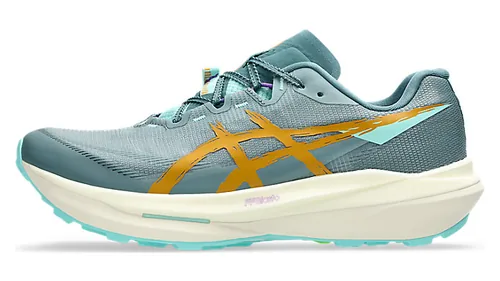
Best for: Fast trail workouts and racing
Support: Neutral
Surface: Trail
Launch price: $160
Key technology: Dual FF Blast Plus, PEBAX plate, AsicsGRIP
Fujispeed 4 is the faster, lower-priced plated trail option. A trail-optimized PEBAX plate sits inside a dual-layer FF Blast Plus midsole, while AsicsGRIP rubber provides traction. It is built for runners who want more propulsion and control on climbs and descents without paying Metafuji Trail 2 money. The 5 mm drop and racier setup make it less relaxed than the Trabuco Max 5 for easy long runs. Think of it as the trail equivalent of a speed-day shoe rather than an all-purpose hiking model.
Fuji Lite 7
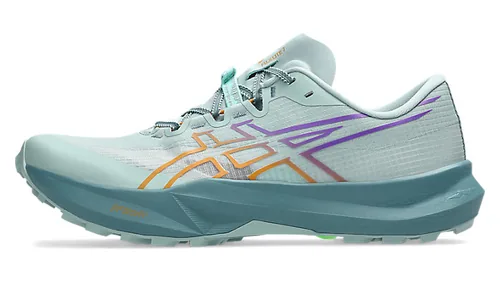
Best for: Light technical trail running
Support: Neutral
Surface: Trail
Launch price: $140
Key technology: FF Blast Plus, engineered woven upper
Fuji Lite 7 is the lighter, more agile trail option in the current Asics lineup. It uses FF Blast Plus cushioning and an engineered woven upper designed to improve durability and midfoot lockdown on technical terrain. It does not have a plate, which makes it more natural and flexible than Fujispeed 4 or Metafuji Trail 2. Choose it if you value control, moderate cushioning and a lighter feel over a tall protective platform. It also works well for runners who dislike the muted ground feel of max-cushion trail shoes.
Gel-Trabuco MT GTX
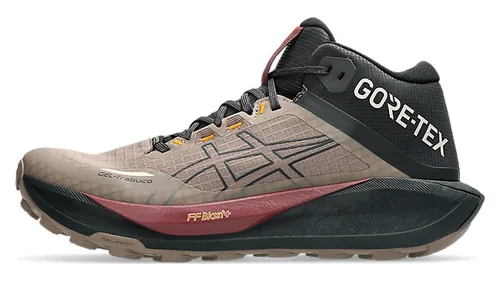
Best for: Wet technical trails and added ankle coverage
Support: Neutral
Surface: Trail
Launch price: $200
Key technology: Gore-Tex Invisible Fit, FF Blast Plus, rock plate
Gel-Trabuco MT GTX is the protective mid-top trail model for wet and messy conditions. Gore-Tex Invisible Fit helps keep rain and snow out, while the higher collar reduces debris entry. FF Blast Plus cushioning softens impact and a rock protection plate shields the foot from sharp trail debris. It is heavier and less breathable than a standard low-cut trail shoe, so it makes the most sense when weather protection matters. For ordinary dry trails, the Trabuco 14 is lighter and more versatile.
Fujisetsu Max GTX
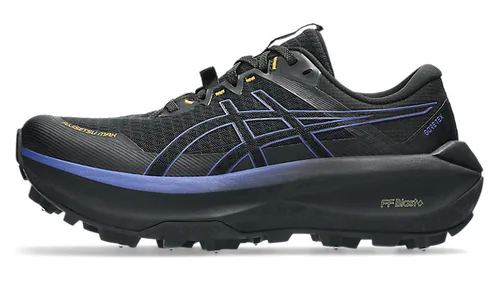
Best for: Snow and icy winter trail running
Support: Neutral
Surface: Trail / ice
Launch price: $230
Key technology: Outsole spikes, Gore-Tex, FF Blast Plus
Fujisetsu Max GTX is Asics’ winter-specific trail shoe. Its outsole uses spikes for traction on icy surfaces, while a Gore-Tex system and protective upper help keep snow and moisture out. FF Blast Plus cushioning provides impact protection under a higher stack. This is not a general trail shoe: the spikes and winter construction make it appropriate for runners who regularly train on snow and ice. If winter traction is not a recurring need, a normal TRABUCO model will be lighter, cheaper and more useful across the year.
Gel-Sonoma 8
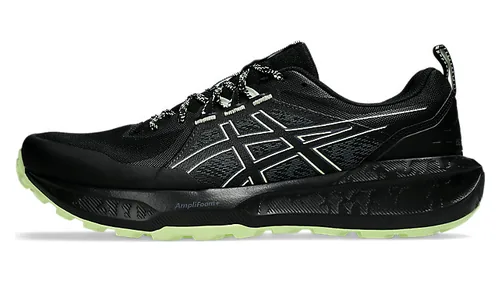
Best for: Affordable everyday trail running
Support: Neutral
Surface: Trail
Launch price: $90
Key technology: AMPLIFOAM PLUS, GEL, trail outsole
Gel-Sonoma 8 is a value-oriented trail shoe for runners who want basic off-road grip without premium pricing. It combines a full-length AMPLIFOAM PLUS midsole with GEL technology and a trail-specific outsole designed for uphill and downhill traction. It is heavier and less energetic than Asics’ premium trail models, but it is easier to justify for occasional trail runs, hiking and mixed outdoor use. Choose it over the Gel-Venture 11 when you want a more clearly trail-focused platform and are willing to spend a little more.
Gel-Venture 11
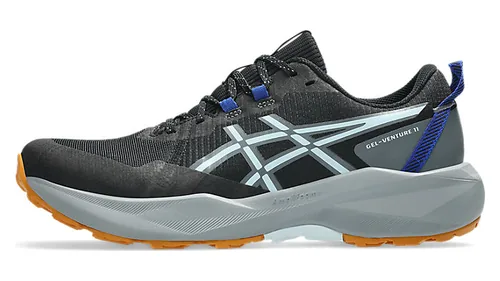
Best for: Easy trails, walking and everyday outdoor use
Support: Neutral
Surface: Road / easy trail
Launch price: $90
Key technology: AMPLIFOAM PLUS, no-sew upper
Gel-Venture 11 is the crossover entry point between everyday wear and easy trail use. AMPLIFOAM PLUS cushioning and a slightly higher stack improve impact absorption, while the outsole is suitable for light off-road surfaces. It is not a technical trail racer and does not have the premium grip compounds used in the higher-end models. Instead, it fits walkers, hikers and occasional runners who want one durable shoe for parks, gravel and daily use. Waterproof versions are available if weather protection matters more than breathability.
Asics running-shoe technology: what it means and which models use it
Asics uses a large technology vocabulary, but most of it falls into four jobs: cushioning, propulsion, stability and traction. The FF foam family controls most of the ride. FF BLAST, FF Blast Plus and FF Blast Max cover everyday cushioning at different levels of softness and energy return. FF LEAP and FF TURBO variants sit farther toward the performance end. Stability now comes mainly from geometry-based systems such as FLUIDSUPPORT and 3D GUIDANCE rather than old-style hard medial posts. Plates appear in speed shoes, but not every plate is carbon: SONICBLAST uses ASTROPLATE, while FUJISPEED uses a trail-oriented PEBAX plate. Outsoles matter too, especially AsicsGRIP on wet roads and trails.
| Technology | What it does | Current models that use it |
|---|---|---|
| FF LEAP | Asics’ lightest, most race-focused foam, built for low weight and high energy return. | Superblast 3, Magic Speed 5, Metaspeed Ray, Metaspeed Sky Tokyo, Metaspeed Edge Tokyo, Yogiri Speed, Metafuji Trail 2 |
| FF TURBO / FF TURBO² / SQUARED | A family of high-energy foams and pods used to add bounce and faster toe-off. | Megablast, Novablast 6, Sonicblast 2, S4+ Yogiri |
| FF Blast Max | A softer, more energetic training foam used across current road, stability and trail models. | Novablast 6, Sonicblast 2, Gel-Kayano 33, GT-2000 15, Gel-Cumulus 28, Blazeblast, Trabuco 14 |
| FF Blast Plus | Lightweight cushioning used in comfort shoes, fast trainers and trail models. | Gel-Kayano 33, Gel-Nimbus 28, Superblast 3, Magic Speed 5, Noosa Tri 16, Metafuji Trail 2, Trabuco Max 5, Fujispeed 4, Fuji Lite 7, Gel-Trabuco MT GTX, Fujisetsu Max GTX |
| FF BLAST | A responsive foam below the MAX/PLUS tiers in the current naming hierarchy. | GT-1000 15, Gel-Pulse 17 |
| FLUIDSUPPORT | Adaptive stability technology using cushioning layers and geometry instead of a traditional medial post. | Gel-Kayano 33 |
| 3D GUIDANCE SYSTEM | Geometry-based guidance designed to create a stable, balanced stride without a hard post. | GT-2000 15, GT-1000 15, Noosa Tri 16 |
| PureGEL / GEL | Impact-absorbing technology. PureGEL is the softer modern version used in premium cushioning shoes; traditional GEL remains in value models. | Gel-Nimbus 28; traditional GEL in Gel-Pulse 17, Gel-Contend 10 and Gel-Sonoma 8 |
| ASTROPLATE | A propulsion plate designed to create quicker transitions without turning the shoe into a full race super shoe. | Sonicblast 2 |
| Carbon plates | Stiffer propulsion structures used in Asics’ top road and trail speed shoes. | Metaspeed Ray, Metaspeed Sky Tokyo, Metaspeed Edge Tokyo, Magic Speed 5, Yogiri Speed, S4+ Yogiri, Metafuji Trail 2 |
| PEBAX plate | A trail-optimized plate that adds propulsion while retaining more flexibility and control than a road carbon racer. | Fujispeed 4 |
| AsicsGRIP | High-traction outsole rubber used on many faster road shoes and most performance trail models. | Megablast, Novablast 6, Metaspeed Ray, Hyper Speed 6, YOGIRI models, Noosa Tri 16, Metafuji Trail 2, Blazeblast, TRABUCO family, Fujispeed 4 |
| FLUIDRIDE | An outsole material designed to smooth transitions through the stride. | Gel-Cumulus 28 |
| AMPLIFOAM PLUS | A durable, comfort-focused foam used mostly in value and mixed-use shoes. | Gel-Excite 11, Gel-Contend 10, Gel-Sonoma 8, Gel-Venture 11 |
| FF LUXE | A plush, responsive cushioning foam developed for the women-specific Bloomstride platform. | Bloomstride |
| Gore-Tex Invisible Fit | Waterproof membrane construction used where wet-weather protection is the priority. | Gel-Trabuco MT GTX, Fujisetsu Max GTX; also available on selected road-model variants |
For a deeper explanation of the foam hierarchy, see our Asics midsole foam guide. For the newest stability change in the Kayano, see what Asics FLUIDSUPPORT is and how it works.
Frequently Asked Questions About Asics Running Shoes
Asics makes both. Neutral models include the Novablast 6, Gel-Nimbus 28, Gel-Cumulus 28 and most of the speed and trail range. The main stability models are the Gel-Kayano 33, GT-2000 15 and GT-1000 15. The Noosa Tri 16 is classified as a neutral shoe but also uses the 3D GUIDANCE SYSTEM for added guidance.
All three are stability-oriented road shoes, but they target different price and cushioning levels. Gel-Kayano 33 is the premium maximum-cushion model with FLUIDSUPPORT. GT-2000 15 is a lighter everyday stability trainer with 3D GUIDANCE SYSTEM and FF Blast Max. GT-1000 15 is the lower-cost stability option using 3D GUIDANCE SYSTEM and FF BLAST cushioning.
For neutral runners, Novablast 6 is the most energetic everyday option, Gel-Cumulus 28 is the more traditional all-rounder and Gel-Nimbus 28 is the softer maximum-cushion choice. Stability runners should look first at GT-2000 15 or Gel-Kayano 33. The right choice depends on support needs, preferred cushioning and how fast you normally run.
Gel-Nimbus 28 is the softest and most protective of the three. Gel-Cumulus 28 is a smoother, more traditional neutral daily trainer. Novablast 6 is tuned for more bounce and energy return. All three are neutral road shoes, but they feel distinctly different underfoot.
Current plated road models include Metaspeed Ray, Metaspeed Sky Tokyo, Metaspeed Edge Tokyo, Magic Speed 5, Yogiri Speed and S4+ Yogiri. Sonicblast 2 uses an ASTROPLATE rather than a full carbon racing plate. On trails, Metafuji Trail 2 uses a carbon plate and Fujispeed 4 uses a trail-optimized PEBAX plate.
For long cushioned trail runs, start with Trabuco Max 5. For more technical terrain, Trabuco 14 is the stronger all-around choice. Fuji Lite 7 is lighter and more agile, while Fujispeed 4 and Metafuji Trail 2 are the faster plated options. Gel-Sonoma 8 and Gel-Venture 11 are the value choices, and Fujisetsu Max GTX is designed specifically for snow and ice.
They are different Asics midsole foam families. FF BLAST and its PLUS and MAX versions are used across daily trainers, stability shoes and trail models. FF LEAP is the light, high-energy foam used in premium speed shoes such as the Metaspeed line and Superblast 3. FF TURBO and newer TURBO variants are high-energy foams or pods used in models such as Megablast, Novablast 6, Sonicblast 2 and S4+ Yogiri.