Last Updated on October 22, 2026
| Quick Answer: Best Walking Shoes for Flat Feet in 2026. Flat feet do not automatically mean you need a stability shoe. The right walking shoe depends on whether your low arches are painful, whether your feet roll inward excessively and how much width or orthotic room you need. Our current picks are the Brooks Adrenaline GTS 25, Asics Gel-Kayano 33, Hoka Gaviota 6, Hoka Arahi 9, New Balance 847v4, Propet Stability Walker and Brooks Ghost Max 4. The first six add varying levels of guidance; the Ghost Max 4 is the neutral option for flat feet that do not need correction. |
Flat feet describe the shape of the arch when you stand. They do not automatically mean your feet are unhealthy, weak or in need of maximum motion control. Many people have low arches and walk comfortably without special shoes. The useful question is whether your feet hurt, tire quickly or move in a way that makes walking uncomfortable.
Cleveland Clinic notes that flat feet often need no treatment when they are not causing symptoms. When pain or instability is present, footwear can be one part of conservative care. That is why this guide includes both stability shoes and one neutral option rather than assuming everyone with a low arch needs the same correction.
Best Walking Shoes for Flat Feet at a Glance
This is the walking-focused flat-feet guide on Best Walking Feet. If you mainly run, use our Best Running Shoes for Flat Feet guide instead. We also maintain separate men’s flat-feet and women’s flat-feet guides for readers who want gender-specific sizing and model availability.
For walking, we prioritize stable platforms, predictable support, width choices and all-day comfort over speed. The Adrenaline GTS 25 is our best overall walking pick because Brooks explicitly lists it for walking as well as running and offers multiple widths. The Gel-Kayano 33 and Gaviota 6 provide more cushioning and guidance. The Arahi 9 is lighter and less bulky. The New Balance 847v4 and Propet Stability Walker are more traditional walkers with firm platforms and extra orthotic room. The Ghost Max 4 is included for people whose arches are flat but whose gait feels neutral and comfortable.
| Shoe | Best for | Support approach | Price |
|---|---|---|---|
| Brooks Adrenaline GTS 25 | Best overall walking support | GuideRails with balanced cushioning | Check latest price |
| Asics Gel-Kayano 33 | Plush stability | FLUIDSUPPORT with dual-density foam | Check latest price |
| Hoka Gaviota 6 | Maximum cushioning with guidance | Enhanced H-Frame and broad base | Check latest price |
| Hoka Arahi 9 | Lighter support | H-Frame with firmer support foam | Check latest price |
| New Balance 847v4 | Orthotics and extended widths | ROLLBAR and firm walking platform | Check latest price |
| Propet Stability Walker | Very wide feet and extra depth | Broad unitsole, heel counters, five widths | Check latest price |
| Brooks Ghost Max 4 | Flat feet without overpronation | Neutral broad base with GlideRoll rocker | Check latest price |
Flat Feet and Overpronation Are Not the Same Thing
This is the most important correction to older flat-feet shoe advice. A low arch is a structural description. Pronation is movement: the way the foot rolls inward as it accepts weight. Some people with flat feet overpronate substantially, while others do not. A stability shoe can feel excellent when excess inward motion is contributing to fatigue or discomfort, but unnecessary correction can feel intrusive when a person is already comfortable in a neutral shoe.
A 2026 study in Foot & Ankle Orthopaedics examined 200 feet in 100 healthy adults and found limited overlap between structural flatfoot and pronated foot posture. Only 16.3% of feet classified as pronated also met the study’s structural flatfoot criteria. The authors cautioned that the study was cross-sectional and involved asymptomatic adults, so it does not tell us which shoe a particular person should wear. It does reinforce the point that arch shape and dynamic foot motion should not be treated as interchangeable.
For practical shopping, start with how you feel while walking. If your feet and ankles feel stable in a neutral shoe, do not assume you need a motion-control model because your footprint looks flat. If your arches fatigue, your ankles roll inward noticeably or you have been advised to use additional support, compare the guided shoes in this list. Our Shoe Fit & Gait Calculator can help organize the factors worth checking.
Best Walking Shoes for Flat Feet in 2026
The seven shoes below cover a wide range of walking needs. The first four are modern athletic stability shoes that use geometry, sidewalls or guidance systems rather than a hard medial post. The New Balance and Propet models are firmer traditional walkers that make sense when orthotics, width or extra depth matter more than a soft ride. The Ghost Max 4 is deliberately neutral because flat feet alone are not proof that you need corrective support.
Comfort should be immediate. A stability feature should make the shoe feel calmer and more predictable, not like a hard object is pushing into your arch. Width is equally important because low arches can spread through the midfoot under load. If the middle of your foot spills over the platform or the upper presses along the inside edge, try a true wide size rather than buying a longer shoe. Bring your orthotic when trying shoes because it changes both internal volume and heel fit.
Brooks Adrenaline GTS 25
Best for: Everyday walking when you want moderate structured support.

Brooks explicitly lists the Adrenaline GTS 25 for walking as well as road running. Its GuideRails system uses raised support around the heel to limit excess movement rather than forcing the arch against a rigid post. That makes it a strong first stability shoe for walkers who want guidance without a heavy motion-control feel.
The current version adds more DNA LOFT v3 cushioning in the heel and forefoot, uses a 10mm drop and comes in narrow, standard, wide and extra-wide versions depending on color. The US launch price was $155. The combination of width choice, reliable support and moderate cushioning is why it leads this walking-specific list.
Read our Brooks Adrenaline GTS 25 review.
Asics Gel-Kayano 33
Best for: Plush stability and long walks on hard surfaces.
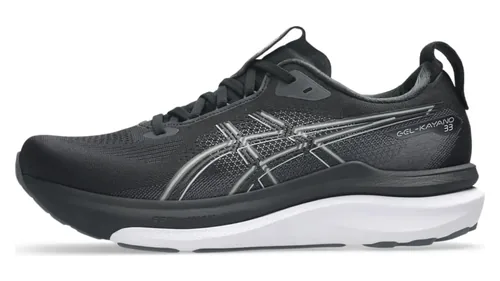
The Gel-Kayano 33 is the plush option for walkers who want a substantial amount of cushioning and support. Asics replaced the previous 4D Guidance System with FLUIDSUPPORT, which combines FF Blast Max and FF Blast Plus foams with supportive geometry to create guidance without a traditional medial post.
PureGEL remains under the heel, the listed drop is 8mm and men’s versions are available in standard, wide and extra-wide fits. The US launch price was $170. It is heavier and more structured than the Adrenaline but feels more cushioned underfoot.
Read our Asics Gel-Kayano 33 review.
Hoka Gaviota 6
Best for: Maximum cushioning with substantial guidance.

The Gaviota 6 is Hoka’s high-cushion stability model. Its enhanced H-Frame uses firmer foam around the softer main midsole to guide the foot, while the broad platform and Active Foot Frame geometry help keep the tall shoe controlled.
The listed drop is 6mm, and regular, wide and extra-wide versions are available depending on size and colorway. The launch price was $180. This is the shoe to consider when the Adrenaline feels too traditional but a neutral Bondi does not provide enough guidance.
Read our Hoka Gaviota 6 review.
Hoka Arahi 9
Best for: A lighter, less bulky guided walking shoe.
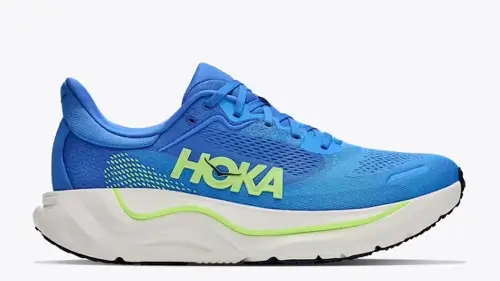
The Arahi 9 uses an enhanced H-Frame but is lighter and less substantial than the Gaviota. Firmer foam forms a supportive H shape around the softer midsole, helping control side-to-side motion without placing a rigid wedge under the arch.
Hoka lists the shoe for walking, standing and easy daily running. It comes in standard and wide versions and launched at $155 in August 2026. Choose it when you want guidance but do not want the weight or high-stack feel of a max-cushion stability shoe.
Read our Hoka Arahi 9 review.
New Balance 847v4
Best for: Walking, orthotics and people who want firmer motion control.
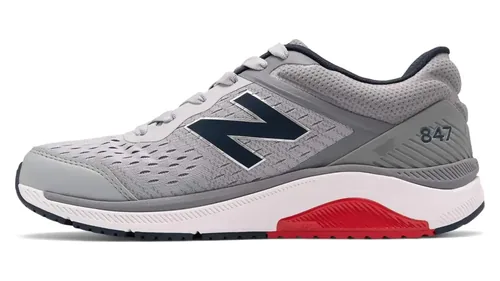
The 847v4 is a true walking shoe rather than a running shoe that also happens to walk well. Its ROLLBAR post and TPU heel clip make the rearfoot feel much more controlled than the softer athletic models above, while the removable Ortholite insole gives you room for many custom orthotics.
The listed drop is 12mm, extended widths are commonly available from narrow through 4E, and the current list price is about $149.99. The ride is firm and the styling is conservative, but it remains one of the most practical choices for walkers who know they prefer substantial motion control.
Read our New Balance 847v4 review.
Propet Stability Walker
Best for: Very wide feet, swelling and custom orthotics.
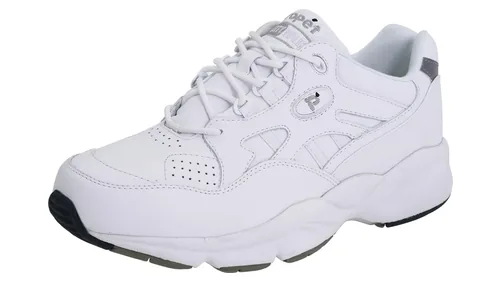
The Stability Walker earns its place because fit can matter more than foam for flat feet. Propet offers five widths from narrow through 4E, plus extra depth and a removable insole. A wide unitsole base, internal and external heel counters and a contoured heel stabilizer create a firm, steady walking platform.
It is not a plush modern shoe, and the styling is traditional. It is the better choice when standard stability shoes simply do not provide enough width or internal volume. List prices commonly run about $103 to $125 depending on version and retailer.
Read our Propet Stability Walker review.
Brooks Ghost Max 4
Best for: Flat feet that do not need corrective stability.

The Ghost Max 4 is the neutral counterpoint to the rest of this list. It uses a broad base, deep DNA LOFT v3 cushioning and a GlideRoll rocker, but it does not add a dedicated stability system. That makes it useful for walkers whose arches are structurally flat but whose feet feel stable and comfortable without correction.
The listed drop is 6mm, wide and extra-wide versions are available in many colors, and the launch price was $164.95. The insole is removable if you use your own insert. If a stability shoe has always felt intrusive, this is the model to try before assuming your arch shape requires more control.
Read our Brooks Ghost Max 4 review.
How to Choose Walking Shoes for Flat Feet
Start with symptoms. If your flat feet are painless and you already walk comfortably in neutral shoes, there is no reason to chase the strongest stability system. If your arches fatigue, your ankles roll inward or you feel more comfortable when the shoe guides your foot, compare moderate stability models such as the Adrenaline or Arahi before moving to firm motion-control footwear.
Next, check width through the midfoot. Low arches can spread under load, which means the foot may need more platform width even when the toes themselves are not particularly broad. Your midfoot should sit on the shoe rather than hanging over the inside edge. If the shoe feels narrow, try a wide version instead of sizing up in length. A longer shoe can cause heel slip and make the foot less stable.
Finally, consider orthotics and activity. If you use a custom device, choose a removable factory insole and enough heel depth to keep the foot secure once the orthotic is inserted. For long walks on pavement, cushioning may matter more than it does for short indoor walks. For work or standing, firmness and width can be more important than bounce. Our free Shoe Finder can narrow options by width, cushioning and support level.
When Flat Feet Need Medical Attention
Flat feet that have always been present and do not hurt usually do not need treatment. A new change in arch height is different. Cleveland Clinic notes that arches can collapse later in life, and symptoms may include pain, swelling or difficulty walking. Problems involving the posterior tibial tendon, arthritis, injury and other conditions can change the shape and function of the foot over time.
See a podiatrist or orthopedic specialist if one arch changes noticeably, pain persists, swelling develops along the inside of the ankle, balance worsens or you can no longer comfortably stand on tiptoe. Those signs deserve evaluation rather than simply moving into a more aggressive stability shoe.
Orthotics can help some symptomatic flat feet, but they are not automatically required. Cleveland Clinic notes that over-the-counter inserts may help mild symptoms while persistent or severe pain may warrant evaluation for custom orthotics. The shoe and insert should work together without crowding the foot or creating a new pressure point.
Frequently Asked Questions About Walking Shoes for Flat Feet
The central question is not whether a shoe has the strongest arch support. It is whether the shoe matches the way your foot actually moves and feels while walking. Modern stability shoes range from mild guidance to firm motion control, and neutral shoes can still work well for people whose arches are low but whose gait is comfortable. Width, orthotic room and surface matter as much as the stability label. These FAQs cover the most common decisions, including whether low arches always require support, which models work best for walking, and when foot pain deserves professional evaluation rather than another shoe purchase.
No. Flat feet describe arch shape, while pronation describes movement. If your feet are pain-free and stable in a neutral shoe, you may not need corrective stability. Choose support based on symptoms, gait and comfort.
The Brooks Adrenaline GTS 25 is our best overall walking option because it combines GuideRails support, balanced cushioning and multiple widths. The Ghost Max 4 is the better choice if your flat feet do not need corrective stability.
They can be. The Gaviota 6 provides substantial guidance and maximum cushioning, while the Arahi 9 is lighter and less bulky. Choose the amount of support that feels natural rather than automatically selecting the most structured model.
Only when your foot needs the extra width. Low arches often spread through the midfoot under load, so a wider platform can improve comfort, but a shoe that is too loose can create heel slip and instability.
They can help some people with pain or instability. Use a shoe with a removable insole and enough internal depth so the orthotic does not crowd the foot. Persistent pain should be evaluated by a podiatrist.
It is a strong option if you prefer a plush stability shoe. The Gel-Kayano 33 uses FLUIDSUPPORT, an 8mm drop and broad cushioning, and is sold in multiple widths.
Seek an evaluation if flat feet become painful, one arch changes noticeably, swelling develops along the inside of the ankle, balance worsens or symptoms keep limiting normal walking.