Last Updated on September 15, 2026
| Quick Answer: Which Brooks Model Is Best in 2026 For most runners, the Brooks Ghost 18 is the best place to start. It is a versatile neutral shoe for daily running, walking and general use. Choose the Glycerin 23 if you want a softer, more premium ride, or the Glycerin Max 2 for maximum cushioning. The Adrenaline GTS 25 is the better everyday choice if you want structured support. The Ghost Max 4 combines a broad platform, high cushioning and rocker geometry, while the Hyperion 3 and Hyperion Max 3 are better choices for faster training. See shoe comparsion. |
Brooks has one of the deepest running shoe lineups available, but that can make choosing a pair confusing.
The Ghost, Glycerin and Adrenaline all work for everyday running. The Ghost Max and Glycerin Max add more cushioning. The Hyperion family focuses more heavily on speed. Brooks also offers separate trail and racing shoes.
The right Brooks running shoe depends less on which model is “best” and more on what you want the shoe to do.
If you want our ranked recommendations rather than a model-by-model comparison, see our Best Brooks Running Shoes for 2026.
Brooks Running Shoes Comparison
Here are the current Brooks models most runners should compare first.
Brooks shoe | Best for | Support | Cushioning | Drop | Men’s weight | Launch price |
|---|---|---|---|---|---|---|
Everyday running and walking | Balanced | Balanced | 10 mm | 10.2 oz. | $150 | Check latest price | |
High-cushion daily runs, walking and orthotics | Max | Balanced | 6 mm | 10.3 oz. | $165 | Check latest price | |
Ghost Amp | Daily runs and uptempo workouts | Balanced | Responsive | 6 mm | 9.0 oz. | $150 | Check latest price |
Plush daily and long-distance running | Balanced | Plush | 8 mm | 10.6 oz. | $175 | Check latest price | |
Plush cushioning with structured support | Structured / GuideRails | Plush | 8 mm | 11.0 oz. | $180 | Check latest price | |
Maximum plush cushioning, recovery runs and walking | Max | Plush | 6 mm | 11.3 oz. | $200 | Check latest price | |
Glycerin Flex | Flexible daily running and long runs | Flexible / FlexZone | Plush | 6 mm | 9.1 oz. | $170 | Check latest price |
Everyday structured support | Structured / GuideRails | Balanced | 10 mm | 10.6 oz. | $155 | Check latest price | |
Maximum structured support, orthotics and walking | Structured / GuideRails | Balanced | 12 mm | 12.5 oz. | $170 | Check latest price | |
Revel 9 | Affordable daily running and everyday wear | Balanced | Balanced | 8 mm | 9.5 oz. | $100 | Check latest price |
Launch 12 | Lightweight daily training and faster runs | Balanced | Responsive | 8 mm | 8.9 oz. | $120 | Check latest price |
Lightweight workouts and faster running | Balanced | Responsive | 8 mm | 8.2 oz. | $140 | Check latest price | |
Hyperion Max 4 | Fast workouts, training and long runs | Max | Responsive | 6 mm | 10.1 oz. | $200 | Check latest price |
Road racing, half marathons and marathons | Neutral | Responsive | 7 mm | 6.8 oz. | $275 | Check latest price | |
Ghost Trail | Road-to-trail, gravel and groomed trails | Balanced | Balanced | 8 mm | 10.6 oz. | $150 | Check latest price |
Technical trails and hiking | Trail-oriented | Balanced | 6 mm | 10.8 oz. | $160 | Check latest price |
Weights shown are Brooks’ listed men’s weights and can vary by size.
If fit is one of your biggest concerns, our running shoe fit guide by brand explains how Brooks sizing and width options compare with other major brands.
Which Brooks Running Shoe Should You Choose?
If you are unsure where to start, first decide whether you want a neutral shoe or Brooks’ structured GTS support.
Then consider how much cushioning you want and whether the shoe will be used primarily for everyday miles, long runs, walking, speed training or trails.
Here are the main differences.
Brooks Ghost 18
Best Starting Point for Most Runners
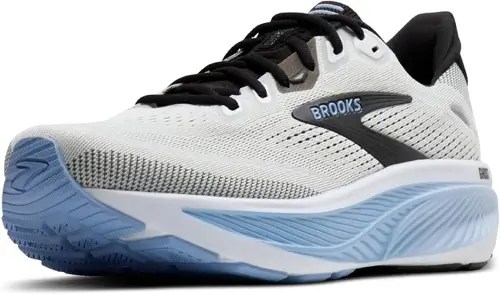
The Brooks Ghost 18 is the easiest Brooks model to recommend to someone who simply wants a comfortable everyday running shoe.
It uses Brooks’ nitrogen-infused DNA Loft v3 cushioning and has a traditional 10 mm heel-to-toe drop. Brooks lists it for road running, daily runs and walking.
The Ghost is not Brooks’ softest, lightest or fastest shoe. That is part of its appeal. It sits in the middle of the lineup.
The ride is cushioned without feeling excessively soft. The heel feels secure, and the shoe has enough structure to feel stable without using Brooks’ GuideRails support system.
At 10.2 ounces for the men’s version, it is not especially light, but it remains versatile enough for regular training.
Choose the Ghost 18 if you want:
- One shoe for most daily runs
- A traditional running-shoe feel
- Balanced rather than maximum cushioning
- A neutral shoe that also works well for walking
- Wide and extra-wide sizing options
Read our complete Brooks Ghost 18 review for a closer look at ride, fit, cushioning and performance.
Brooks Ghost Max 4

Best for More Cushioning and Walking
The Ghost Max 4 takes the Ghost concept in a very different direction.
Brooks gives it a higher stack of DNA Loft v3 cushioning, a broad base and a GlideRoll rocker. A rocker is the curved shape of the sole that helps the foot move from landing toward toe-off.
The drop is also lower at 6 mm.
Brooks specifically positions the Ghost Max for easy running and walking. The broad platform also gives the shoe inherent stability without turning it into a traditional stability shoe.
That makes it especially interesting for people who spend as much time walking as running.
Choose the Ghost Max 4 if you want:
- More cushioning than the Ghost 18
- A rocker-assisted walking or running stride
- A broad and stable platform
- A shoe suitable for easy running and long walks
- A lower 6 mm drop
The Ghost Max 4 is not simply a softer Ghost. Its higher stack, lower drop and rocker create a noticeably different experience.
Our Brooks Ghost Max 4 review also compares it with the outgoing Ghost Max 3 and looks at the changes in fit and weight.
Brooks Ghost 18 vs. Ghost Max 4
These two shoes share the Ghost name but serve different runners.
Feature | Ghost 18 | Ghost Max 4 |
|---|---|---|
Best for | Everyday versatility | Cushioning, walking and long runs |
Drop | 10 mm | 6 mm |
Men’s weight | 10.2 oz. | About 10.2 oz. |
Midsole | DNA Loft v3 | High-stack DNA Loft v3 |
Rocker | Traditional transition | GlideRoll Rocker |
Platform | Traditional daily trainer | Broad, high-stack platform |
Feel | Traditional | Rockered and protective |
Choose the Ghost 18 for a conventional everyday trainer. Choose the Ghost Max 4 if cushioning, walking comfort and smooth rocker-assisted transitions are more important.
Brooks Glycerin 23

Best Premium Daily Trainer
The Glycerin 23 moves above the Ghost in Brooks’ cushioning hierarchy.
Its DNA Tuned midsole uses different foam cell structures in the heel and forefoot to create softer landings while keeping the front of the shoe more responsive.
Brooks gives the shoe an 8 mm drop and lists it at 10.6 ounces for men.
This is a strong option for runners who like the versatility of the Ghost but want a plusher experience underfoot.
The Glycerin 23 works particularly well for:
- Everyday training
- Long runs
- Runners who prefer softer cushioning
- Walking and extended daily wear
- Runners who want premium comfort without maximum-stack geometry
The Glycerin 23 also has a broad platform that can make it feel stable even though it does not contain GuideRails.
Read our Brooks Glycerin 23 review for more on the DNA Tuned cushioning, fit and walking performance.
Brooks Ghost 18 vs. Glycerin 23
This may be the most useful Brooks comparison for neutral runners.
Both are everyday road shoes, but the Glycerin emphasizes cushioning while the Ghost emphasizes versatility.
Feature | Ghost 18 | Glycerin 23 |
|---|---|---|
Cushion | Balanced | Plush |
Drop | 10 mm | 8 mm |
Men’s weight | 10.2 oz. | 10.6 oz. |
Midsole | DNA Loft v3 | DNA Tuned |
Best for | Everyday versatility | Softer daily and long runs |
Launch price | $150 | $175 |
Choose the Ghost 18 if you want the more straightforward and less expensive daily trainer.
Choose the Glycerin 23 if you are willing to pay more for a softer, more premium ride.
Glycerin Max 2
Best for Maximum Plush Cushioning
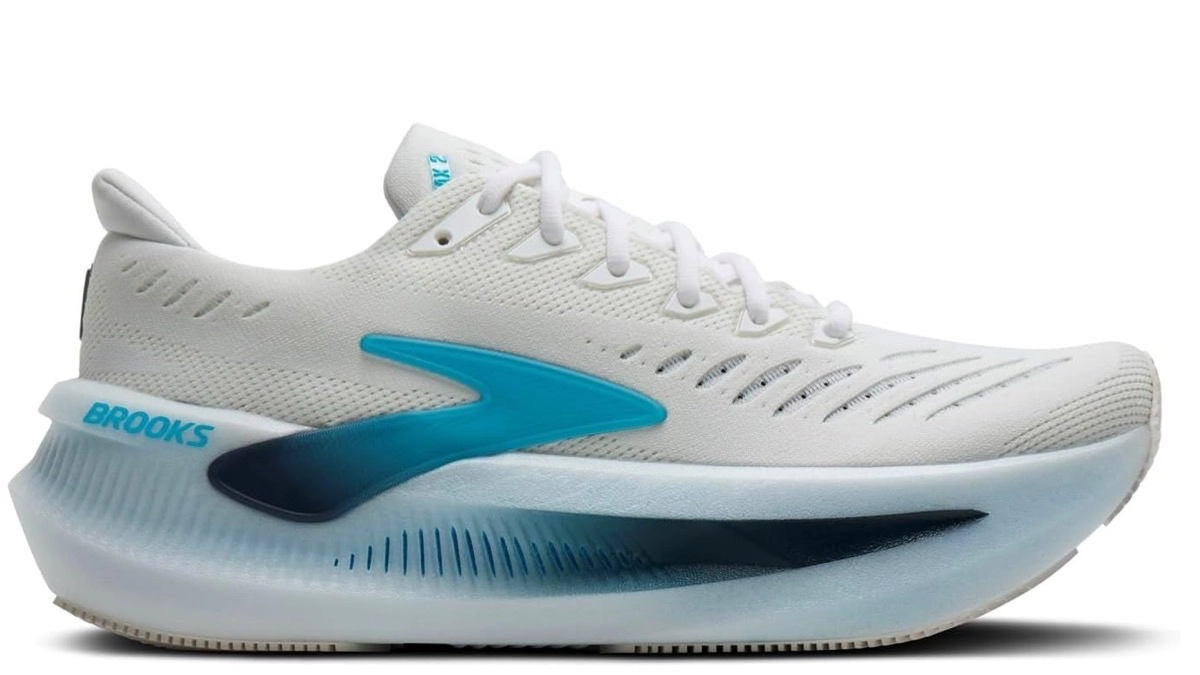
The Glycerin Max 2 sits at the high-cushion end of Brooks’ current road lineup.
Brooks uses DNA Tuned cushioning along with a GlideRoll Rocker to create a heavily cushioned shoe designed to move smoothly through each stride.
It has a 6 mm drop and is considerably more substantial than the standard Glycerin.
The extra cushioning makes it a natural choice for long runs, recovery runs and walking. The trade-off is weight. This is not the shoe to choose if your main goal is speed.
The Glycerin Max 2 makes the most sense for runners who want:
- Very high cushioning
- Long-run comfort
- Recovery-day protection
- A rocker-shaped sole
- A softer experience than the Ghost Max 4
The Glycerin Max 2 and Ghost Max 4 overlap considerably, but the Glycerin Max leans further toward plushness while the Ghost Max provides a more balanced feel.
Brooks Glycerin Flex
Best for Plush Cushioning With More Natural Flexibility
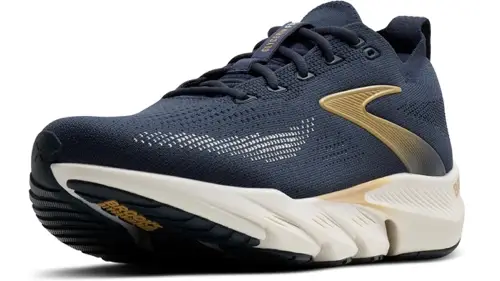
The Brooks Glycerin Flex is designed for runners who like the soft cushioning of the Glycerin family but want the shoe to bend and move more naturally with the foot.
Its defining feature is FlexZone, a groove through the midfoot that allows more flexibility than you get from a conventional high-cushion running shoe. Brooks combines this with a podular forefoot design that lets different areas of the sole move more independently. The result is a plush shoe that feels less rigid underfoot.
The midsole uses nitrogen-infused DNA Tuned foam. Larger cells in the heel are designed to soften landings, while smaller cells in the forefoot provide a firmer, more responsive toe-off. A flexible flat-knit upper is designed to move with the foot rather than restrict it.
The men’s Glycerin Flex weighs 9.1 ounces, has a 6 mm heel-to-toe drop and launched at $170. The women’s version weighs 8.0 ounces. Brooks recommends it for everyday road running, long runs and workouts.
Choose the Glycerin Flex if you want:
- Plush cushioning without an overly rigid feel
- More natural movement through the midfoot and forefoot
- A lighter Glycerin option
- Everyday road running and longer runs
- A 6 mm drop instead of the Glycerin 23’s 8 mm drop
The main decision is Glycerin Flex vs. Glycerin 23. Choose the Glycerin 23 if you want the traditional plush Glycerin ride with a more conventional platform. Choose the Glycerin Flex if you value flexibility and want the shoe to move more freely with your foot. Brooks classifies the Flex as “flexible support,” while the standard Glycerin 23 uses its “balanced support” design.
Brooks Beast GTS 26
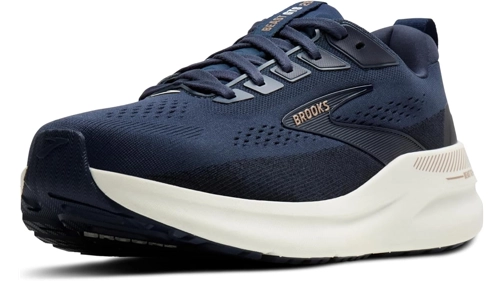
Best for Maximum Structured Support
The Brooks Beast GTS 26 is built for runners and walkers who want more structured support than the Adrenaline GTS 25 or Glycerin GTS 23. It is also designed to accommodate orthotics, making it one of the most supportive shoes in the current Brooks lineup.
Brooks uses its GuideRails support system to help control excess movement while allowing the foot and body to follow their natural motion path. A broad base adds stability underfoot, while nitrogen-infused DNA Loft v3 cushioning provides a softer, smoother ride than you might expect from a substantial stability shoe.
The upper has a roomy, accommodating design and is available in men’s medium, wide and extra-wide widths. Brooks specifically lists the Beast GTS 26 for running with orthotics, walking, everyday wear and runners who need maximum support. It also carries the APMA Seal of Acceptance.
The men’s Beast GTS 26 weighs 12.5 ounces, has a 12 mm heel-to-toe drop.
Choose the Beast GTS 26 if you want:
- Maximum structured support
- GuideRails support
- A broad, stable platform
- Room for orthotics
- Wide or extra-wide sizing
- A supportive shoe for both running and walking
The main decision is Beast GTS 26 vs. Adrenaline GTS 25. Choose the Adrenaline if you want structured support in a lighter everyday running shoe. Choose the Beast GTS 26 if support, a broad platform and room for orthotics are higher priorities than keeping weight down.
Brooks Adrenaline GTS 25
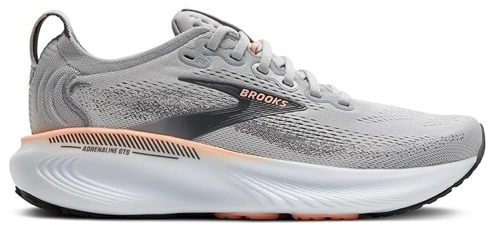
Best Everyday Support Shoe
The Adrenaline GTS 25 is the structured-support alternative for runners who like the idea of an everyday Brooks trainer but want more guidance.
Brooks uses its GuideRails system around the heel to help limit excessive movement.
The Adrenaline GTS 25 has balanced cushioning, a 10 mm drop and a listed men’s weight of 10.6 ounces.
It works well for running, walking and everyday wear. Unlike older stability shoes that often relied heavily on a firm medial post under the arch, GuideRails use structures around the rear of the shoe.
Choose the Adrenaline GTS 25 if you want:
- Structured support
- A dependable everyday trainer
- A 10 mm drop
- A shoe suitable for both walking and running
- More guidance than the Ghost provides
Read our Brooks Adrenaline GTS 25 review for the full fit and performance analysis.
If you want to understand the support technology itself, see our guide to the Brooks GuideRails support system.
Glycerin GTS 23
Best Plush Brooks Stability Shoe
The Glycerin GTS 23 combines the plush DNA Tuned cushioning of the standard Glycerin with Brooks GuideRails. That makes the choice between the two fairly straightforward.
Choose the standard Glycerin 23 if you want a neutral ride.
Choose the Glycerin GTS 23 if you like the Glycerin’s cushioning but want additional structured support.
Both have an 8 mm drop. The men’s GTS version weighs about 11 ounces compared with 10.6 ounces for the standard Glycerin.
This is the model to consider if the Adrenaline feels too traditional or you simply want a softer stability shoe.
Our Brooks Glycerin GTS 23 review goes into more detail on how it differs from both the neutral Glycerin 23 and Adrenaline GTS 25.
Adrenaline GTS 25 vs. Glycerin GTS 23
Both shoes use Brooks GuideRails, but they do not feel the same.
The Adrenaline GTS 25 is the more traditional everyday stability trainer. The Glycerin GTS 23 adds a softer, more premium cushioning experience.
If support is the priority and you want a straightforward daily shoe, start with the Adrenaline.
If you want structured support but prefer a softer ride for long runs or extended time on your feet, the Glycerin GTS 23 is likely the better fit.
You can also read our dedicated Brooks Adrenaline vs. Glycerin comparison for a deeper look at these two Brooks families.
Hyperion 3
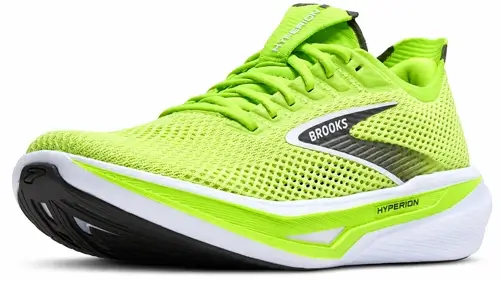
Best for Lightweight Speed Training
Not every Brooks shoe is designed primarily around comfort.
The Hyperion 3 is substantially lighter than the Ghost, Glycerin and Adrenaline families and uses responsive DNA Flash v2 cushioning.
Brooks positions it for everyday runs, running workouts and gym workouts. The 8 mm drop keeps its geometry relatively conventional despite its lighter and quicker ride. The Hyperion 3 is a good option if the Ghost feels heavier than you want for intervals, tempo runs or faster daily training.
Choose it for:
- Faster workouts
- Tempo runs
- Shorter runs
- Gym sessions
- Runners who prefer a lighter shoe
It is less protective than Brooks’ maximum-cushion models, so runners looking primarily for long-distance comfort may prefer the Ghost, Glycerin or Hyperion Max.
Hyperion Max 4
Best for Fast Training and Long Workouts
The Brooks Hyperion Max 4 is a performance-oriented trainer for runners who want more speed than a traditional daily shoe without giving up the cushioning needed for longer efforts.
The Hyperion Max 4 uses Brooks’ high-performance DNA Gold cushioning and a SpeedVault+ plate to create a quicker, more responsive ride. Its RapidRoll Rocker geometry helps move the foot smoothly toward toe-off, making the shoe particularly well suited to tempo runs, intervals and faster long runs.
Unlike Brooks’ everyday Ghost and Glycerin models, the Hyperion Max 4 is designed with faster training in mind. It provides more cushioning and structure than the lighter Hyperion, making it the better option when workouts get longer.
Choose the Hyperion Max 4 if you want:
- Tempo and threshold runs
- Faster long runs
- Interval workouts
- A plated performance trainer
- More cushioning than the standard Hyperion
The Hyperion Max 4 is a better choice than the Hyperion for longer, faster training sessions. Runners primarily looking for comfortable everyday miles should consider the Ghost 18 or Glycerin 23 instead.
Brooks Cascadia 20

Best Brooks Shoe for Technical Trails and Hiking
The Brooks Cascadia 20 is the better choice when your route moves beyond pavement and groomed paths onto technical trails, rocks, roots and uneven terrain.
Brooks updated the Cascadia 20 with DNA Loft v3 cushioning and added 4 mm of cushioning compared with the previous version. Despite the added cushioning, the shoe remains focused on trail protection and control rather than delivering the softer feel of a max-cushion road shoe.
The TrailAdapt System helps the shoe adapt to uneven ground, while the Vibram Megagrip outsole provides traction on wet and dry surfaces. Brooks also uses adaptable lugs, a protective toe cap and mudguard to make the Cascadia better suited to rough terrain.
The Cascadia 20 has a 6 mm heel-to-toe drop, weighs 10.8 ounces for the men’s version and launched at $160.
Choose the Cascadia 20 if you want:
- Technical trail running
- Hiking on rocky or uneven terrain
- Strong wet- and dry-surface traction
- More underfoot protection than a road-to-trail shoe
- A Brooks trail shoe built for rugged terrain
If most of your runs combine pavement, gravel and relatively smooth trails, the Brooks Ghost Trail is the more versatile road-to-trail option. Choose the Cascadia 20 when the terrain gets rougher and trail protection and grip become more important.
Ghost Trail
Brooks Ghost Trail
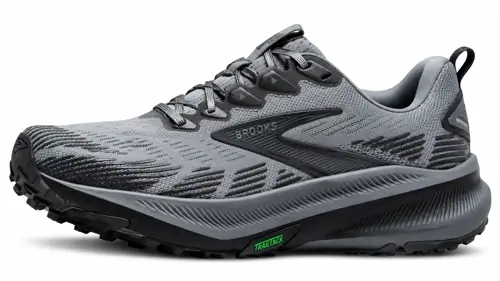
Best for Road-to-Trail Running
The Brooks Ghost Trail is the better choice for runners whose routes combine pavement with gravel paths, park trails and relatively smooth off-road terrain.
It takes inspiration from the Ghost road-running family but adds trail-specific features. The shoe uses DNA Loft v3 cushioning with a TrailTack Green rubber outsole and 3 mm lugs for additional grip away from pavement. The lugs are less aggressive than those on a technical trail shoe, which helps the Ghost Trail remain comfortable when part of your run is on the road.
The Ghost Trail has an 8 mm heel-to-toe drop and weighs 10.6 ounces for the men’s version. It launched at $150.
Choose the Ghost Trail if you want:
- A mix of road and trail running
- Gravel roads and crushed-stone paths
- Groomed and less technical trails
- More traction than the Ghost 18
- A more road-friendly ride than the Cascadia 20
The biggest decision is Ghost Trail vs. Cascadia 20. Choose the Ghost Trail when pavement is regularly part of your route. Choose the Cascadia 20 for rougher, more technical trails where stronger traction, protection and trail stability are more important.
Brooks GTS vs. Neutral Shoes
One of the most important decisions when buying Brooks shoes is whether you want a GTS model.
Brooks uses the GTS designation for shoes equipped with its GuideRails support system. Current examples include the Adrenaline GTS 25 and Glycerin GTS 23.
Neutral models such as the Ghost 18, Ghost Max 4, Glycerin 23 and Glycerin Max 2 do not contain GuideRails.
Neither type is automatically better.
A runner who feels comfortable and stable in neutral footwear may not need additional support. Someone who prefers greater guidance or has been advised to use a structured shoe may prefer a GTS model.
Our Brooks GTS vs. non-GTS shoe guide explains the differences in more detail.
If stability footwear is new to you, also see What Is a Stability Shoe? before choosing solely based on labels such as neutral, stability or motion control.
Brooks GuideRails Explained
Brooks’ GuideRails approach differs from the firm medial posts that were traditionally used in many stability shoes.
Rather than placing a noticeably firmer block of foam directly underneath the inside arch, Brooks uses firmer structures around the heel to help limit excessive side-to-side movement.
You will find GuideRails in Brooks GTS shoes such as the Adrenaline GTS 25 and Glycerin GTS 23.
For a deeper explanation of how the system works, which current shoes use it and who may benefit from it, read our Brooks GuideRails Support System Explained guide.
Brooks Cushioning Explained
Brooks now uses several different foam systems, and the names can make the lineup sound more complicated than it really is.
DNA Loft v3 is Brooks’ nitrogen-infused everyday cushioning. You will find it in models such as the Ghost 18 and Ghost Max 4. It is designed to balance softness with durability and responsiveness.
DNA Tuned is used in the Glycerin family. Brooks varies the foam’s cell structure in different parts of the midsole to provide softer landings in the heel and a different response toward the forefoot.
DNA Flash v2 is a lighter, more responsive nitrogen-infused foam intended for faster running. It appears in shoes such as the Hyperion 3.
Brooks also uses higher-performance foam compounds in its faster shoes.
The foam name matters, but geometry matters too. Stack height, heel-to-toe drop, rocker shape, platform width and support features can change how two shoes with similar cushioning feel.
Learn more about Brooks shoe foam technologies.
Which Brooks Shoe Is Best for Walking?
Running shoes can work very well for walking, but some Brooks models are better suited to it than others.
The Ghost 18 is our best all-around Brooks choice for people who divide their time between walking and running.
The Ghost Max 4 is particularly interesting for dedicated walkers because of its high cushioning, broad base and rocker geometry.
Choose the Adrenaline GTS 25 if you prefer structured support while walking.
For maximum softness, consider the Glycerin 23 or Glycerin Max 2.
People using prescription orthotics should consider the requirements of the orthotic and advice from the health professional who fitted it rather than assuming that a stability shoe is automatically required.
For comparisons beyond Brooks, see our main Best Walking Shoes guide.
Which Brooks Shoes Are Best for Wide Feet?
Brooks remains one of the stronger major running brands for width choices.
The Ghost family is particularly useful because Brooks offers multiple widths in several Ghost configurations.
The Glycerin and Adrenaline families also provide wider options in selected versions.
Do not automatically size up in length to solve a width problem. Moving to a wider version of the correct length usually provides a better fit.
There should generally be enough room for your toes to move without the heel sliding or the foot moving excessively inside the shoe.
For more options across multiple brands, see our Best Wide Shoes for Walking guide.
You can also compare Brooks sizing with Asics, Hoka, New Balance, Saucony and other brands in our running shoe fit guide by brand.
Explore More Brooks Shoe Reviews
We review individual Brooks models separately because fit, ride and performance can differ substantially even within the same brand.
Browse our full shoe review library to see the latest Brooks reviews along with shoes from Hoka, Asics, New Balance, Saucony, Nike and other major brands.
You can also browse our running and walking shoe brands directory if you want to compare Brooks with another manufacturer.
Frequently Asked Questions
The Brooks Ghost 18 is the best starting point for most neutral runners because it balances cushioning, stability and versatility. The Glycerin 23 provides a softer alternative, while the Adrenaline GTS 25 adds structured GuideRails support. See our complete Brooks Ghost 18 review if the Ghost is your leading option.
The Ghost 18 is better for runners who want a versatile, balanced daily trainer. The Glycerin 23 is softer and more premium. Both work for everyday running, but the Glycerin costs more and emphasizes plush cushioning. Our Brooks Glycerin 23 review covers the softer model in detail.
The Ghost 18 is a neutral shoe without GuideRails. The Adrenaline GTS 25 is a structured-support shoe that uses Brooks GuideRails. Both are designed for daily running and walking. Read our Brooks Adrenaline GTS 25 review if you think you may prefer the supportive option.
The Glycerin Max 2 sits at the maximum-cushion end of Brooks’ current road lineup. The Ghost Max 4 is another high-cushion option with a more balanced everyday feel.
Brooks currently uses GTS to identify models equipped with its GuideRails support system. Shoes such as the Adrenaline GTS 25 and Glycerin GTS 23 provide structured support, while models such as the Ghost 18 and standard Glycerin 23 are neutral. See our Brooks GTS vs. non-GTS guide for the full explanation.
Yes. Brooks lists walking among the intended uses for the Ghost 18. The Ghost Max 4 is another strong walking option, particularly for people who want additional cushioning, a rocker sole and a broad platform. See also best walking shoes.
The Hyperion 3 is Brooks’ lightweight option for faster workouts and versatile training. The Hyperion Max 3 adds more cushioning and a plate, making it better suited to longer workouts and fast long runs.